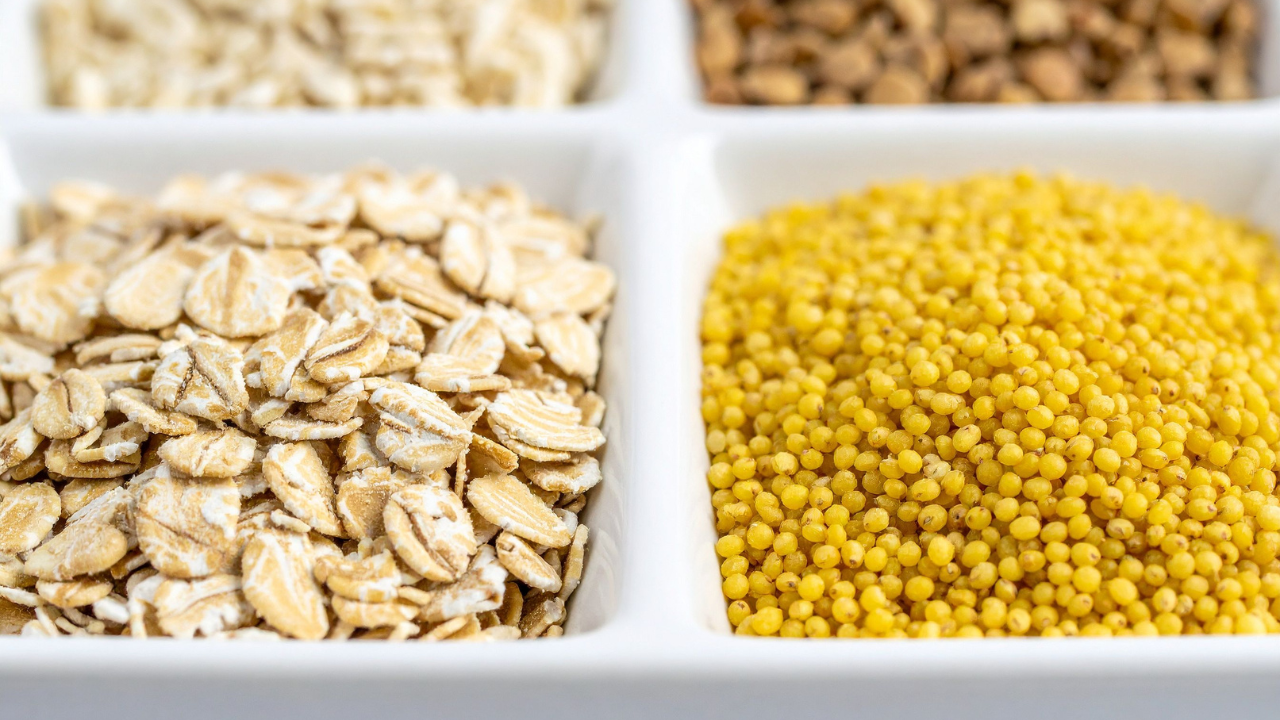
Oats have long been celebrated as a “healthy grain,” but in recent years, millets have made a powerful comeback. This has sparked a common question: millets or oats—what’s better?
The answer isn’t about trends—it’s about nutrition, digestion, and suitability for Indian lifestyles.
Understanding Oats
Oats are:
- High in soluble fiber
- Good for cholesterol management
- Common in Western diets
However:
- They’re often highly processed
- Instant oats spike blood sugar
- Not traditionally suited to all digestive systems
Understanding Millets
Millets are ancient grains that have nourished Indian diets for centuries. They are:
- Naturally gluten-free
- Rich in minerals
- Climate-resilient
- Easy to digest
Different millets offer different benefits:
- Ragi for calcium
- Bajra for iron
- Jowar for fiber
Nutritional Comparison: Millets vs Oats
Fiber: Both are high, but millets offer diverse fiber types
Protein: Millets paired with pulses provide complete protein
Minerals: Millets are richer in calcium and iron
Glycemic Index: Millets are generally lower
Digestibility: Millets are gentler for many Indians
Why Processing Matters
Many oat products:
- Contain added sugars
- Are ultra-refined
- Lose nutritional integrity
Millets retain nutrition even after minimal processing.
Which Is Better for Indian Diets?
For most people:
- Millets are more culturally aligned
- Better tolerated
- More nutritionally diverse
This is why Nutramore focuses on millet-pulse combinations rather than imported grains.
Frequently Asked Questions
Can I eat both?
Yes—variety is key.
Are millets good for children and seniors?
Absolutely.
Choose What Nourishes You Best
There’s no one-size-fits-all grain. But for daily nutrition, digestion, and long-term health, millets offer a powerful advantage.
Nutramore brings ancient wisdom into modern nutrition—one bite at a time.