
Some children seem to catch every cold that passes through the classroom. Others sit next to the same sick friends, share the same water bottles, breathe the same air — and stay well. Parents of the first kind often wonder what they are doing wrong. Parents of the second kind rarely stop to ask why their child's immune system is holding up.
The answer, in most cases, is not luck. It is not genetics alone. And it is not the brand of probiotic they are giving their child before bed.
It is, overwhelmingly, nutrition — consistent, daily, foundational nutrition that either builds immune resilience or quietly undermines it, one meal and one snack at a time.
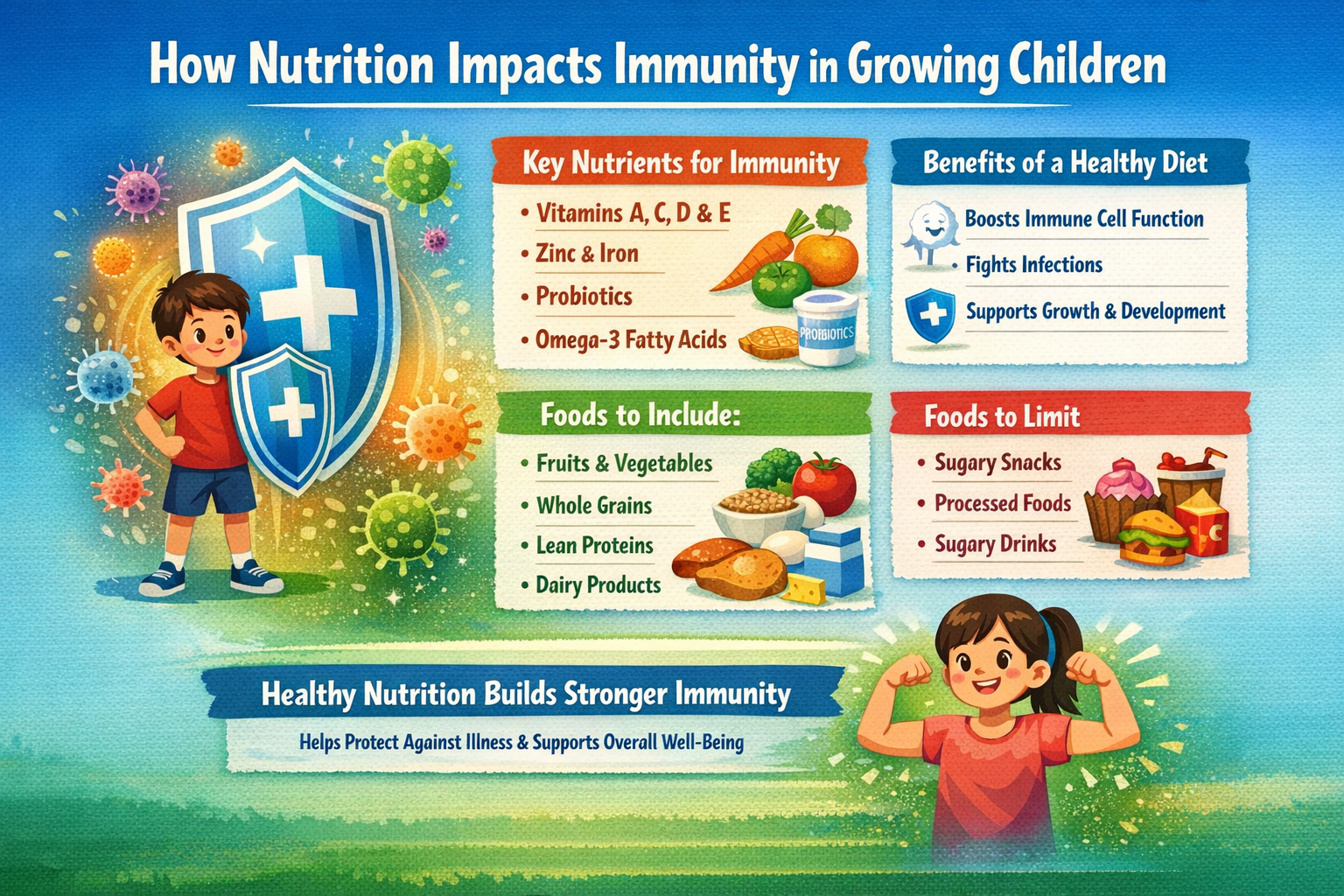
This is not a fringe claim. The relationship between nutritional status and immune function is one of the most extensively studied areas in paediatric health. Deficiencies in specific nutrients — iron, zinc, vitamin A, vitamin C, vitamin D, and others — have been directly and repeatedly linked to increased infection frequency, longer illness duration, slower recovery, and reduced vaccine effectiveness in children. Conversely, children with adequate nutritional status across these key micronutrients show measurably stronger immune responses, shorter illness duration, and better recovery trajectories.
What makes this relevant to every Indian parent is that many of the most critical immune-supporting nutrients are consistently deficient in modern Indian children's diets — not because families aren't trying, but because the foods that deliver these nutrients have been displaced by refined, low-nutrient packaged snacks that fill caloric need without building nutritional resilience.
This blog explains the science clearly, identifies the specific nutrients that matter most, and gives you a practical framework for building those nutrients into your child's daily eating — starting with snacks.
How a Child's Immune System Is Different from an Adult's
Before discussing nutrition, it helps to understand why children's immune systems are particularly sensitive to nutritional gaps.
A child's immune system is not simply a smaller version of an adult's. It is an immune system that is actively being built — developing, training, and calibrating itself through every encounter with the environment. This has several important implications.
The immune system is growing simultaneously with everything else. During childhood, the body is building bones, growing muscle, developing the brain and nervous system, expanding the gut microbiome, and producing immune cells — all at the same time. The nutrients required for immune development are competing with the nutrients required for every other growth process. A child in a marginal nutritional state will prioritise growth — children are biologically programmed to grow — and immune function may receive whatever is left over.
The adaptive immune system is still learning. When a child encounters a pathogen for the first time, the adaptive immune system must identify it, mount a response, and build memory cells so it can respond faster next time. This process requires substantial nutritional resources: amino acids for antibody production, zinc for immune cell proliferation, vitamin A for mucous membrane integrity, iron for immune cell function. A child who is nutritionally depleted cannot run this process efficiently, leading to more severe illness and longer recovery.
The gut-immune axis is still maturing. Approximately 70% of the immune system is located in and around the gut — in the form of gut-associated lymphoid tissue (GALT) that learns to distinguish beneficial organisms from harmful ones. The gut microbiome, which directly trains this immune tissue, is not fully established until around age 3–5 and continues to evolve through childhood. What children eat during this period directly shapes the microbiome, which directly shapes immune competence. Fiber-rich, diverse diets support a diverse, resilient microbiome. Refined-food diets support a narrow, inflammation-prone one.
Children have higher relative nutritional needs. Per kilogram of body weight, children need significantly more iron, zinc, calcium, and protein than adults — because they are building tissue rapidly. This means nutritional gaps that would be mild inconveniences in adults can have significant consequences in children, including measurable impairment of immune function.
The Nutrients That Build Immune Resilience in Children
Understanding which nutrients specifically support immunity — and what deficiency in each looks like — allows parents to move from vague intentions to targeted nutritional strategy.
Let's go deeper into each of these, because understanding the mechanism helps parents make the connection between the food and the outcome — and that connection is what drives consistent, lasting change.
Iron: The Most Common Immune Deficiency in Indian Children
Iron deficiency is the most prevalent nutritional deficiency in the world, and Indian children are disproportionately affected. National surveys consistently show that 50–70% of children in India under five are anaemic, and sub-clinical iron deficiency — low enough to impair function but not low enough to show on a basic blood test — is even more widespread.
The immune consequences of iron deficiency are significant and often underappreciated. Iron is essential for the proliferation of T-lymphocytes — the immune cells responsible for identifying and destroying infected cells. It is required for the activity of natural killer (NK) cells that provide the first line of antiviral defence. Iron deficiency reduces the production of interleukin-2, a critical signalling molecule that coordinates the immune response. And it impairs the function of neutrophils — the white blood cells that engulf and destroy bacteria.
In practical terms, an iron-deficient child will get sick more often, stay sick longer, and recover more slowly than an iron-adequate child exposed to the same pathogens. Iron deficiency also reduces vaccine effectiveness — iron-depleted children show measurably lower antibody titres following vaccination than iron-replete children.
The most iron-rich millet available in India is bajra (pearl millet), containing approximately 8mg of iron per 100g — comparable to many meat sources on a calorie-adjusted basis. Nutramore's Bajra Cookies and Bajra Moong Chocolate Cookies both use bajra as a primary base, making them a genuinely meaningful source of dietary iron in a format children will eat consistently without negotiation.
An important note on iron absorption: non-heme iron from plant sources is more bioavailable when consumed alongside vitamin C. Pairing bajra-based snacks with a piece of citrus fruit, amla, or a small glass of lime water in the afternoon snack window maximises the iron that a child's body actually absorbs — not just the iron that passes through.
Zinc: The Gatekeeper of Immune Response
If iron is the most common deficiency in Indian children, zinc is the most consequential for immune function per unit of deficiency. Even mild zinc inadequacy — well above the threshold that would be detected on standard testing — has measurable effects on immune competence.
Zinc is required at almost every step of the immune response. It is necessary for the development and maturation of the thymus gland — the organ that trains T-lymphocytes to recognise self from non-self. It is required for the production of thymulin, a hormone that regulates T-cell function. It supports the integrity of the epithelial barriers — skin, gut lining, respiratory tract — that form the body's first line of defence against pathogens. And it is essential for antibody production, wound healing, and the resolution of inflammation after an infection.
Children with zinc deficiency show significantly increased susceptibility to respiratory infections, diarrhoeal diseases, and malaria. Research across multiple countries has demonstrated that zinc supplementation reduces pneumonia incidence in children by approximately 41% and diarrhoea incidence by approximately 18% — illustrating just how significant the zinc-immunity connection is in practice.
Jowar (sorghum) and moong dal are among the better plant sources of zinc available in the Indian diet. The combination of both in a single snack — as in Nutramore's Jowar Chilla Mix — delivers meaningful zinc alongside the complete protein that further supports immune cell synthesis. Moong Almond Pistachio Cookies add nuts to the equation — almonds and pistachios are both reasonable zinc sources — creating a snack that addresses zinc from multiple ingredient directions simultaneously.
Protein: The Raw Material of Every Immune Response
Every antibody your child's immune system produces is made of protein. Every immune cell that proliferates in response to an infection is built from protein. Every cytokine that signals between immune cells, every enzyme that breaks down pathogens, every structural component of the gut lining that keeps bacteria out of the bloodstream — all protein.
A child who is protein-deficient cannot mount an adequate immune response, even if they are not showing obvious signs of protein malnutrition. Sub-clinical protein inadequacy — consuming enough protein to grow but not enough to fully support all competing demands including immunity — is particularly common in vegetarian Indian households where protein sources are limited to small amounts of dal consumed primarily at dinner.
The recommended protein intake for children is approximately 1.0–1.5g per kilogram of body weight per day — higher than most parents realise and higher than most Indian children's diets consistently deliver. A 20kg child needs 20–30g of protein per day across all meals and snacks.
This is why protein in snacks matters — not just in lunch and dinner. A mid-morning or after-school snack that delivers 5–10g of protein contributes meaningfully to the daily total. Nutramore's Green-Gram Upma Premix delivers 32g of protein per serving. The Jowar Chilla Mix delivers 30g. The Baked Protein Sticks deliver 18g per 75g pack. These are not marginal contributions — in a child's daily protein budget, snacks built from these ingredients make a genuinely significant difference.
The millet-pulse combination is particularly powerful for children's immune protein needs because it delivers complete protein — all 9 essential amino acids — from plant sources, eliminating the concern that vegetarian children are not getting the full amino acid spectrum required for antibody and immune cell synthesis.
Calcium: Beyond Bones — The Immune Signalling Mineral
Most parents associate calcium with bone health, which is entirely valid — but calcium plays a less well-known role in immune function that is equally important for children.
Calcium ions act as intracellular messengers in immune cells. When a T-cell or B-cell is activated by an antigen, calcium influx is one of the first signalling events — it triggers the cascade of responses that ultimately produces antibodies or destroys infected cells. Without adequate calcium, this signalling cascade is impaired, slowing and weakening the immune response.
Calcium also regulates the production of cytokines — the chemical messengers that coordinate between different immune cell types. Adequate calcium status supports a balanced cytokine profile, reducing the risk of excessive inflammatory responses that can cause as much damage as the pathogen itself.
Ragi (finger millet) is one of the most extraordinary sources of plant calcium available anywhere in human nutrition. At approximately 344mg of calcium per 100g — compared to approximately 34mg in wheat and 120mg per 100ml in cow's milk — ragi delivers roughly 10 times the calcium density of wheat and nearly three times that of milk. For children who are poor milk drinkers or who have dairy sensitivities, ragi is not just an alternative — it is a genuinely superior calcium source.
Nutramore's Ragi Chocolate Cookies and Rice Ragi Cookies make ragi's calcium available in a snack format that children actively enjoy. Served alongside warm milk, they create a combined calcium delivery that comprehensively covers a child's daily needs in a single snack occasion.
Fiber and the Gut-Immune Axis: The Connection Most Parents Miss
Of all the nutrition-immunity connections in children, the gut-immune axis is the most underappreciated and arguably the most foundational. Understanding it changes the way you think about what your child eats every single day.
The gut is not simply a digestive organ. It houses approximately 70% of the body's immune tissue — the gut-associated lymphoid tissue (GALT) — which includes Peyer's patches, mesenteric lymph nodes, and a vast array of immune cells distributed throughout the intestinal lining. This tissue is constantly sampling the gut environment, learning to tolerate beneficial bacteria and food antigens while remaining poised to respond to genuine pathogens.
The quality of this immune training depends directly on the diversity and composition of the gut microbiome — the community of bacteria, fungi, and other organisms that live in the intestine. A diverse, fiber-rich microbiome produces short-chain fatty acids (SCFAs) — particularly butyrate, propionate, and acetate — that directly nourish gut-lining cells, regulate inflammatory responses, and support the development of regulatory T-cells that prevent immune overreaction.
A microbiome dominated by sugar-feeding bacteria — which is increasingly common in children eating refined, low-fiber diets — produces fewer SCFAs, weakens the gut lining, increases intestinal permeability (allowing bacterial fragments to enter the bloodstream and drive systemic inflammation), and impairs the regulatory immune responses that prevent both infection and allergic disease.
Dietary fiber is the primary food source for the beneficial bacteria that produce SCFAs. Specifically, the resistant starch in millets like jowar and the prebiotic fibers in pulses like moong are among the most potent substrates for beneficial gut bacteria. A child who eats millet and pulse-based foods regularly is consistently feeding the gut microbiome in a way that supports immune resilience from the inside out.
This is one of the most compelling arguments for building millet and pulse-based snacks into a child's daily routine. The benefit is not visible after one snack. It accumulates over weeks and months — gradually shifting the microbiome toward greater diversity, stronger SCFA production, and more robust immune training. Children whose diets are consistently rich in millet fiber and pulse-derived prebiotics develop measurably more resilient immune systems than those eating refined-grain diets — not because of any single nutrient, but because the gut ecosystem that trains immunity is better nourished.
What Poor Nutrition Does to Children's Immunity: The Vicious Cycle
One of the most troubling aspects of the nutrition-immunity relationship in children is the self-reinforcing nature of the cycle once it begins to go wrong.
A child who is nutritionally deficient gets sick more frequently. When sick, they eat less — either because of reduced appetite, or because illness itself reduces nutrient absorption in the gut. The illness depletes iron, zinc, and protein stores further. Recovery is slower because the immune system lacks the resources to fully resolve the infection. The child returns to school still not fully recovered, encounters the next pathogen before their immune system has fully rebuilt, and gets sick again.
Each cycle of illness leaves the child slightly more nutritionally depleted than before, and therefore slightly more susceptible to the next infection. This is the vicious cycle of malnutrition and infection that paediatric nutritionists have documented for decades — and it is as relevant in middle-class Indian urban households as it is in resource-poor settings, because the deficiencies in the former are often driven by poor food quality rather than food scarcity.
Breaking this cycle requires nutritional intervention during the well periods — building sufficient nutritional reserves across iron, zinc, protein, calcium, and fiber during the weeks and months when the child is healthy, so that the next inevitable infection encounter doesn't find a depleted immune system.
This is precisely why snack quality matters so much for children's immunity. Meals are three occasions per day. Snacks are two or three more. A child who eats nutritionally dense, whole-ingredient snacks adds five or six meaningful nutritional contributions to their day — iron from bajra, zinc from moong, calcium from ragi, protein from pulse combinations, fiber from whole millets. This is not supplementation. It is food doing what food was always supposed to do.
Practical Immunity-Building Snack Choices for Children
Bringing this all together into daily practice, here is a simple framework for choosing snacks with children's immunity specifically in mind:
For iron: Make bajra-based snacks a regular part of the snack rotation. Bajra Cookies and Bajra Moong Chocolate Cookies are the most practical format. Pair with vitamin C sources whenever possible — a piece of orange, a small amla, or lime water alongside the snack.
For zinc and complete protein: The millet-pulse combination in snack form. Jowar Chilla Mix for after-school warm snacks. Green-Gram Upma Premix for quick mornings. Baked Protein Sticks for lunchboxes and on-the-go occasions. Moong Almond Pistachio Cookies for a nut-enriched zinc and protein hit in cookie form.
For calcium: Build ragi into the snack rotation at least three or four times per week. Ragi Chocolate Cookies served with warm milk in the evening is one of the most calcium-dense snack combinations available in Indian cuisine. Rice Ragi Cookies provide the same calcium benefit in a lighter flavour profile for children who prefer less intense tastes.
For gut-immune health: Prioritise variety and fiber across the whole day. The Savoury Snacks Combo — combining Millet Methi Crispies and Baked Protein Sticks — adds a different millet and pulse fiber matrix to the day's gut microbiome feeding, complementing the fiber from cookies and premixes with a different structural carbohydrate type.
For variety and consistency: The All-Time Favourite Cookies Combo covers jowar, rice-ragi, and bajra across three flavour profiles — ensuring children don't tire of the same taste while rotating through three different millet nutritional profiles. For families new to this range, the Try & Taste Trial Pack with 9 mini flavours lets children identify their preferences before a full pantry is built around their choices.
The Immunity Dividend of Consistent Nutritional Snacking
There is a concept in finance called compound interest — small, consistent contributions that accumulate into something substantial over time. Nutritional immunity works the same way.
No single snack builds a child's immune system. No single ragi cookie prevents the next cold. But a child who eats bajra, jowar, ragi, and moong-based snacks consistently — several times a day, five days a week, across months and years — is building iron stores, zinc reserves, gut microbiome diversity, and protein adequacy that collectively produce measurably stronger immune function than a child eating refined biscuits and chips across the same period.
This is the immunity dividend of nutritional snacking. It is not dramatic and it is not immediate. It shows up over a school year in fewer sick days, shorter illness durations, faster recoveries, and a child who, sitting next to the same sick classmate, more often than not — stays well.
Final Thoughts
Children's immunity is built daily — in kitchens, in lunchboxes, in after-school snack bowls, in the choices parents make every morning before the school rush and every afternoon before dinner.
The nutrients that matter most — iron, zinc, calcium, protein, and fiber — are not found in the refined, packaged snacks that dominate children's diets across India. They are found in millets and pulses: in bajra, jowar, ragi, moong, and green gram — the very grains and legumes that Indian culinary tradition has been combining and serving for generations, and that modern food science is now confirming were always the right foundation.
Making these foods convenient, genuinely enjoyable, and consistently present in a child's daily snacking is not a difficult or expensive undertaking. It is a decision — made once, implemented gradually, and maintained through the small daily act of choosing what goes in the snack box and what sits in the pantry.
The return on that decision, measured in your child's health across the months and years ahead, is one of the highest-yield investments any parent can make.
Explore Nutramore's full range of immunity-supporting millet snacks for children at nutramore.in/our-products
