
If your snack leaves you hungry within 30 minutes, it’s not balanced.
Many people eat snacks that are either:
- Pure carbs
- Pure fat
- Or sugar-heavy
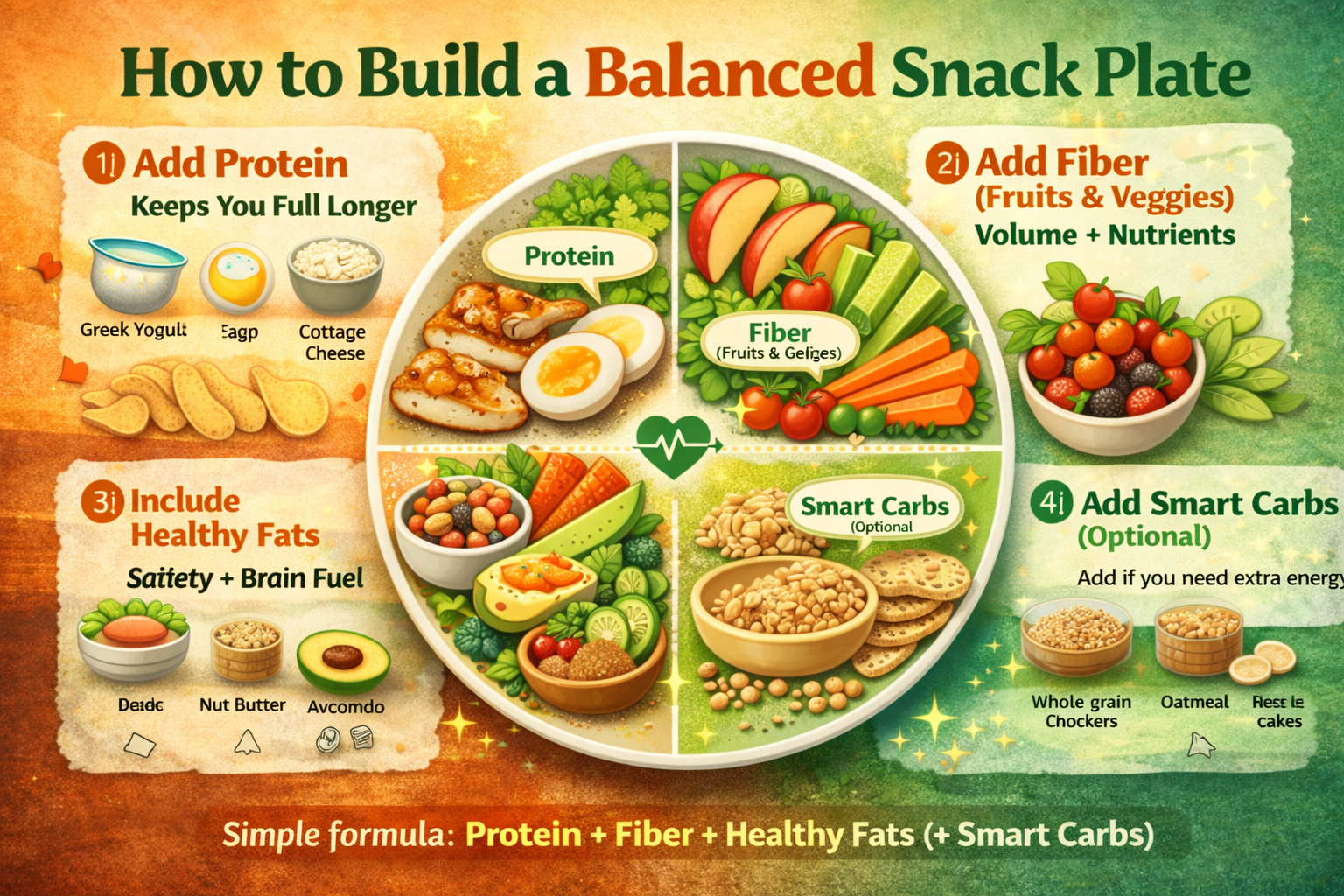
A balanced snack plate should combine protein, fiber, and slow-releasing energy.
Why Balance Matters
When snacks lack protein and fiber:
- Blood sugar rises quickly
- Insulin spikes
- Hunger returns faster
Balanced snacks:
- Stabilize blood sugar
- Improve satiety
- Support metabolism
The 3 Components of a Balanced Snack
1. Protein
Supports muscle repair and keeps you full.
Examples:
- Pulses
- Nuts
- Millet-pulse snacks
2. Fiber
Improves digestion and slows glucose absorption.
Sources:
- Millets
- Whole grains
- Seeds
3. Complex Carbohydrates
Provide steady energy without crashes.
Millets are excellent complex carbs.
What a Balanced Snack Looks Like
- Millet cookie + milk
- Roasted pulses + fruit
- Savoury baked snacks made with whole grains
- Jowar-based snack options
Why Portion Control Still Matters
Even healthy snacks should be eaten mindfully. Over-snacking can still increase calorie intake.
Listen to hunger cues.
Conclusion
A balanced snack isn’t complicated — it’s intentional.
Choose foods that combine protein, fiber, and energy for lasting nourishment.