
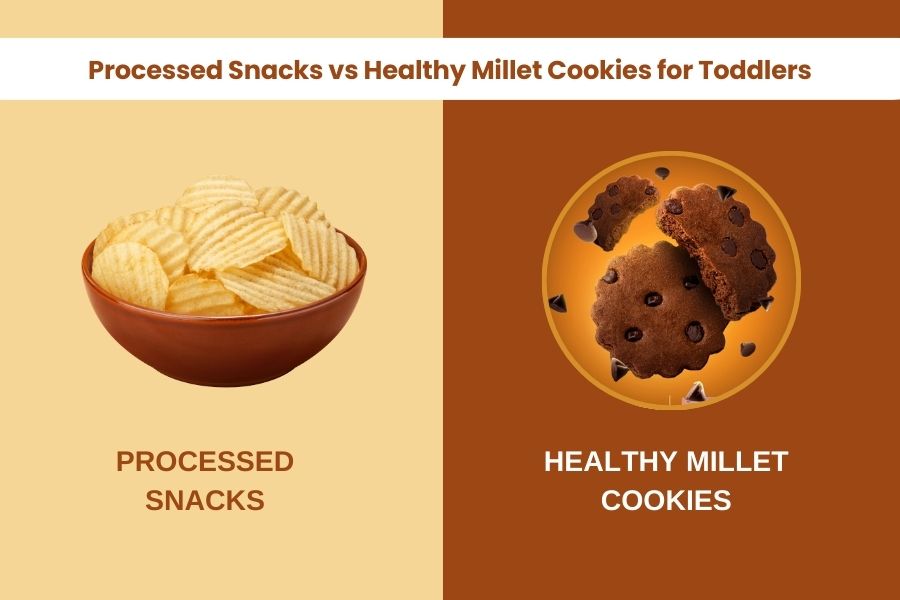
Indian parents juggle a lot: feeding picky toddlers, decoding labels, and balancing taste with nutrition. Snack time often becomes the hardest part of the day. Packaged chips, cream biscuits, and sugary treats are everywhere, and toddlers love them. But do these snacks help your child grow well? There’s a better option many parents in India are turning to healthy cookies made from millets.
In this guide, we’ll compare common processed snacks with healthy millet cookies so you can make confident choices. You’ll learn what to watch for on labels, how millets support growth, and practical tips to choose the best millet cookies for your child. We’ll also share why Nutramore Healthy Millet Cookies are a strong pick for Indian families.
Key takeaways:
- Processed snacks are often high in salt, sugar, and unhealthy fats and add little nutrition.
- Millet cookies offer fiber, protein, iron, and slower-release energy - better for growth and digestion.
- With a simple label check, you can find healthy cookies your toddler will actually enjoy.
- Nutramore’s millet cookies align with what many parents look for: clean ingredients and child-friendly taste.
Key takeaways:
- Processed snacks are often high in salt, sugar, and unhealthy fats and add little nutrition.
- Millet cookies offer fiber, protein, iron, and slower-release energy - better for growth and digestion.
- With a simple label check, you can find healthy cookies your toddler will actually enjoy.
- Nutramore’s millet cookies align with what many parents look for: clean ingredients and child-friendly taste.
The Problem with Processed Snacks
Most Indian grocery aisles are packed with brightly colored snack packs that promise fun and flavor. Toddlers love them, but here’s what’s often inside.
What counts as a processed snack?
Processed snacks include:
- Potato chips, namkeen, and fried mixes
- Cream biscuits, candy-coated treats, and wafers
- Instant noodles and flavored corn puffs
They may look different, but many share the same core issue: refined ingredients plus additives designed to make you eat more.
Common nutrition pitfalls
- High sugar: Many sweet biscuits and treats pack added sugar in the first three ingredients. For toddlers, frequent sugary snacks can crowd out nutrients and strain dental health.
- High salt (sodium): Savory snacks rely on salt to boost taste and shelf life. Too much sodium isn’t ideal for small kidneys and can shape salty taste preferences early.
- Unhealthy fats: Palm oil and hydrogenated fats are common. Some snacks are deep-fried, adding extra calories without nutrients.
- Refined flours: Maida-based snacks digest fast, leading to quick energy spikes and crashes. Toddlers often get cranky when energy dips.
- Additives and colors: Artificial flavors, synthetic colors, and preservatives are routine in mass-market snacks.
How this affects toddlers
- Appetite displacement: When a toddler fills up on empty calories, they’re less likely to eat nutrient-dense meals at home.
- Energy swings: High-sugar snacks lead to hyperactivity followed by fatigue and fussiness.
- Gut health: Low fiber and high additives can upset digestion. A fiber-poor diet also leads to constipation.
- Taste shaping: Early exposure to intense sweetness and salt can make plain, natural foods less appealing.
- Long-term risk: Frequent intake of high-sugar, high-fat snacks is linked to obesity, dental caries, and poor dietary habits carried into later childhood.
None of this means a child can never have a treat. But when daily snacks are mostly processed, it’s tough to meet nutrition goals. That’s where millet cookies can help.
Why Choose Healthy Millet Cookies
Millets are ancient grains that have always been part of Indian food traditions. They’re making a strong comeback because they offer what growing kids need: steady energy, fiber, and essential nutrients.
What are millet cookies?
Millet cookies are biscuits made with one or more millets instead of only refined wheat flour. Common Indian millets include:
- Ragi (finger millet)
- Bajra (pearl millet)
- Jowar (sorghum)
- Foxtail, little, kodo, barnyard millets
Healthy versions often replace refined sugar with jaggery or limit sugar altogether, and avoid artificial flavors, colors, and preservatives.
The nutrition edge of millets
- Better fiber profile: Millets deliver more dietary fiber than refined flour. Fiber supports digestion, reduces constipation, and stabilizes blood sugar.
- Slow-release energy: Complex carbohydrates in millets break down slowly, providing steady energy for play and learning.
- Protein support: Millets contribute plant protein, which helps with growth and tissue repair when paired with a varied diet.
- Micronutrients many toddlers need:
- Ragi is rich in calcium and iron—helpful for bone health and hemoglobin levels.
- Jowar and bajra offer B vitamins, magnesium, and zinc that support immunity and metabolism.
- Naturally gluten-free: Most millets are gluten-free, which can be useful for families exploring gluten sensitivity.
Why they suit toddlers
- Gentle on tiny tummies: Fiber and complex carbs support a healthy gut and regular bowel movements.
- Balanced snack: Combine millet cookies with milk, curd, or fruit, and you have a well-rounded mini-meal.
- Familiar yet better: Cookies feel like a treat, so it’s easier to shift away from junk without a fight.
- Taste and texture options: From mildly sweet ragi to light, crunchy jowar blends, there’s a style for every toddler.
Healthy cookies won’t replace meals, but they make snack time count.
Comparing Processed Snacks and Millet Cookies
Here’s how these two snack categories stack up across the factors that matter for toddlers.
Ingredients
- Processed snacks: Often built on maida, refined sugar, palm oil, corn syrup solids, artificial flavors, synthetic colors, acidity regulators, and preservatives.
- Millet cookies: Use millet flours (ragi, jowar, bajra), whole grains, natural sweeteners (like jaggery), cold-pressed oils or butter in small amounts, and minimal or no artificial additives.
Tip: On labels, the first three ingredients carry the most weight. Look for millet flour among them.
Nutritional value
- Processed snacks: High in calories but low in essential nutrients, fiber, and quality protein.
- Millet cookies: Offer fiber, minerals like iron and calcium (especially ragi), B vitamins, and more sustaining carbs.
Example: A ragi cookie with jaggery and ghee delivers energy plus calcium and iron. A cream biscuit mainly supplies sugar, refined flour, and fat.
Health impact
- Processed snacks: More likely to drive sugar highs, cravings, and overconsumption. Regular intake is linked to dental issues and poor diet quality.
- Millet cookies: Support even energy, better digestion, and fuller satiety. They help bridge nutrient gaps when paired with fruits, nuts (if age-appropriate), and dairy.
Suitability for toddlers
- Processed snacks: Fun sometimes, but not ideal as a daily habit.
- Millet cookies: Suitable as an everyday snack option, especially when made with clean ingredients and modest sweetness.
Tips for Choosing the Best Millet Cookies
Not all “healthy cookies” are equal. Use these checks to find the real deal.
1) Read the ingredient order
- Look for millet flour (ragi, jowar, bajra) in the first three ingredients.
- Prefer whole grain or multigrain over maida-heavy mixes.
- Watch for short, clean lists. If you see many additives, emulsifiers, and complex codes, put it back.
2) Check the sugar source and quantity
- Prefer jaggery or limited added sugar over refined white sugar or glucose syrup.
- For toddlers, choose cookies that taste mildly sweet, not dessert-sweet.
- If sugar is the first or second ingredient, it’s not ideal for daily snacking.
3) Fat quality matters
- Cold-pressed oils or ghee in small amounts beat hydrogenated fats.
- Avoid products listing “vanaspati,” “shortening,” or “hydrogenated” fats.
4) Fiber and protein
- Aim for cookies with visible fiber-rich ingredients like millets, oats, or seeds (if age-safe).
- Fiber helps satiety and bowel regularity. For toddlers, balance is key—too much fiber at once can be heavy, so moderation works best.
5) Additives and flavors
- Choose options with “no artificial colors or flavors” and “no preservatives,” when possible.
- Natural flavors, spices (cardamom, cinnamon), or cocoa in moderation are fine.
6) Allergen and age considerations
- If your toddler has allergies, scan for nuts, dairy, or gluten notes.
- Most millets are gluten-free, but check for cross-contamination or added wheat.
- For toddlers under two, aim for simple recipes with minimal salt and sugar.
7) Texture and taste trial
- Start with small packs to test acceptance.
- Toddlers often like lightly sweet, crisp-but-not-hard cookies that pair well with milk or fruit.
8) Trusted brands and transparency
- Prefer brands that share sourcing info and nutrition facts clearly.
- Explore established options like Nutramore Healthy Millet Cookies, which focus on clean ingredients and child-friendly flavors.
Why Choose Healthy Millet Cookies: The Bigger Picture
Snacks are not just fillers between meals. They can help toddlers:
- Meet daily energy needs without sugar crashes
- Stay regular and comfortable, thanks to fiber
- Get micronutrients that support immunity and bone health
- Learn to enjoy natural flavors instead of artificial ones
Millet cookies fit into modern Indian schedules. They’re portable, shelf-stable, and align with traditional wisdom. Pair them with fresh fruit, milk, or curd for a balanced snack that feels like a treat.
Why Nutramore Healthy Millet Cookies Are a Great Choice
For parents who want quality without spending hours baking at home, Nutramore is a dependable option. Here’s what sets them apart:
Millet-first recipes
Nutramore Healthy Millet Cookies prioritize millets such as ragi, jowar, and bajra. That puts fiber and slow-release carbs upfront, not just as a token addition.
Clean label philosophy
- No artificial colors or flavors
- No unnecessary preservatives
- Mindful sweetness, often using better sugar choices in controlled amounts
This matters when you’re feeding a toddler daily and want to keep additives low.
Taste toddlers enjoy (and parents approve)
The cookies are lightly sweet and balanced in texture—crisp enough to satisfy but not so hard that small teeth struggle. This makes them a practical choice for tiffin boxes, travel, and evening snacks.
Fits Indian family routines
- Easy to carry for daycare, park visits, or trips
- Works well with milk or a bowl of curd
- Pairs with fruit to round out fiber and vitamins
Transparency and accessibility
Nutramore shares product details, making selection easier for parents. You can browse flavors and ingredient lists online and order directly from their store:
Smart Snack Swaps: Practical Ideas for Toddlers
Use these simple swaps to shift your pantry toward better choices without a fight.
- Swap cream biscuits with ragi-jaggery millet cookies.
- Replace fried namkeen with baked millet cookies and a handful of roasted chana (if age-appropriate).
- Ditch syrupy drinks for plain milk, buttermilk, or coconut water.
- Create a balanced snack plate: 2 millet cookies + banana slices + a few raisins.
- For variety, try different millets through the week—ragi one day, jowar the next.
Portion tip: For most toddlers, 1–3 cookies per snack is enough, depending on size and meal timing. Watch hunger cues rather than forcing finishes.
How to Read Labels Like a Pro (Quick Checklist)
Before you drop a pack into your basket, scan for:
- Top three ingredients: Is a millet flour listed there?
- Sugar placement: Is sugar or glucose near the top?
- Fat quality: Any “hydrogenated” or “vanaspati” terms? If yes, skip.
- Fiber mention: Whole grains or millets typically boost fiber.
- Additives: Shorter lists tend to be cleaner.
- Allergen info: Especially for nuts, dairy, and gluten.
If a brand is transparent and the label is easy to understand, that’s a positive sign.
Sample Day: Balanced Toddler Snacking with Millets
- Morning: Ragi millet cookie + warm milk
- Midday: Banana slices + a small cup of curd
- Evening: Jowar millet cookie + roasted makhana (age-appropriate size)
- Dinner add-on: Moong dal khichdi with ghee and soft-cooked veggies
This plan keeps sweetness moderate, boosts fiber, and spreads energy evenly.
Comparing Costs and Convenience
- Convenience: Processed snacks are easy, but so are millet cookies. The difference lies in nutrition quality.
- Shelf life: Many millet cookies have a good shelf life without harsh preservatives, thanks to careful baking and packaging.
- Value: You pay for better grains and cleaner ingredients. Over time, that supports healthier eating habits and fewer food battles.
Cultural Fit: Millets in Indian Homes
India has a long history with millets, especially in states like Karnataka (ragi), Maharashtra (jowar), and Rajasthan (bajra). Reintroducing millets through cookies makes sense for modern families:
- Familiar flavors, child-friendly format
- Supports Indian farmers and traditional crops
- Aligns with national efforts to promote millets for health and sustainability
It’s more than a snack—it’s part of a food culture that respects both taste and nutrition.
Transition Tips: Moving Away from Processed Snacks
- Go gradual: Replace one processed snack a day with a millet cookie and fruit.
- Keep it visible: Store millet cookies at toddler eye-level and keep sugary treats out of sight.
- Offer choice: Let your child pick between two millet cookie flavors. Choice boosts acceptance.
- Model behavior: Snack on millet cookies yourself. Kids copy what they see.
- Celebrate small wins: Praise your child for trying a new flavor or finishing a balanced snack plate.
The Role of Variety
Even the best cookie shouldn’t be the only snack. Rotate options to cover different nutrients:
- Millets: ragi, jowar, bajra cookies
- Whole fruits: banana, chikoo, apple, guava
- Dairy: milk, curd, paneer cubes
- Protein add-ons: roasted chana, moong chilla strips, egg (if non-vegetarian)
Balanced variety keeps nutrition broad and taste buds curious.
A Closer Look at Ragi, Jowar, and Bajra
- Ragi (finger millet): Often highlighted for calcium and iron. Good for bone health and hemoglobin. Mildly earthy flavor that pairs well with jaggery and cardamom.
- Jowar (sorghum): Light, neutral taste. Offers B vitamins and fiber. Makes cookies crisp and easy to chew.
- Bajra (pearl millet): Warm, hearty profile with magnesium and potassium. Works well in cooler months and pairs nicely with ghee notes.
A brand that blends these thoughtfully can deliver taste plus a strong nutrition profile.
Putting It All Together: Snack Planning for Busy Parents
- Keep a small stash: Store sealed packs of millet cookies for school runs and travel.
- Build mini-meals: Cookie + dairy + fruit is a winning combo.
- Time it right: Offer snacks 2–3 hours after meals to protect appetite for lunch and dinner.
- Hydrate: Water or milk alongside snacks prevents over-snacking.
- Involve kids: Let them help place cookies on a plate or choose the fruit pairing. Participation boosts interest.
Why Nutramore Works for Indian Families
Nutramore Healthy Millet Cookies check the boxes many parents care about:
- Millet-first approach for fiber and steady energy
- Clean ingredient lists without artificial colors or flavors
- Toddler-friendly sweetness and texture
- Easy online access with clear product pages and ingredient details
Ready to explore flavors and pick what suits your child? Shop now Nutramore Healthy Millet Cookies.
Conclusion
Processed snacks may be convenient, but they often load toddlers with sugar, salt, and empty calories. Healthy cookies made from millets are a smarter daily choice. They bring fiber for digestion, slow-release energy for steady play, and key minerals like calcium and iron that support growth. With a quick label check and a few smart swaps, you can make snack time both tasty and nourishing.
Start small: replace one processed snack this week with millet cookies paired with fruit or milk. Notice the smoother energy, the easier digestion, and fewer sugar crashes. If you want a ready-made option that aligns with these goals, Nutramore Healthy Millet Cookies make the shift simple.
Choose snacks that help your child thrive—one cookie at a time.
Frequently Asked Questions
1. Are millet cookies safe for toddlers under two?
Yes, in many cases—if ingredients are simple and the cookie is not too hard or sweet. Always introduce one new food at a time, watch for reactions, and consult your pediatrician if your child has known allergies or sensitivities.
2. Do millet cookies contain gluten?
Most millets are naturally gluten-free. However, check labels for added wheat flour or cross-contamination notes if your child needs strict gluten avoidance.
3. Will my toddler like the taste?
Millet cookies are lightly sweet and comforting. Start with simple flavors. If your child prefers sweeter snacks, pair the cookie with banana or warm milk while you transition away from refined treats.
4. Can millet cookies replace meals?
No. They’re a better snack choice, not a meal replacement. Use them to bridge hunger between meals while maintaining a varied diet with dal, rice, rotis, veggies, eggs, dairy, and fruit.
5. Are they expensive?
Prices vary by brand and millet type. Many parents find that higher-quality snacks reduce impulse buys and wastage. Buying multipacks online can help manage cost.