
Travel disrupts routines.
Long sitting hours, irregular meal timing, dehydration, and limited food options often result in bloating, acidity, fatigue, and poor digestion.
Whether it’s a business trip, family vacation, train journey, or long road travel — planning your snacks is essential for staying energized and comfortable.
Why Travel Affects Digestion
Travel changes:
- Eating timing
- Hydration levels
- Physical movement
- Sleep cycles
Sitting for long hours slows digestion. Combined with fried or sugary snacks, this causes:
- Bloating
- Constipation
- Heaviness
- Acid reflux
The Biggest Travel Food Mistakes
1. Relying on Airport or Highway Food
Most options are:
- Deep-fried
- Refined flour-based
- High sodium
2. Sugary Beverages
Soft drinks and packaged juices increase dehydration and blood sugar spikes.
3. Overeating Due to Boredom
Travel boredom often leads to mindless eating.
What Makes an Ideal Travel Snack?
Travel snacks should be:
✔ Shelf-stable
✔ Easy to carry
✔ Non-messy
✔ Balanced in nutrients
✔ Light on digestion
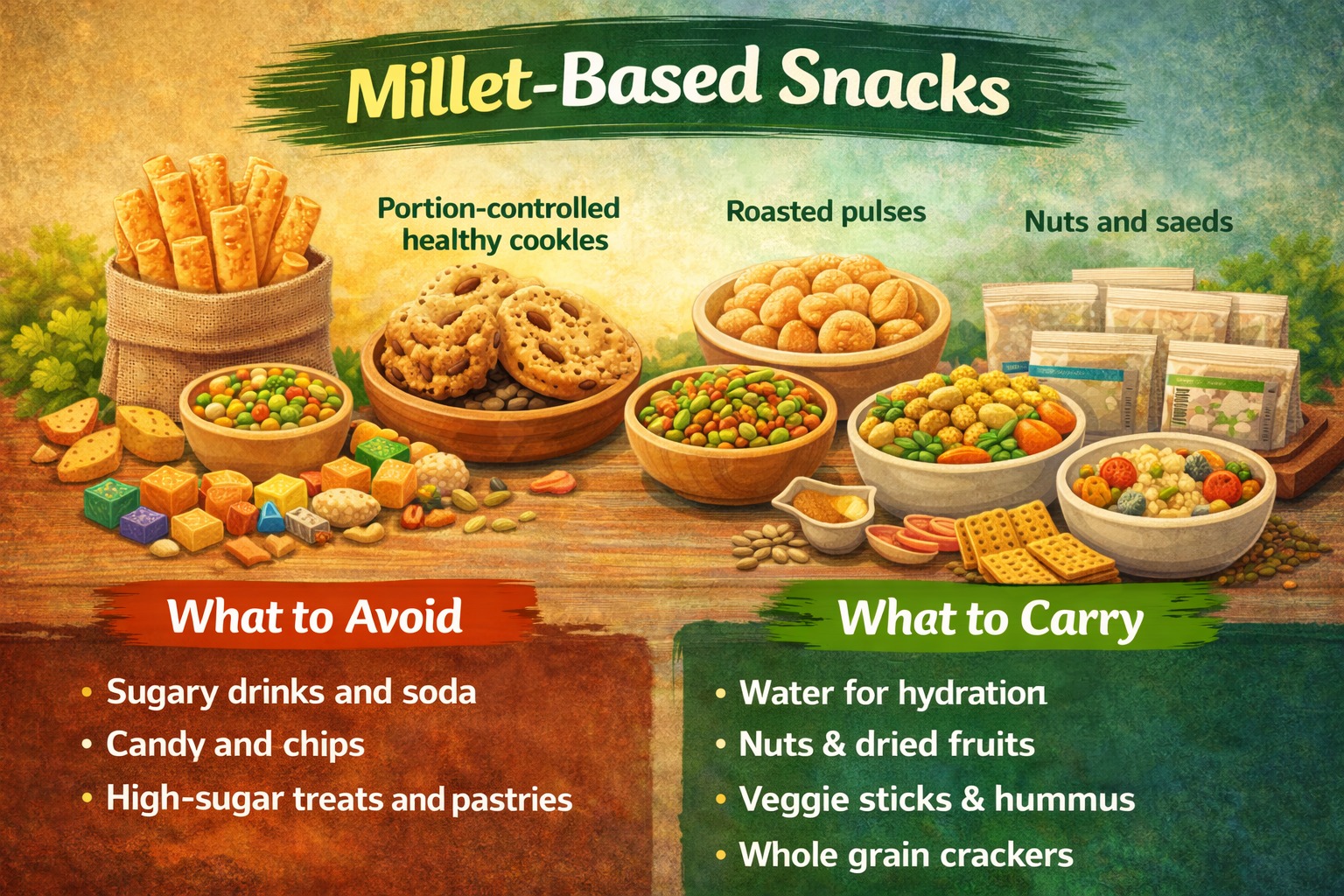
Best Snacks to Carry While Traveling
- Baked millet savouries
- Portion-controlled healthy cookies
- Roasted pulses
- Nuts and seeds
- Green gram–based snacks
- Breakfast premix portions for hotel stays
Millet-based snacks are particularly useful because they:
- Provide fiber
- Release energy steadily
- Avoid digestive heaviness
Hydration Strategy During Travel
Many people confuse thirst with hunger.
Tips:
- Drink water every 1–2 hours
- Avoid excessive caffeine
- Add lemon water for digestion
Travel Snacking for Children
Children get cranky when hungry. Carrying nutritious snacks prevents:
- Tantrums
- Sugar crashes
- Reliance on junk food
Travel Snacking for Diabetics
Choose:
- Low-GI snacks
- Fiber-rich options
- Controlled portions
Avoid:
- Sugary airport desserts
- Refined flour items
Smart Travel Eating Schedule
- Light breakfast
- Snack every 3–4 hours
- Avoid very heavy meals
- Eat smaller portions more frequently
Final Thoughts
Travel should create memories — not digestive discomfort.
Planning your snacks in advance:
- Protects energy
- Maintains gut health
- Prevents overeating
Nutramore encourages travel that nourishes, not exhausts.