
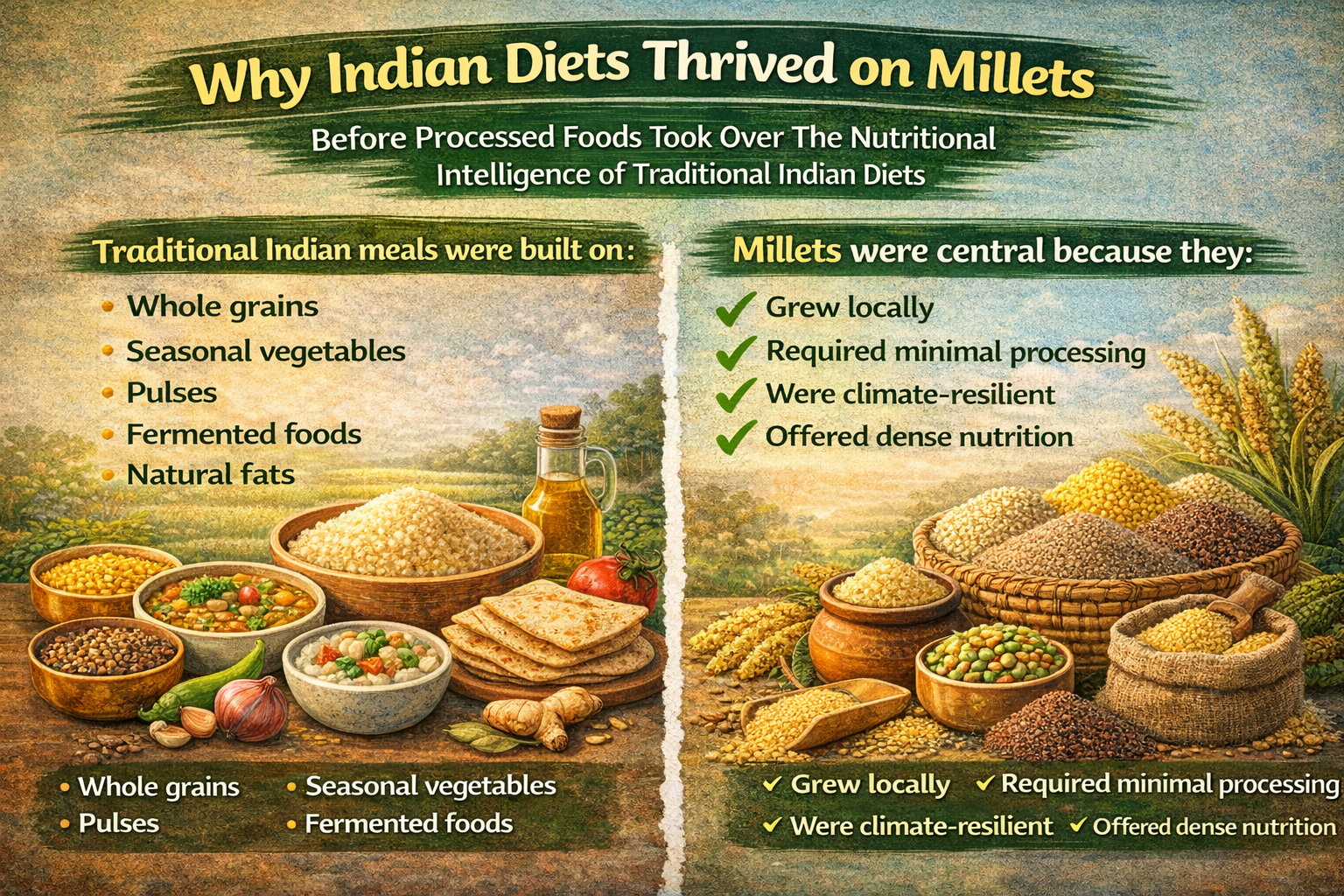
Before supermarkets were filled with refined flour snacks, protein bars, and packaged cereals, Indian households relied on something far simpler — millets and pulses.
For centuries, millets like ragi, jowar, bajra, and little millet were staple grains across India. From rural villages to royal kitchens, these grains nourished generations with strength, resilience, and longevity.
So what changed?
The shift toward refined wheat, polished rice, and ultra-processed snacks has altered not only taste preferences — but metabolic health itself.
Let’s understand why Indian diets once thrived on millets — and why returning to them may be one of the smartest health decisions today.
The Nutritional Intelligence of Traditional Indian Diets
Traditional Indian meals were built on:
- Whole grains
- Seasonal vegetables
- Pulses
- Fermented foods
- Natural fats
Millets were central because they:
✔ Grew locally
✔ Required minimal processing
✔ Were climate-resilient
✔ Offered dense nutrition
Unlike refined wheat, millets were consumed whole — retaining fiber, minerals, and antioxidants.
What Made Millets Superior to Refined Grains?
1. High Fiber Content
Millets contain significantly more fiber than refined flour. Fiber:
- Improves digestion
- Slows glucose absorption
- Supports gut bacteria
2. Natural Mineral Density
Millets are rich in:
- Calcium (especially ragi)
- Iron
- Magnesium
- Phosphorus
These minerals are often stripped away during grain polishing.
3. Lower Glycemic Impact
Millets digest slowly, preventing rapid blood sugar spikes.
The Shift to Refined Foods
Post-industrialization, convenience began replacing tradition.
Refined flour became popular because:
- It had longer shelf life
- It was softer and lighter
- It suited mass production
However, refining removed:
- Bran (fiber)
- Germ (healthy fats & vitamins)
- Micronutrients
This led to increased cases of:
- Diabetes
- Obesity
- Digestive disorders
Why Modern Lifestyles Need Millets Even More
Today’s challenges include:
- Sedentary work
- High stress
- Irregular meal timing
- Increased sugar consumption
Millets help counter these issues by:
- Stabilizing energy
- Supporting metabolism
- Improving gut health
Bringing Millets Back — The Practical Way
Reintroducing millets doesn’t mean changing everything overnight.
You can:
- Replace refined snacks with millet-based options
- Include millet breakfast items
- Choose baked millet snacks over fried foods
Nutramore’s philosophy is built around reviving this traditional wisdom in modern, convenient formats.
Final Thoughts
India once thrived on foods that were locally grown, minimally processed, and nutritionally dense.
Returning to millets isn’t a trend — it’s a return to balance.