For decades, wheat has dominated modern diets. From bread and biscuits to noodles and pasta, wheat-based foods are everywhere. At the same time, traditional grains like millets — once a staple in Indian households — gradually disappeared from daily meals.
But as health concerns like obesity, diabetes, digestive disorders, and food intolerances rise, many people are asking an important question:
Are millets actually better than wheat for digestion and weight management?
The answer is not about demonizing wheat but understanding how modern processing and consumption patterns have changed the nutritional landscape.
Let’s explore how these two grains compare and why millets are making a strong comeback in health-conscious diets.
Understanding Wheat in Modern Diets
Wheat itself is not inherently unhealthy. Whole wheat contains fiber, vitamins, and minerals. However, the majority of wheat consumed today is refined wheat, commonly known as maida.
Refining wheat removes:
- Bran (fiber-rich outer layer)
- Germ (nutrient-dense core)
What remains is mostly starch, which digests quickly and raises blood sugar levels.
This is why foods made from refined wheat — such as biscuits, bakery items, and instant noodles — provide calories but very little nutrition.
Over time, high consumption of refined wheat products may contribute to:
- Blood sugar spikes
- Increased hunger
- Weight gain
- Poor digestion
Why Digestion Matters More Than Ever
Digestive health has become a growing concern in modern lifestyles. Long sitting hours, irregular meals, stress, and low fiber intake all place pressure on the digestive system.
A healthy digestive system requires foods that:
- Move smoothly through the gut
- Feed beneficial bacteria
- Prevent constipation
- Provide steady energy
This is where the difference between wheat and millets becomes clearer.
How Millets Support Better Digestion
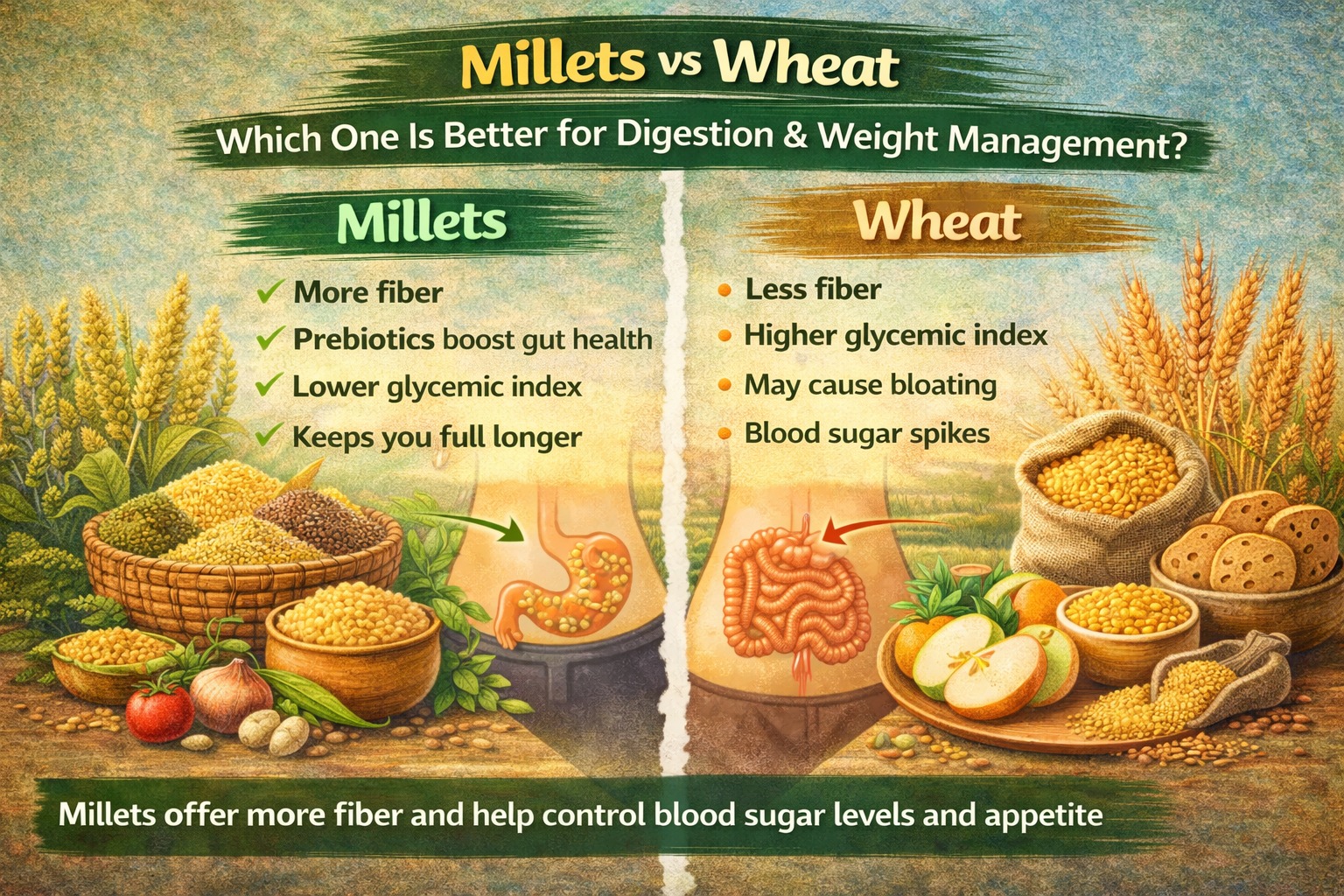
Millets are naturally rich in dietary fiber and resistant starch. These nutrients support digestion in several ways.
1. Improved Gut Movement
Fiber adds bulk to stool, helping prevent constipation and maintaining healthy bowel movements.
2. Support for Gut Microbiome
Millets act as prebiotic foods, feeding beneficial gut bacteria that support immunity and metabolism.
3. Slower Digestion
Unlike refined wheat, millets digest slowly, preventing sudden blood sugar spikes and crashes.
The Role of Gluten in Digestive Sensitivity
Wheat contains gluten, a protein that provides elasticity to dough. While gluten is harmless for most people, excessive consumption — especially in refined forms — may cause digestive discomfort for some individuals.
Common symptoms include:
- Bloating
- Gas
- Heaviness after meals
Millets are naturally gluten-free, making them easier to digest for people with gluten sensitivity or digestive issues.
Weight Management: Wheat vs Millets
Weight management depends largely on how foods influence hunger and metabolism.
Wheat-Based Snacks
Refined wheat foods are quickly digested, causing rapid spikes in blood sugar followed by sudden drops. These crashes increase hunger and cravings, leading to overeating.
Millet-Based Foods
Millets provide slow-releasing carbohydrates and fiber that promote satiety. This helps control appetite and maintain energy levels for longer periods.
Research shows that diets rich in whole grains and fiber improve weight management outcomes compared to refined grain diets.
Nutritional Advantages of Millets
Millets provide a wide range of nutrients, including:
- Iron for oxygen transport
- Magnesium for muscle and nerve function
- Calcium for bone strength
- Antioxidants that help fight inflammation
For example:
- Ragi is one of the richest plant sources of calcium.
- Bajra contains significant iron content.
- Jowar is high in fiber and antioxidants.
These nutrients contribute to better metabolic health over time.
Practical Ways to Replace Wheat with Millets
Switching completely overnight is not necessary. Small changes can make a big difference.
You can start by:
- Replacing wheat-based snacks with millet-based alternatives
- Including millet breakfast options once or twice a week
- Choosing baked millet snacks instead of fried wheat products
These gradual adjustments help the body adapt while improving nutritional intake.
Frequently Asked Questions
Is wheat completely unhealthy?
No. Whole wheat can be part of a balanced diet. The problem arises when refined wheat dominates daily meals.
Are millets safe for daily consumption?
Yes, when consumed in balanced portions alongside other whole foods.
Can millets help with bloating and digestion issues?
For many people, increasing fiber intake from millets improves digestive comfort.
Final Thoughts
Both wheat and millets have their place in traditional diets, but modern processing has significantly reduced the nutritional value of wheat-based foods.
Millets offer a natural alternative that supports digestion, improves satiety, and contributes to better metabolic health.
Reintroducing millets into everyday meals is less about following a trend and more about rediscovering a nutritional tradition that has supported Indian diets for generations.