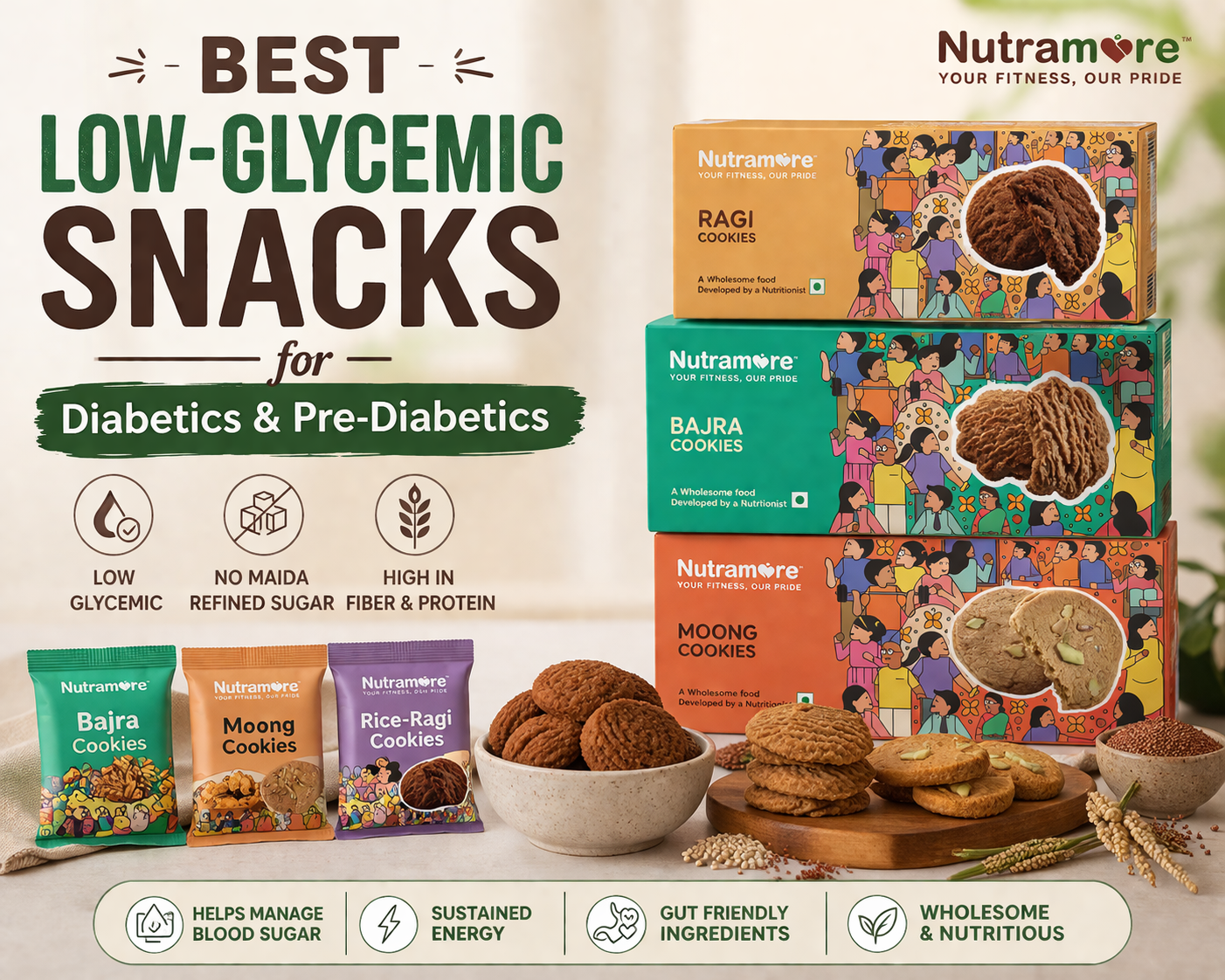
For someone managing diabetes or pre-diabetes, snacking can feel like navigating a minefield. Everything seems to spike blood sugar. Everything comes with a warning. The advice — avoid sugar, avoid carbs, avoid this, avoid that — tells you what not to eat but rarely gives a clear, practical picture of what you actually can eat between meals without undoing the careful management you maintain at main meals.
This blog is the clear picture.
It explains the science of blood sugar management as it specifically applies to snacking, identifies the nutrients and food properties that make a snack genuinely safe and beneficial for diabetics and pre-diabetics, and gives you a practical, specific, and genuinely enjoyable set of snacking options built around India's most powerful low-glycemic foods — millets and pulses.
Because snacking with diabetes does not have to mean rice cakes and boredom. It means understanding what your body needs between meals and choosing food that delivers exactly that.
Why Snacking Matters More, Not Less, for Diabetics
A common piece of advice given to people managing diabetes is to eat fewer, larger meals and avoid snacking altogether. The reasoning is intuitive — fewer eating occasions mean fewer blood sugar events. But this advice, while superficially logical, is often counterproductive in practice.
Here is what actually happens when a diabetic goes too long between meals.
Blood sugar drops gradually after a meal as cells use the available glucose. In a person with healthy insulin function, this drop is smooth and controlled. In a person with diabetes or insulin resistance, blood sugar regulation is impaired — the drop may be steeper, or the person may overcorrect and arrive at the next meal with severely low blood sugar. This triggers intense hunger, cravings for high-glycemic foods, and the tendency to overeat rapidly at the next meal — producing a larger, harder-to-manage blood sugar spike than a well-timed snack would have caused.
In contrast, a small, low-glycemic, protein-and-fiber-rich snack between meals keeps blood sugar from dropping too far, prevents the hunger that leads to poor meal choices, moderates the glycemic impact of the subsequent meal by slowing gastric emptying, and — crucially — does not itself cause a significant blood sugar spike if correctly chosen.
Well-timed, well-chosen snacks are not the enemy of blood sugar management. Poorly chosen snacks are. The distinction is entirely about what is in the snack — and understanding what that means practically is the whole point of this guide.
The Glycemic Index vs the Glycemic Load: What Actually Matters
Most discussions of snacking for diabetics focus on the Glycemic Index (GI) — a measure of how rapidly a food raises blood glucose compared to pure glucose. Foods below 55 GI are considered low-glycemic, 56–69 are medium, and 70 and above are high.
The GI is useful but incomplete. It measures how fast blood sugar rises from a standard 50g portion of carbohydrate — which is not the same as how much blood sugar rises from a realistic serving of that food.
This is where Glycemic Load (GL) becomes more useful. GL is calculated by multiplying the GI of a food by the actual grams of carbohydrate in a standard serving, then dividing by 100.
GL = (GI × grams of carbohydrate in serving) ÷ 100
A watermelon, for example, has a GI of 72 — which sounds alarming. But a standard serving of watermelon contains only about 6g of carbohydrate, giving it a GL of approximately 4 — very low and perfectly acceptable for diabetics. Conversely, a product with a moderate GI of 60 but a large serving size containing 40g of carbohydrate has a GL of 24 — quite high, despite the moderate GI.
For snacking purposes, the most important principle is to choose snacks that are simultaneously low-GI and contain a small-to-moderate absolute carbohydrate load — keeping the glycemic load per snack occasion below 10 wherever possible, which is the threshold that produces a clinically insignificant blood sugar response in most diabetics.
Whole millet-based snacks naturally achieve this through their combination of low GI (55–65 range for whole jowar, bajra, and ragi), high fiber content (which reduces net carbohydrate absorption), and moderate serving sizes that keep absolute carbohydrate load manageable.
The Four Properties of a Safe Snack for Diabetics
Not all low-GI foods make good diabetic snacks. A snack that is safe and beneficial for blood sugar management consistently demonstrates four properties:
Low or medium glycemic index. The carbohydrate source must be inherently slow-releasing — whole grain, pulse-based, or fiber-rich. Refined flour, white rice, and any product with sugar in the first three ingredients fails this criterion regardless of portion size.
Meaningful fiber content. Fiber — particularly soluble fiber and resistant starch — directly reduces the glycemic impact of any food it accompanies by slowing glucose absorption at multiple points in the digestive process. A snack with less than 1g of fiber per serving provides essentially no glycemic protection. A snack with 3–5g or more per serving meaningfully flattens the post-meal glucose curve.
Adequate protein. Protein does not raise blood sugar. It stimulates GLP-1 — the gut hormone that enhances insulin sensitivity and promotes satiety. And it slows gastric emptying, reducing the rate at which carbohydrates reach the small intestine and enter the bloodstream. Every snack for a diabetic or pre-diabetic should contain at least 4–6g of protein.
No refined sugar or refined flour. Even small amounts of refined sugar or maida can trigger significant blood sugar spikes in insulin-resistant individuals. Products sweetened with jaggery — which has a lower GI and contains chromium that supports insulin sensitivity — are meaningfully safer than those sweetened with refined sugar, though still subject to portion awareness.
The Best Millets for Blood Sugar Management — and Why
Not all millets are equal from a blood sugar management standpoint. Each has a distinct nutritional profile and glycemic characteristic that makes it more or less suited to specific diabetic snacking situations.
Jowar (Sorghum) — The Primary Diabetic Grain
Jowar has one of the most extensively studied glycemic profiles of any Indian grain. Its glycemic index sits between 55 and 62 — firmly in the low range — and its glycemic impact is further reduced by two specific properties that make it exceptional for diabetic management.
First, jowar contains significant quantities of resistant starch — a carbohydrate that behaves like fiber, bypassing the small intestine entirely and fermenting in the colon. This dramatically reduces the net digestible carbohydrate content compared to what the total carbohydrate number on a label suggests. Second, jowar contains polyphenols — particularly tannins and anthocyanins — that directly inhibit the enzymes responsible for starch digestion (amylase and glucosidase). This is essentially a natural version of the mechanism used by the diabetes medication acarbose — slowing carbohydrate digestion and flattening the post-meal glucose curve.
Research published in the Journal of the Academy of Nutrition and Dietetics has demonstrated that replacing refined wheat with jowar in equivalent meals reduces postprandial glucose response by approximately 25–30% in people with type 2 diabetes.
Nutramore's Jowar Coconut Cookies and Jowar Chocolate Cookies use whole jowar flour as their primary base — retaining all of the resistant starch, polyphenols, and fiber that make jowar so valuable for blood sugar management. Sweetened only with jaggery and baked rather than fried, they represent one of the most genuinely diabetic-appropriate cookie formats available in Indian snacking.
For a more substantial jowar-based snack, Nutramore's Jowar Upma Premix and Jowar Chilla Mix deliver 30g of complete protein alongside jowar's low-GI complex carbohydrates — making them genuinely outstanding choices for diabetics who need a substantial between-meal option or a quick, blood-sugar-safe breakfast.
Bajra (Pearl Millet) — The Insulin Sensitivity Supporter
Bajra has a GI of approximately 54 — the lowest among common Indian millets — alongside an exceptionally high magnesium content that gives it a specific advantage for people with insulin resistance.
Magnesium is a cofactor for over 300 enzymatic reactions in the body, including the insulin receptor signalling pathways that govern how efficiently cells respond to insulin. Population studies consistently show an inverse relationship between magnesium intake and type 2 diabetes risk — people with the highest magnesium intake have approximately 15–23% lower risk of developing diabetes than those with the lowest intake. In people who already have insulin resistance, magnesium supplementation has shown clinically significant improvements in insulin sensitivity — and bajra is one of the richest dietary sources of magnesium available in Indian cuisine.
Bajra also contains significant quantities of beta-glucan — a soluble fiber that is one of the most potent natural blood-sugar-moderating substances identified in nutritional research. Beta-glucan forms a thick gel in the digestive tract that dramatically slows glucose absorption and has been shown in clinical studies to reduce postprandial glucose spikes by 20–40%.
Nutramore's Bajra Cookies and Bajra Moong Chocolate Cookies bring bajra's magnesium and beta-glucan to a snack format that is genuinely enjoyable and practically easy to incorporate into a daily routine. The moong component of the Bajra Moong cookies adds pulse protein — further moderating the glycemic response and delivering a complete amino acid profile that supports the insulin signalling machinery.
Ragi (Finger Millet) — The Postprandial Glucose Moderator
Ragi is perhaps the most studied millet specifically in the context of diabetes management. Its GI of approximately 54–68 varies depending on preparation method, but its glycemic impact consistently outperforms refined wheat. More importantly, ragi contains several specific compounds with documented anti-diabetic mechanisms.
Ragi is rich in polyphenols — including ferulic acid, catechin, and epicatechin — that inhibit alpha-amylase and alpha-glucosidase, the digestive enzymes that break down starch into absorbable glucose. These polyphenols are natural starch blockers, slowing carbohydrate digestion in a way that directly reduces postprandial glucose elevation.
Ragi also contains a significant amount of resistant starch and a particularly high proportion of slowly digestible starch — meaning even the starch that is eventually digested is released into the bloodstream gradually rather than rapidly.
Studies at the University of Agricultural Sciences in Bangalore specifically examining ragi-based foods in type 2 diabetic subjects showed postprandial glucose responses 35–50% lower than equivalent wheat-based foods — a clinically meaningful difference for anyone managing blood sugar.
Nutramore's Ragi Chocolate Cookies and Rice Ragi Cookies make ragi's anti-diabetic properties accessible in a pleasant, consistent snack format. The chocolate variant is particularly valuable because it satisfies the sweet craving that many diabetics struggle with — without the refined sugar and refined flour that make conventional sweet snacks dangerous for blood sugar.
The Role of Pulses in Diabetic Snacking
If millets are the ideal carbohydrate base for diabetic snacking, pulses are the ideal protein complement — and the scientific case for pulse-based foods in diabetes management is among the strongest in nutritional research.
Pulses — moong, chana, green gram, all varieties of dal — have glycemic indices ranging from 25 to 45, making them among the lowest-GI foods available in any cuisine. When combined with millets, they lower the overall glycemic load of the combined food through two mechanisms: the pulse's own low GI blends down the average GI of the combination, and the protein from the pulse slows gastric emptying and glucose absorption from the millet component.
The Canadian Diabetes Association, the American Diabetes Association, and the Indian Council of Medical Research all specifically recommend pulse consumption as a core dietary strategy for blood sugar management in people with diabetes and pre-diabetes.
Beyond glycemic index, pulses provide a specific category of resistant starch — type RS2 — that is particularly effective at feeding Bifidobacterium and Lactobacillus species in the gut microbiome. These bacteria produce butyrate, which improves insulin sensitivity at the cellular level — meaning regular pulse consumption gradually improves the body's underlying response to insulin, not just its immediate blood sugar response to a meal.
Nutramore's Baked Protein Sticks are a pure dal-based snack delivering 18g of protein per 75g serving — an exceptionally protein-dense option for diabetics who need a substantial savoury snack that creates minimal blood sugar impact. The Green-Gram Upma Premix combines green gram's ultra-low GI with 32g of protein per serving, making it possibly the single most blood-sugar-safe substantial snack option available in Nutramore's range.
Snacking Timing: When You Eat Matters as Much as What You Eat
For diabetics and pre-diabetics, snack timing is not a minor consideration — it is part of the blood sugar management strategy.
The mid-morning snack (10–11am) is typically the most important. After breakfast, blood sugar rises and then begins to fall. Without a mid-morning snack, blood sugar may drop significantly before lunch — increasing hunger, reducing impulse control around food choices, and setting up a larger lunch-time glucose spike. A small, low-GI snack at this point prevents the drop and moderates the subsequent meal response.
The mid-afternoon snack (3–4pm) addresses the post-lunch glucose dip that many diabetics experience between 2 and 4pm — a period when insulin from the lunch meal has cleared but the next meal is still hours away. This dip can trigger fatigue, brain fog, and cravings for high-glycemic foods. A protein-and-fiber-rich snack at this window prevents it.
The pre-dinner snack (6–7pm), if needed, should be light and very low-glycemic — the goal is to prevent extreme pre-dinner hunger without providing a glucose load that will compound with the dinner spike. A small serving of Millet Methi Crispies or two or three Bajra Cookies with warm water or a non-sweetened beverage achieves this without meaningful blood sugar impact.
What to avoid: Snacking within 1.5–2 hours of a main meal — when insulin from the previous meal is still elevated and adding more glucose input creates compounding glycemic load. Late-night snacking after 9pm — when insulin sensitivity is naturally lowest and any carbohydrate is more likely to be stored as fat.
Special Considerations: Pre-Diabetes vs Established Diabetes
Pre-diabetes and established type 2 diabetes are on the same spectrum but at different points, and the snacking strategy differs slightly between them.
For pre-diabetics: The primary goal is prevention — specifically, preventing the progression to established diabetes by reducing the frequency and severity of blood sugar spikes that drive insulin resistance. At this stage, the metabolic system retains significant reserve capacity, and consistent dietary improvement can meaningfully reverse insulin resistance and restore normal blood sugar regulation. The snacking strategy is therefore slightly more flexible — the focus is on consistently replacing high-GI snacks with low-GI alternatives, building fiber and protein into every snack occasion, and establishing dietary habits that become sustainable baselines. All Nutramore millet-based snacks are appropriate throughout the day for pre-diabetics, with particular emphasis on jowar and bajra-based options for their resistant starch and magnesium content.
For established type 2 diabetics: The metabolic reserve is more limited and the consequences of spikes more immediate. The snacking strategy becomes more precise — smaller portions at each snack occasion, stricter avoidance of even moderate-GI foods in isolation, consistent protein pairing at every snack, and more careful attention to snack timing. The Breakfast Premix Combo — combining Green-Gram Upma, Jowar Upma, and Jowar Chilla Mix — provides a week's worth of genuinely diabetes-safe morning snack or breakfast rotation in a single purchase, with each option delivering high protein, low GI, and zero refined ingredients.
For those on medication: Consistent snack timing is particularly important for diabetics on insulin or sulfonylureas — medications that lower blood sugar regardless of food intake. Skipping snacks at usual times can lead to hypoglycaemia. Regular, reliable, low-glycemic snacks at consistent times help maintain the stable blood sugar environment that these medications work most effectively in.
What to Avoid: The Snacks Most Dangerous for Diabetics
Being specific about what to avoid is as important as recommending what to eat. These are the snack categories that most consistently derail blood sugar management in diabetics and pre-diabetics:
"Sugar-free" packaged products — many of these replace refined sugar with maltitol or other sugar alcohols that still raise blood sugar, or with refined flour that spikes independently. Always check the ingredient list for maida and the GI of any sweetener used.
Packaged fruit juices and flavoured drinks — even 100% fruit juice is a concentrated sugar solution with no fiber — it has a glycemic impact approaching that of a soft drink. Whole fruit with its fiber intact is categorically different.
White rice-based snacks — puffed rice, rice cakes, and similar products have a GI of 70–80, making them among the most blood-sugar-dangerous snack foods available despite their light, seemingly innocent texture.
Flavoured yoghurt — the live cultures in plain curd are genuinely beneficial for the gut microbiome and insulin sensitivity. Flavoured yoghurt adds refined sugar that negates these benefits entirely.
Protein bars marketed to diabetics — many contain refined sugar, maltodextrin (a high-GI starch), and isolated protein that lacks the fiber and micronutrient co-benefits of whole food protein sources. Read the ingredient list of any "diabetic-friendly" packaged product with particular care.
Tea biscuits and marie biscuits — consistently described as "light" and assumed to be safe, these are maida-and-sugar products with a GI of 65–75. They are not a safe snack for diabetics under any description.
A Practical Week of Low-Glycemic Diabetic Snacking
To make everything concrete — here is a practical, specific snacking schedule for a week of diabetic-safe snacking, built entirely from genuinely low-GI, high-fiber, protein-rich options:
Monday: Mid-morning — Jowar Chilla (half serving) with curd. Afternoon — Baked Protein Sticks + cucumber slices.
Tuesday: Mid-morning — Bajra Cookies (3 pieces) + a small handful of almonds. Afternoon — Millet Methi Crispies + warm buttermilk.
Wednesday: Mid-morning — Green-Gram Upma (half serving). Afternoon — Jowar Chocolate Cookies (2–3 pieces) + a small piece of guava.
Thursday: Mid-morning — Jowar Upma (half serving). Afternoon — Bajra Moong Chocolate Cookies (2–3 pieces) + roasted chana.
Friday: Mid-morning — Baked Protein Sticks + a small apple. Afternoon — Ragi Chocolate Cookies (2–3 pieces) + a glass of plain curd.
Saturday: Mid-morning — Jowar Chilla with green chutney. Afternoon — Millet Methi Crispies + a handful of walnuts.
Sunday: Mid-morning — Green-Gram Upma with a squeeze of lime. Afternoon — Rice Ragi Cookies (2–3 pieces) + plain curd.
This rotation provides genuine variety across the week, covers all snack occasions with low-GI, protein-containing, fiber-rich options, and requires minimal preparation — most options are either ready-to-eat or prepare in under 10 minutes.
Final Thoughts
Managing diabetes and pre-diabetes through diet is not about eating nothing between meals. It is about eating the right things between meals — foods that deliver sustained energy without blood sugar spikes, protein that supports insulin sensitivity, fiber that slows glucose absorption, and micronutrients like magnesium and polyphenols that address the underlying mechanisms of insulin resistance.
Millets and pulses — the foundation of traditional Indian nutrition — deliver all of these properties simultaneously. Jowar, bajra, and ragi are among the lowest-GI whole grains available in any cuisine. Green gram, moong, and dal are among the most protein-dense, lowest-GI foods on the planet. Together, in well-formulated snack formats built on real ingredients and jaggery sweetening, they represent genuinely excellent tools for blood sugar management — not as a supplement or a medical food, but as ordinary, delicious snacking that happens to be right for the metabolic situation.
The path to better blood sugar through snacking is not complicated. Replace the refined with the whole. Add protein to every snack occasion. Choose fiber over convenience. And build a snack rotation that you genuinely enjoy — because consistency is the most important ingredient in any long-term dietary strategy.
Explore Nutramore's full range of diabetic-friendly millet snacks at nutramore.in/our-products