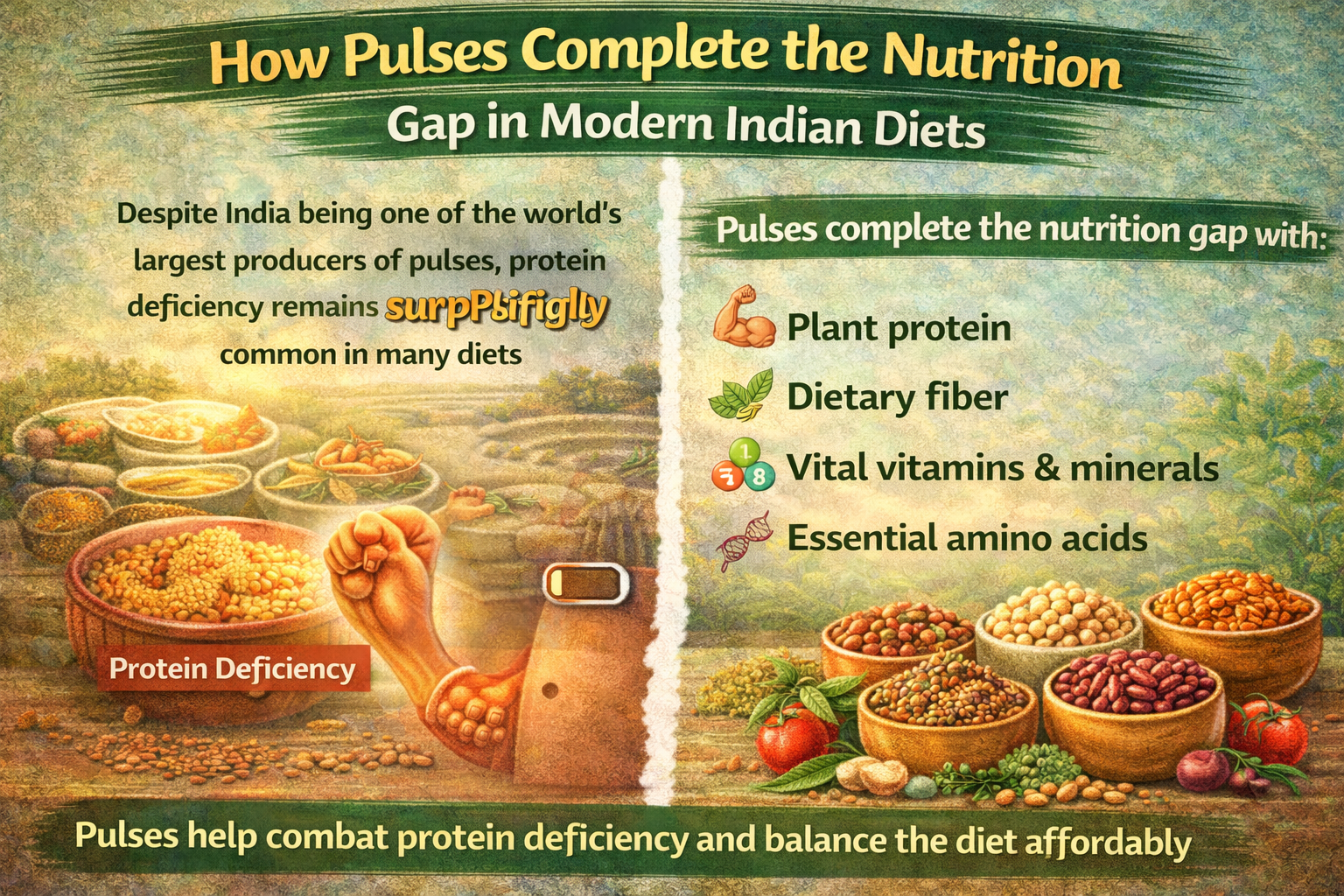
Despite India being one of the world’s largest producers of pulses, protein deficiency remains surprisingly common in many diets.
Urban lifestyles have shifted toward convenience foods, refined grains, and quick snacks. While these foods provide calories, they often lack essential nutrients, especially protein.
Pulses — including lentils, chickpeas, and green gram — offer a powerful solution to this growing nutritional gap.
Why Protein Intake Is Often Insufficient
Many people assume their diets contain enough protein simply because they eat regularly. However, many meals consist mainly of carbohydrates such as rice, bread, or refined snacks.
Without adequate protein, the body may experience:
- Fatigue and low energy
- Slow muscle recovery
- Reduced immunity
- Difficulty maintaining healthy weight
For vegetarians, ensuring sufficient protein intake becomes even more important.
Nutritional Strength of Pulses
Pulses are nutritional powerhouses that provide several essential nutrients.
High Plant-Based Protein
Pulses provide substantial protein while remaining low in fat.
Rich in Fiber
Dietary fiber supports digestion and promotes satiety.
Essential Micronutrients
Pulses supply iron, folate, magnesium, and potassium.
These nutrients support energy production, blood health, and nerve function.
Pulses and Sustainable Nutrition
Beyond personal health, pulses are also environmentally sustainable.
They require:
- Less water than many crops
- Minimal fertilizers
- Nitrogen-fixing properties that improve soil quality
This makes pulses an important food for both human health and environmental sustainability.
The Protein Challenge in Vegetarian Diets
Unlike animal proteins, most plant proteins lack one or more essential amino acids. This means they are considered incomplete proteins when eaten alone.
However, combining plant foods strategically can solve this issue.
Traditional Indian diets have practiced this approach for centuries.