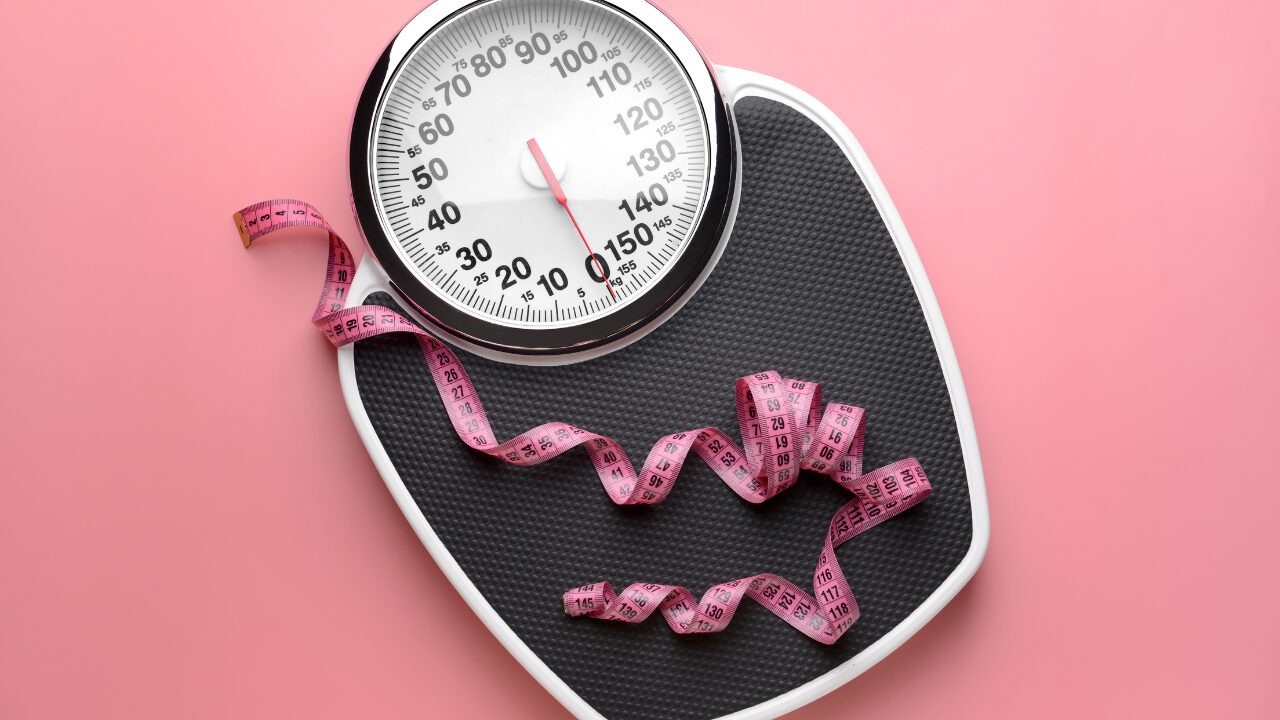
Two people eat the same meal. One stores more fat from it. One feels fuller for longer. One has more stable blood sugar. One experiences more cravings. The differences are real and consistent — not explained by willpower, not explained by metabolism in the conventional sense, and not fully explained by the calorie content of the meal.
Increasingly, research points to the gut microbiome as a significant determinant of these differences. The community of trillions of microorganisms living in the human digestive tract — primarily in the colon — does not merely digest food. It produces signalling molecules that influence hunger, satiety, fat storage, inflammation, insulin sensitivity, and the neurochemical environment that governs food preference and reward.
Understanding the gut-weight connection is not a fringe nutritional claim. It is a rapidly developing and robustly supported field of metabolic science — with direct, practical implications for what to eat and why.
The Microbiome as a Metabolic Organ
The human gut microbiome contains approximately 100 trillion microorganisms representing thousands of species — collectively encoding more metabolic genes than the entire human genome. In nutritional terms, the microbiome functions as an additional metabolic organ: digesting compounds that human enzymes cannot break down, producing metabolites that enter the bloodstream and influence physiology at sites distant from the gut, and sending signals to the brain via the gut-brain axis that influence appetite, mood, and food-seeking behaviour.
The microbiome's composition — which species are dominant, which are sparse, how diverse the community is — is not fixed. It changes in response to diet over days to weeks. And the metabolic consequences of these compositional shifts are now well-documented.
The Firmicutes-Bacteroidetes ratio is one of the most studied microbiome markers in obesity research. Multiple studies — starting with the landmark Turnbaugh et al. work at Washington University — have demonstrated that obese subjects consistently show a higher ratio of Firmicutes to Bacteroidetes compared to lean subjects, and that this ratio shifts toward a leaner profile with low-GI, high-fiber dietary change. Firmicutes species are more efficient at extracting energy from food — a survival advantage in food-scarce environments, but a fat-accumulation driver in caloric abundance.
Germ-free mouse experiments provide the most direct evidence that the microbiome influences weight independent of caloric intake. Germ-free mice — raised in a sterile environment without any gut bacteria — are dramatically leaner than conventional mice on the same diet, and gain weight rapidly when colonised with microbiomes from obese mice. The microbiome is not a bystander in weight regulation — it is an active participant.
Microbiome transplant studies in humans are emerging but consistent with this picture — recipients of microbiome transfers from lean donors show improvements in insulin sensitivity within six weeks that are attributable to the transferred microbiome, not to caloric change.
How the Microbiome Influences Weight: The Specific Mechanisms
Mechanism 1: Caloric Extraction Efficiency
Different gut bacteria have different capacities to extract calories from food — particularly from dietary fiber, which human digestive enzymes cannot break down but which some bacterial species can ferment into short-chain fatty acids (SCFAs) that are absorbed as energy.
The SCFA production from fiber fermentation represents a variable caloric contribution from fiber-containing foods — higher in people with more Firmicutes species capable of fiber fermentation, lower in people with more Bacteroidetes-dominant microbiomes. This explains a portion of the individual variation in caloric extraction from the same food.
Importantly, not all caloric extraction from fiber is metabolically damaging — the SCFAs produced include butyrate, which has documented anti-obesity, anti-inflammatory, and insulin-sensitising effects that are metabolically beneficial. The concern is with Firmicutes species that extract energy primarily as acetate and propionate from less healthy substrates.
Mechanism 2: Short-Chain Fatty Acid Signalling
Butyrate, propionate, and acetate — the primary SCFAs produced from dietary fiber fermentation by beneficial gut bacteria — have documented effects on weight regulation through multiple signalling pathways.
Butyrate activates the PPAR-gamma receptor in adipocytes in a way that promotes fat oxidation rather than fat storage. It directly stimulates GLP-1 secretion from intestinal L-cells — the same satiety hormone pathway that GLP-1 receptor agonist medications target. And it crosses the blood-brain barrier to directly modulate appetite-regulating neurons in the hypothalamus, suppressing the AgRP neurons that drive hunger.
Propionate is converted in the liver to glucose precursors that sustain blood glucose during fasting — reducing the blood glucose drops that drive cortisol and ghrelin surges. It also directly stimulates PYY secretion from gut cells, adding a second satiety hormone pathway to the appetite-suppression cascade.
Acetate crosses the blood-brain barrier and directly suppresses AgRP neuron firing — reducing baseline appetite through a neurological pathway that operates independently of the peripheral hormonal mechanisms above.
The practical implication: people whose gut microbiomes produce more SCFAs from dietary fiber — those eating consistently high-fiber, whole-grain, pulse-rich diets — experience greater natural appetite suppression, better blood sugar stability, and more favourable fat storage and oxidation signals than those eating low-fiber, refined diets, independent of caloric intake.
Mechanism 3: Gut Permeability and Systemic Inflammation
A healthy gut lining is a selective barrier — allowing nutrients to pass from the gut lumen into the bloodstream while keeping bacteria, bacterial fragments, and incompletely digested food particles contained within the digestive tract. This selectivity is maintained by tight junction proteins that hold intestinal epithelial cells together.
Gut dysbiosis — a microbiome composition dominated by inflammatory species at the expense of beneficial ones — reduces the production of butyrate that nourishes tight junction maintenance, and produces lipopolysaccharides (LPS) from gram-negative bacterial cell walls that specifically degrade tight junction integrity.
The result is increased intestinal permeability — colloquially called "leaky gut" — through which LPS and other bacterial products enter the bloodstream. LPS in the bloodstream triggers a systemic low-grade inflammatory response — elevating TNF-alpha, IL-6, and CRP — that directly impairs insulin receptor signalling (worsening insulin resistance), promotes visceral fat accumulation (inflammation-driven lipogenesis), and activates the hypothalamic inflammation that disrupts the leptin and insulin signalling at the root of appetite dysregulation.
This inflammation-mediated pathway is increasingly recognised as a primary mechanism linking gut dysbiosis to obesity — and it explains why gut microbiome improvement through dietary fiber produces metabolic improvements that extend far beyond what the caloric contribution of the fiber itself would predict.
Mechanism 4: The Gut-Brain Axis and Food Preference
The gut communicates with the brain through the vagus nerve, through hormonal signalling, and through the serotonergic pathway — approximately 90–95% of serotonin is produced in the gut, influenced by gut bacterial activity. The composition of the gut microbiome influences the serotonin environment that in turn influences mood, reward sensitivity, and food preference.
Documented in both animal and human research, gut bacteria that thrive on refined sugar and refined carbohydrates — certain Proteobacteria and Firmicutes species — generate neurochemical signals that the brain interprets as craving for more of their preferred substrate. The "I can't stop thinking about biscuits" experience is, in part, a signal generated by the bacterial species that biscuits feed — a microbiome-mediated appetite bias toward the foods that sustain it.
Conversely, fiber-feeding Bifidobacterium and Lactobacillus species produce butyrate and SCFA signals associated with satiety and reduced food-reward sensitivity. Building these populations through consistent high-fiber, whole-grain, and pulse-rich eating progressively shifts the neurochemical bias away from refined food craving — which is the mechanism behind the observation, consistent across dietary interventions, that cravings genuinely diminish after 4–8 weeks of high-fiber eating. The shift is not in willpower. It is in microbiome composition.
The Fiber-Microbiome-Weight Connection in Practice
The most direct dietary intervention for improving the gut microbiome in ways that support weight management is dietary fiber — specifically the prebiotic fibers that selectively feed beneficial bacterial species rather than the dysbiosis-promoting ones.
Resistant starch (particularly from jowar and legumes), beta-glucan (from bajra and oats), arabinoxylan (from bran of whole grains), and fructooligosaccharides (from onions, garlic, and legumes) are the prebiotic fibers with the strongest evidence for supporting Bifidobacterium and Lactobacillus populations — the beneficial species whose SCFA production and neurochemical signalling support weight management.
Whole millets and pulses — in snack form — are the most practical delivery vehicle for these prebiotic fibers in the Indian dietary context.
Millet Methi Crispies combine millet's arabinoxylan and resistant starch with fenugreek's galactomannan — one of the most potent prebiotic fibers identified in nutritional research. Baked Protein Sticks from whole dal provide pulse-derived resistant starch alongside protein — the combination that consistently supports the most beneficial microbiome composition in research. Bajra Cookies and Jowar Chocolate Cookies deliver bajra's beta-glucan and jowar's resistant starch — the two most SCFA-productive prebiotic fibers among common Indian grains.
The Probiotic Dimension: What Fermented Foods Add
Prebiotic fiber feeds existing beneficial bacteria. Probiotic foods introduce new beneficial bacteria — or reinforce existing populations — directly from the food.
Traditional Indian fermented foods — dahi (yoghurt), kanji (fermented rice or carrot water), idli, dosa, dhokla, fermented rice preparations — are probiotic foods whose regular consumption maintains the live bacterial populations whose SCFA production and neurochemical signalling support the gut-weight connection.
The daily inclusion of dahi or a fermented food alongside meals — and the weekly inclusion of fermented preparations as meals or snacks — provides both probiotic replenishment and the organic acid environment in the gut that supports beneficial bacterial growth at the expense of dysbiotic species.
The combination of probiotic fermented foods and prebiotic millet-and-pulse-based snacks is the most effective dietary strategy for microbiome improvement — the probiotics introduce or reinforce beneficial bacteria, and the prebiotics sustain and feed them.
Timeline: How Long Does the Gut-Weight Connection Take to Manifest?
Research on microbiome change and metabolic outcomes provides a consistent timeline:
Within 3–5 days: Measurable shifts in gut microbiome composition in response to dietary fiber change — both increase in fiber-feeding Bifidobacterium and decrease in sugar-feeding Proteobacteria populations. These early shifts are associated with reduced bloating and improved stool consistency rather than weight changes.
Within 2–4 weeks: SCFA production is measurably increased. Fasting insulin begins to fall. GLP-1 responsiveness improves. Subjective sugar cravings begin to reduce as the neurochemical signalling from the shifting microbiome changes.
Within 8–12 weeks: Gut permeability markers improve — LPS levels in blood fall, inflammatory cytokines reduce, insulin sensitivity improves by measurable amounts on HOMA-IR. Weight management becomes progressively easier as the appetite dysregulation driven by gut dysbiosis reduces.
Beyond 3 months: The new microbiome composition is more stable — the beneficial species have established themselves sufficiently that occasional dietary lapses do not immediately reverse the composition shift. The metabolic environment supporting weight management has genuinely changed.
This timeline means that the benefits of dietary change for gut-mediated weight management accumulate slowly relative to the changes the scale shows in the early weeks. People who expect immediate weight loss from a gut-health dietary intervention may be discouraged by the relatively modest early progress. People who understand that the mechanism takes weeks to fully activate will maintain the intervention long enough to reach the point where the microbiome shift genuinely changes the metabolic and appetite environment.
Final Thoughts
The gut microbiome is not a secondary consideration in weight management — it is a primary metabolic actor whose composition determines caloric extraction efficiency, SCFA production and signalling, systemic inflammation levels, gut barrier integrity, insulin sensitivity, and the neurochemical environment that governs food craving and appetite.
The dietary intervention that most effectively improves gut microbiome composition in ways that support weight management is precisely the intervention that is already recommended for blood sugar management, PCOS, cardiovascular health, and immune function: high dietary fiber from whole millets and pulses, combined with regular fermented food consumption and the elimination of refined carbohydrates and refined sugar that feed dysbiotic bacterial populations.
The convergence of these recommendations across multiple health domains is not coincidental. It reflects the fundamental role of gut microbiome quality as the metabolic foundation on which most dimensions of metabolic health rest.
Explore Nutramore's gut-health-supporting millet snacks at nutramore.in/our-products