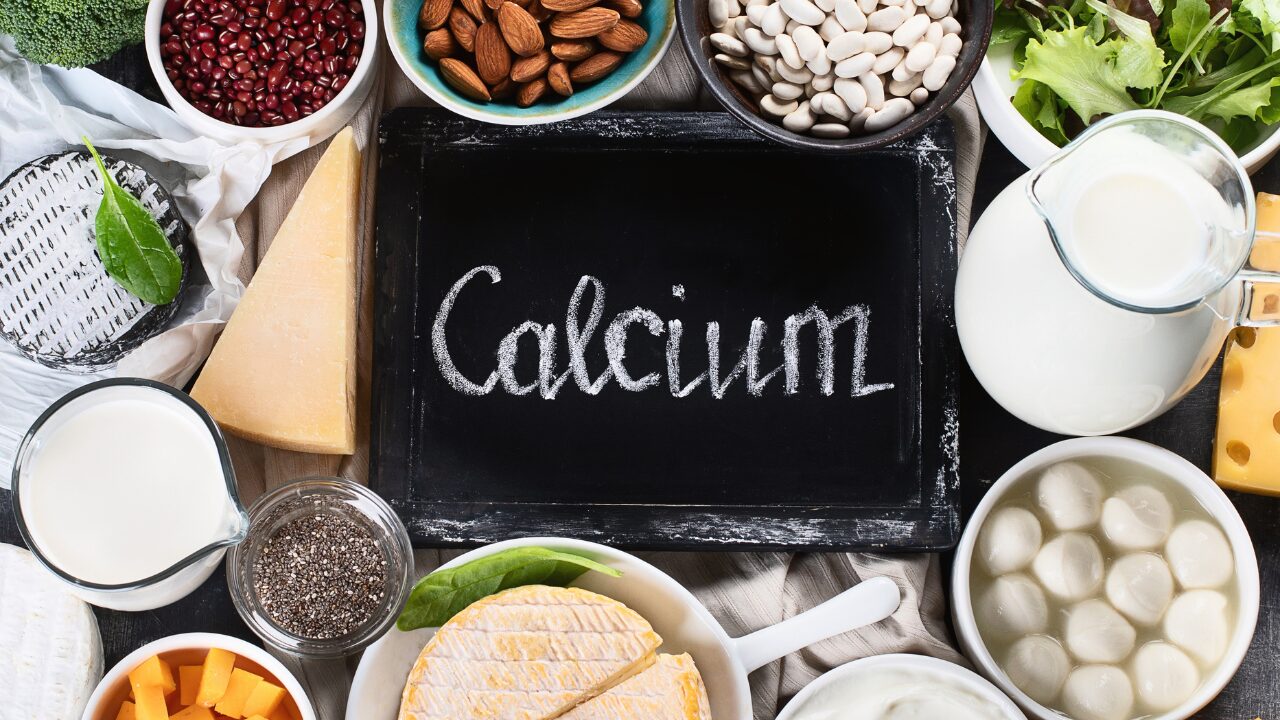
"Drink your milk for strong bones" is one of the most persistent nutritional messages in Indian households. It is not wrong — milk is a genuine calcium source. But it is incomplete in ways that leave a significant portion of Indian women with inadequate calcium despite conscientious dairy consumption.
The incompleteness operates at several levels: many Indian women have some degree of lactose intolerance that limits comfortable dairy consumption. Calcium from dairy exists without the full suite of cofactors — particularly vitamin K2, magnesium, and boron — that direct calcium to bone rather than to soft tissue and blood vessels. And the dairy-centric calcium narrative consistently obscures the fact that India's traditional food culture contains calcium sources that, per gram of food, surpass the calcium density of milk by significant margins.
Ragi, til, moringa, certain dark leafy greens, and almonds are not dairy alternatives in the sense of being inferior substitutes. In some respects they are calcium sources of superior quality — providing calcium alongside the mineral cofactors that support its appropriate utilisation, rather than requiring the consumer to source those cofactors separately.
This blog maps India's best plant-based calcium sources, explains how to maximise absorption from each, and provides a practical framework for building calcium adequacy without relying primarily on dairy.
Why Women's Calcium Needs Are Distinctively High
The recommended daily calcium intake for Indian women varies by life stage:
Adult women (19–50 years): 1,000mg per day. Women over 50 (post-menopausal): 1,200mg per day. Pregnant women: 1,200mg per day. Breastfeeding women: 1,200–1,500mg per day. Adolescent girls (12–18): 1,300mg per day.
The reasons for these elevated requirements are specific. Bone density peaks in the late teens to mid-twenties, and the calcium deposited during adolescence and early adulthood is the primary determinant of lifetime bone strength. Pregnancy draws calcium from maternal bones for foetal skeletal development — supplementing adequately prevents the permanent loss of bone density that inadequately nourished pregnancies can produce. Post-menopause, the fall in estrogen removes the primary hormonal protection of bone density — calcium adequacy becomes critical to limiting the rate of bone mineral loss.
Indian women face a specific challenge: the National Nutrition Monitoring Bureau consistently documents that average calcium intake in India falls significantly short of recommended levels across all age groups — typically 400–600mg per day against a recommended 1,000–1,200mg. The gap is largest in women, and its consequences — osteoporosis, fractures, dental deterioration, and the PMS calcium deficiency effects described in the previous blog — are widespread and largely preventable.
India's Best Plant-Based Calcium Sources
Ragi (Finger Millet): 344mg per 100g — The Plant Calcium Champion
Ragi's calcium density is the most important single fact in this blog. At 344mg of calcium per 100g, ragi contains nearly three times the calcium of milk (approximately 120mg per 100ml) and approximately 10 times the calcium of wheat. It is not an alternative to dairy calcium — it is, gram for gram, a more calcium-dense food than dairy.
Ragi's calcium exists partly as calcium oxalate — a form with lower bioavailability than dairy calcium (approximately 20% for ragi calcium versus 30–32% for dairy calcium). However, the dramatically higher calcium density of ragi means that the absolute amount of absorbable calcium per 100g of ragi (approximately 69mg of absorbable calcium) compares very favourably with the absorbable calcium from 100ml of milk (approximately 37–38mg).
Ragi's calcium absorption is further enhanced by the absence of lactose (which some people malabsorb, reducing gut transit time and calcium exposure), the presence of polyphenols that in moderate concentrations do not significantly inhibit calcium absorption, and the food matrix of ragi-based preparations that typically includes cooking methods maintaining bioavailability.
Practical intake: 100g of ragi flour produces approximately 2–3 rotis or a substantial bowl of porridge. Regular daily ragi consumption — in the form of porridge, cookies, or bhakri — contributes approximately 50–70mg of absorbable calcium per 100g serving. Across several ragi-based meals and snacks in a day, a meaningful contribution to the calcium target is achievable.
Ragi Chocolate Cookies and Rice Ragi Cookies make daily ragi calcium delivery practical and genuinely enjoyable across all age groups.
Til (Sesame Seeds): 975mg per 100g — Highest Plant Calcium Density Available
Sesame seeds have the highest calcium density of any commonly available Indian food — nearly three times that of ragi, and eight times that of milk. Even accounting for the somewhat lower bioavailability of sesame calcium (partly as calcium oxalate, similar to ragi), sesame is an extraordinary calcium source.
A 30g serving of til (approximately 3 tablespoons) provides approximately 293mg of calcium — nearly 30% of the daily recommended intake in a single small portion. The fat in sesame seeds — a natural delivery vehicle for fat-soluble vitamin K2, which directs calcium to bone — makes sesame a more complete calcium delivery system than its calcium number alone suggests.
Traditional Indian til preparations — til laddoo with jaggery, til chikki, til in chutneys and raitas — are not merely delicious. They are among the highest-calcium foods in the Indian culinary repertoire.
Drumstick Leaves (Moringa): 440mg per 100g
Moringa leaves are one of the most nutritionally concentrated foods available in India, with approximately 440mg of calcium per 100g fresh weight — exceeding ragi on a fresh weight basis. Moringa also provides vitamin K1, which supports calcium utilisation in bone metabolism, alongside iron, B vitamins, and significant protein.
The practical limitation of moringa is availability — drumstick trees grow abundantly in South India and are used extensively in South Indian cooking (sambar, thoran, kootu), but are less familiar in Northern and Western Indian kitchens. Dried moringa powder, increasingly available, provides an even more concentrated calcium source (approximately 2,000mg per 100g dried powder, though bioavailability calculations require adjustment for the moisture difference).
Amaranth (Rajgira): 159mg per 100g
Rajgira — used in laddoos, rotis, and porridges, particularly during Navratri fasting — contains approximately 159mg of calcium per 100g, alongside significant iron and complete protein (containing all essential amino acids, including lysine that most grains lack). Its calcium bioavailability is higher than ragi's because it contains less oxalate — making rajgira calcium one of the more efficiently absorbed plant sources.
Dark Leafy Greens: Variable but Significant
Bathua (Chenopodium album): approximately 150mg per 100g — a traditional North Indian winter green. Methi (fenugreek leaves): approximately 395mg per 100g fresh — also rich in iron and beneficial for blood sugar management. Palak (spinach): approximately 99mg per 100g but high in oxalate — the oxalate significantly inhibits calcium absorption, making palak a relatively poor calcium source despite its calcium content. Drumstick leaves: as above.
The oxalate content of different greens is the most important variable in determining actual calcium delivery. Cooking reduces oxalate by leaching it into cooking water. Using cooking water for soups and dals rather than discarding it retains some of the water-soluble calcium while reducing the oxalate that inhibits absorption.
Almonds: 264mg per 100g
Almonds provide approximately 264mg of calcium per 100g — comparable to milk on a calorie-adjusted basis — alongside significant magnesium, vitamin E, and the monounsaturated fats that support fat-soluble vitamin absorption. A 30g handful of almonds (approximately 20–23 almonds) provides about 79mg of calcium — a meaningful contribution.
Moong Almond Pistachio Cookies provide both almonds' calcium alongside moong's B vitamins and pistachio's potassium — a combination that delivers calcium alongside the cofactors that support its utilisation.
The Calcium Absorption Maximisers
The calcium content of a food and the calcium absorbed from a food are different numbers — and the difference is determined by the presence or absence of several key factors:
Vitamin D is the most critical calcium absorption factor. Without adequate vitamin D, intestinal calcium absorption drops from approximately 30–40% to 10–15%. India's vitamin D deficiency epidemic — affecting 70–90% of urban Indians — is one of the primary reasons calcium intake targets are not translating into adequate calcium status. Sun exposure is the most effective vitamin D source; supplementation is warranted for those with consistently low levels.
Vitamin K2 directs calcium absorbed from the gut to bone (through osteocalcin carboxylation) and away from soft tissue and arterial walls (through matrix Gla protein activation). Vitamin K2 is found in fermented foods — particularly natto (very high), aged cheese, and traditionally fermented dairy. Indian consumption of vitamin K2 is generally low — increasing fermented food consumption (fermented dal, dahi, kanji) supports calcium utilisation.
Magnesium is required for the conversion of vitamin D to its active form (calcitriol) — so magnesium deficiency impairs calcium absorption indirectly through vitamin D activation impairment. Bajra's magnesium contribution becomes relevant here not just for insulin sensitivity but for calcium metabolism.
Spreading calcium intake across the day improves total absorption. The intestinal calcium transport system becomes saturated at approximately 500mg per dose — calcium consumed above this amount at a single sitting is absorbed at progressively lower efficiency. Three calcium-containing meals and snacks produce better total absorption than one large calcium dose.
Reducing inhibitors — primarily phytic acid (in unsoaked grains) and oxalic acid (in high-oxalate greens like spinach and beet leaves) — improves calcium bioavailability from plant sources.
Building a Calcium-Adequate Day Without Dairy
Here is a practical template for achieving calcium adequacy through plant and minimally processed sources:
Breakfast: Ragi porridge with jaggery and til sprinkled on top — approximately 140mg calcium from ragi (100g), approximately 97mg from til (10g). Total: ~240mg.
Mid-morning snack: Rice Ragi Cookies 3 pieces + Moong Almond Pistachio Cookies 2 pieces — approximately 80–100mg calcium from combined ragi and almond content.
Lunch: Methi sabzi with jowar bhakri, and rajgira raita — approximately 100–150mg from methi, approximately 80mg from rajgira.
Afternoon snack: Ragi Chocolate Cookies 3 pieces + a glass of nimbu pani — approximately 60–80mg from cookies.
Dinner: Dal with drumstick (moringa), served with bathua or moringa leaf preparation — approximately 150–200mg from combined drumstick and green.
Total approximate daily calcium from this template: 800–900mg — achievable without dairy and comfortably within the supplementary range of a glass of milk or curd to reach 1,000mg if desired, or achievable at the 1,000mg target with careful food selection.
Final Thoughts
India's plant food culture has always contained calcium sources of extraordinary density. Ragi at 344mg per 100g, sesame at 975mg, moringa leaves at 440mg, methi at 395mg — these are not exotic nutritional curiosities. They are traditional Indian foods whose calcium density was always available to the culture that grew and ate them.
The task is not finding new foods but rediscovering, preparing, and consuming the traditional ones with the frequency and combination that their calcium contribution warrants. And for the snacking occasions that represent two or three daily opportunities to contribute to calcium adequacy, ragi-based whole millet products are the most practically accessible and consistently enjoyable vehicle available.
Explore Nutramore's ragi-based products at nutramore.in/our-products