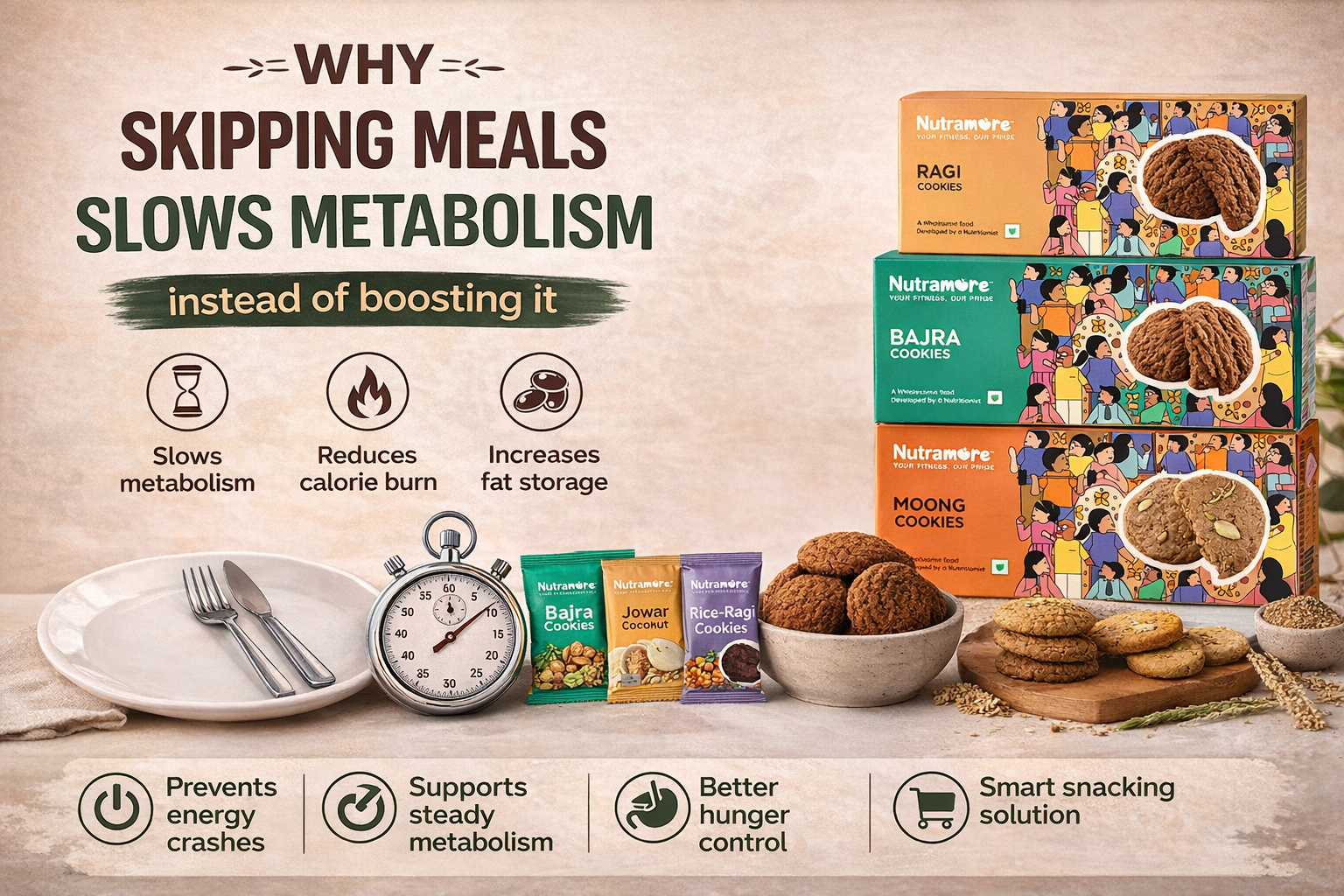
It seems to make perfect sense. You eat less, your body has fewer calories to work with, and therefore you lose weight. Skipping breakfast to cut 400 calories. Skipping lunch when you're busy. Pushing through hunger to create a "deficit." The logic is clean and intuitive.
The problem is that the human body does not operate on clean and intuitive logic. It operates on evolutionary survival programming that is several hundred thousand years old — programming that was designed for a world where food scarcity was genuinely life-threatening, and that responds to meal skipping not by burning stored fat efficiently, but by doing everything in its considerable biological power to conserve energy and rebuild lost weight as quickly as possible.
Skipping meals does not speed up fat loss. In most cases — particularly when done consistently, chronically, or in conjunction with caloric restriction — it actively slows the metabolic rate, degrades muscle mass, disrupts hormonal balance, and sets up the conditions for the rebound weight gain that follows virtually every restrictive diet.
Understanding exactly why this happens — the specific mechanisms, not just the general warning — is what changes behaviour. Because once you genuinely understand what your body is doing when you skip a meal, the temptation to do it loses its appeal almost entirely.
What Metabolism Actually Is — and What Affects It
Before explaining why meal skipping slows metabolism, it is worth being precise about what metabolism means — because the word is used so loosely that its actual meaning is often lost.
Metabolism is the sum total of all chemical reactions occurring in the body to sustain life. It is commonly broken into three components:
Basal Metabolic Rate (BMR) is the energy your body burns at complete rest — maintaining heartbeat, breathing, body temperature, organ function, cell repair, and brain activity. BMR accounts for approximately 60–70% of total daily energy expenditure for most adults. It is determined primarily by lean body mass — the amount of muscle, organ tissue, and bone you carry — along with age, sex, and genetics.
Thermic Effect of Food (TEF) is the energy the body expends digesting, absorbing, and metabolising the food you eat. Different macronutrients have different thermic effects: protein requires 20–30% of its calories just to be digested, carbohydrates require 5–10%, and fat requires 0–3%. Total TEF typically accounts for 10% of daily energy expenditure.
Activity Thermogenesis covers both structured exercise and non-exercise activity thermogenesis (NEAT) — the energy burned through all movement that is not formal exercise: walking, fidgeting, posture maintenance, and routine physical tasks.
The critical insight here is that BMR — the dominant component of metabolism — is largely determined by lean muscle mass. More muscle means a higher resting metabolic rate. Less muscle means a lower resting metabolic rate. And as we will see, meal skipping specifically degrades lean muscle mass — which is the exact mechanism through which it slows metabolism.
The second critical insight is that TEF — the metabolic boost from eating — actually decreases when you eat less frequently. Every time you eat a protein-rich, fiber-rich meal, your body burns approximately 10% of its caloric content just processing it. Skip that meal, and that thermogenic event never happens.
What Happens in the Body When You Skip a Meal
The sequence of events that follows meal skipping is well-documented and entirely predictable. It unfolds in phases:
Phase 1: Blood Sugar Drops (0–3 Hours After Skipping)
When a meal is skipped, blood glucose — which has been sustained by the previous meal — begins to fall. Initially this is not alarming; the body responds by releasing stored glucose from the liver in a process called glycogenolysis. The liver can supply approximately 4–6 hours of blood glucose this way before its glycogen stores are significantly depleted.
During this phase, the person typically feels the beginning of hunger, some difficulty concentrating, and possibly mild irritability — all of which are the body's signalling systems doing exactly what they are supposed to do: communicating that fuel input is needed.
Phase 2: Cortisol Rises (2–4 Hours)
As blood glucose continues to fall and liver glycogen begins to deplete, the adrenal glands release cortisol — the primary stress hormone — to mobilise alternative fuel sources. Cortisol signals the liver to produce new glucose through a process called gluconeogenesis — and critically, the primary raw material for gluconeogenesis is amino acids, which come from the breakdown of muscle protein.
This is the first direct hit to lean muscle mass: the body begins catabolising its own muscle tissue to maintain blood glucose. This process begins far earlier than most people realise — not after days of fasting, but within a few hours of a missed meal in someone whose glycogen stores are already partially depleted from a previous skipped meal or restricted eating.
Elevated cortisol also has a secondary metabolic consequence: it directly suppresses thyroid hormone activity. The thyroid gland is the primary regulator of basal metabolic rate — thyroid hormones determine how fast cells burn fuel at rest. When cortisol rises in response to food deprivation, thyroid function is downregulated — and BMR falls accordingly.
Phase 3: Adaptive Thermogenesis Activates (Ongoing)
The most significant and least intuitive metabolic consequence of meal skipping — particularly when it is a regular pattern rather than a one-off occurrence — is adaptive thermogenesis: the body's active downregulation of metabolic rate in response to perceived energy scarcity.
Adaptive thermogenesis is an evolutionary survival mechanism. When the brain detects that caloric input has fallen below a threshold — which chronic meal skipping reliably triggers — it initiates a systematic reduction in energy expenditure across multiple systems simultaneously. The thyroid produces less T3 (the active thyroid hormone). Mitochondria become more efficient, burning fewer calories per unit of work. NEAT drops — unconscious movement decreases. Core body temperature may lower slightly. Even the efficiency of digestion improves, extracting more calories per gram of food consumed.
The net result is that the body reduces its energy expenditure to match the reduced input — closing the caloric deficit that meal skipping was supposed to create. Research has documented adaptive thermogenic reductions of 15–25% in resting metabolic rate in response to significant caloric restriction — a drop that can persist for months or years after normal eating resumes. This is the metabolic suppression that explains why people who have yo-yo dieted through repeated cycles of restriction and refeeding find it progressively harder to manage weight with each successive attempt.
Phase 4: Ghrelin Surges and Hunger Becomes Overwhelming
As the meal-skipping period extends, the hormone ghrelin — the primary hunger signal — rises substantially. Ghrelin is produced in the stomach and signals the hypothalamus to initiate eating behaviour. In a person who has skipped a meal, ghrelin levels at the next eating occasion are significantly elevated — and the neurological response to food is correspondingly intensified.
The practical result is the well-documented meal-skipping compensation effect: people who skip a meal consistently overeat at the next meal, consuming more total calories than the skipped meal contained. Multiple controlled studies have demonstrated this — participants who skipped breakfast consumed an average of 20–30% more calories at lunch than those who ate breakfast, for a net caloric increase rather than decrease over the day.
The additional calories consumed in this compensatory eating are also more likely to be high-glycemic — because ghrelin specifically increases the appeal of calorie-dense, rapidly digesting foods, and simultaneously reduces the activity of the prefrontal cortex that governs impulse control and food choice evaluation.
The Muscle Loss Problem: Why It Matters More Than You Think
The muscle catabolism that accompanies meal skipping deserves particular attention because it creates a metabolic consequence that extends far beyond the skipped meal itself.
Every 100g of lean muscle mass lost reduces BMR by approximately 5–7 calories per day. This seems trivial. But chronic meal skipping, particularly over months, can cost 500–1,500g of lean muscle — reducing BMR by 25–100 calories per day, permanently, until that muscle is rebuilt through resistance training and adequate protein intake.
This is why people who lose weight through severe restriction and meal skipping find it so difficult to maintain that weight loss. They have lost not just fat, but muscle — reducing their metabolic rate in the process. When they return to normal eating, their lower BMR means that the same food intake that was sustainable before the diet now produces weight gain. The commonly observed "metabolism is broken" experience after restrictive dieting is real — and it is the direct physiological consequence of the muscle loss that starvation-pattern eating produces.
The solution is not just to eat more often. It is to eat more often with adequate protein — because protein intake is the primary stimulus that prevents muscle catabolism. A meal or snack containing meaningful protein (15–25g) signals the body that amino acids are available, reducing the drive to break down muscle tissue for gluconeogenesis and supporting muscle protein synthesis instead.
This is one of the strongest nutritional arguments for protein-rich snacking between meals — not for weight loss per se, but for the preservation of lean muscle mass that keeps the metabolic rate healthy over time.
The Indian Context: Why Meal Skipping Is Particularly Common and Particularly Damaging
Meal skipping in India is not primarily a dieting strategy — it is often a consequence of lifestyle. A rushed morning means breakfast is skipped. A back-to-back meeting schedule means lunch is delayed by two or three hours. A social obligation or late work deadline means dinner comes at 10pm and the previous meal was at 1pm — a nine-hour gap.
These are not deliberate fasts. They are the unplanned meal gaps that accumulate across a week and produce the same metabolic consequences as intentional meal restriction — cortisol elevation, muscle catabolism, adaptive thermogenesis, and compensatory overeating — without any of the supposed benefits.
The consequences are compounded in the Indian dietary context by the nature of the compensatory meal that typically follows a long gap. Indian meals eaten after extended fasts tend to be carbohydrate-heavy — rice, roti, dal, sabzi — without the protein distribution across the day that would protect muscle mass and moderate the glycemic response. The combination of a large, carbohydrate-forward meal consumed by someone whose cortisol is elevated and whose insulin sensitivity has been temporarily impaired by the fasting period produces a significantly larger blood sugar spike and fat storage response than the same meal consumed after a normal three-to-four-hour gap.
This pattern — long unplanned gaps followed by large carbohydrate-heavy meals — is one of the most consistent metabolic patterns driving weight gain and insulin resistance in urban Indian adults, and it is largely invisible because it does not feel like disordered eating. It feels like a busy day.
What Keeps Metabolism Active: The Evidence Base
If skipping meals slows metabolism, the logical question is: what keeps it active? The evidence points consistently to four nutritional behaviours:
Eating at regular intervals — every 3–4 hours. The thermic effect of food keeps digestion-related metabolic activity consistent across the day. Each meal or snack triggers a small but real metabolic boost from the energy cost of processing it. Regular eating also maintains stable blood glucose and cortisol, preventing the adaptive thermogenic response that sustained fasting triggers.
Adequate protein at every eating occasion. Protein has the highest thermic effect of any macronutrient — 20–30% of its calories are burned in the process of digestion and absorption. A 25g protein snack effectively costs 5–7 calories just to process. More importantly, protein is the primary stimulus for muscle protein synthesis — the process that maintains or builds lean muscle mass, which is the dominant determinant of resting metabolic rate. Distributing protein across four to six eating occasions per day consistently produces better muscle mass maintenance than consuming the same total protein in two large meals.
Fiber-rich foods that support the gut-metabolism axis. The gut microbiome influences metabolism through several pathways — including the production of short-chain fatty acids that regulate fatty acid oxidation, the modulation of GLP-1 and PYY (satiety hormones), and the influence on thyroid hormone conversion. A fiber-rich diet supports a gut microbiome that actively promotes metabolic efficiency. A low-fiber diet of refined foods supports a microbiome that promotes fat storage and metabolic slowdown.
Avoiding extreme caloric deficits. A modest caloric deficit of 300–500 calories per day does not trigger significant adaptive thermogenesis. Deficits above 700–800 calories per day — which meal skipping can easily produce — activate the survival mechanisms that reduce metabolic rate. The most metabolically sustainable approach to weight management is a modest, consistent deficit achieved through food quality improvement rather than food quantity restriction.
Snacking as a Metabolic Tool — Not a Guilty Pleasure
Reframing snacking as a metabolic strategy rather than a dietary weakness is one of the most practically useful mindset shifts available for anyone managing weight, energy, or metabolic health.
A well-constructed snack does several things simultaneously: it maintains blood glucose in a stable range, preventing the cortisol response that accompanies hypoglycaemia. It provides protein that stimulates muscle protein synthesis and contributes to TEF. It provides fiber that supports the gut microbiome and slows the glycemic impact of the next main meal. And it prevents the extreme hunger that leads to compensatory overeating and poor food choices at main meals.
The critical qualifier is "well-constructed." A refined flour biscuit does none of these things — it provides a brief blood glucose spike, no meaningful protein, no fiber, and sets up a crash that intensifies rather than prevents hunger. A millet-and-pulse-based snack does all of them — providing slow-release complex carbohydrate, meaningful protein, significant fiber, and a sustained satiety effect that bridges the gap to the next meal without metabolic disruption.
This is the practical distinction between snacking that supports metabolism and snacking that undermines it. It is not a question of whether to snack. It is a question of what to snack on.
The Best Metabolism-Supporting Snacks
Building on the evidence above, here is what to look for in a metabolism-supporting snack and where to find it:
High protein — minimum 5–8g per snack. Protein maintains muscle mass, elevates TEF, and supports satiety. Nutramore's Baked Protein Sticks deliver 18g of protein per 75g pack from a blend of whole dals — making them one of the most protein-dense ready-to-eat snack options available. Green-Gram Upma Premix delivers 32g of protein per serving — extraordinarily high for a breakfast or snack format. Jowar Chilla Mix delivers 30g with the addition of omega-3 fatty acids that support thyroid function and metabolic rate. Between meals, even two or three Moong Almond Pistachio Cookies deliver a meaningful protein hit from moong, almonds, and pistachios combined.
High fiber — from whole grain sources. The resistant starch in jowar, the beta-glucan in bajra, and the polyphenols in ragi all contribute to gut microbiome diversity that supports metabolic health. Millet Methi Crispies combine multiple millet fibers with fenugreek's galactomannan — one of the most effective satiety-promoting fibers identified in nutritional research. The entire Nutramore cookie range — Bajra Cookies, Jowar Coconut Cookies, Rice Ragi Cookies, Ragi Chocolate Cookies — provides 3–5g of whole-grain fiber per serving, meaningfully outperforming any refined flour alternative.
Low glycemic index — to prevent the cortisol spike that follows blood sugar crashes. Every whole millet in Nutramore's range sits between GI 54 and 65 — the low range that prevents the blood sugar instability that triggers cortisol elevation. Combined with protein and fiber, the effective glycemic response of these snacks is lower still.
Jaggery rather than refined sugar. Beyond the lower GI, jaggery provides iron, potassium, and the trace mineral chromium — a cofactor for insulin signalling that directly supports the metabolic machinery that regulates glucose disposal. Bajra Moong Chocolate Cookies and Multigrain Coffee Cookies deliver this combination in formats that satisfy the sweet or rich flavour craving without the metabolic disruption of refined sugar.
For families building a metabolism-supporting snack rotation from scratch, the Breakfast Premix Combo covers the highest-protein snack occasions of the day — breakfast and post-workout — with three genuinely excellent, low-GI, high-protein options rotating across the week. The All-Time Favourite Cookies Combo covers mid-morning and afternoon snacking with the three most versatile millet bases. And the Try & Taste Trial Pack with 9 flavour mini packs is the most practical starting point for anyone new to millet-based snacking — finding what you genuinely enjoy before building a full routine around it.
A Note on Intermittent Fasting
Intermittent fasting (IF) is widely discussed as a metabolic intervention and deserves mention in the context of meal skipping. It is important to distinguish between structured intermittent fasting — a deliberate protocol with specific timing and nutritional attention to the eating window — and unplanned meal skipping, which is what this blog primarily addresses.
Structured intermittent fasting, when implemented carefully, can in some contexts support metabolic health — particularly through autophagy (cellular repair processes that are activated during fasting), insulin sensitivity improvements with specific protocols, and the simplification of eating patterns. However, even within IF, the quality of what is eaten during the eating window determines whether the metabolic benefits are realised or whether muscle loss, compensatory overeating, and nutrient deficiency negate the potential gains.
The concerns raised throughout this blog about cortisol elevation, muscle catabolism, adaptive thermogenesis, and ghrelin-driven overeating are all relevant to poorly implemented fasting protocols and entirely relevant to unplanned meal skipping. IF, done properly and with appropriate nutritional attention during eating windows, is a different intervention. Skipping breakfast because the morning was rushed, or skipping lunch because the meeting ran over, is not IF — it is unplanned food deprivation, with all the metabolic consequences described here.
What to Do Instead: A Practical Framework
The alternative to meal skipping is not eating more. It is eating more strategically — smaller, more frequent, more nutritionally precise eating occasions that keep metabolism active, muscle mass preserved, blood sugar stable, and hunger governed by physiology rather than crisis.
Eat within 60–90 minutes of waking. The post-sleep fasting period, combined with the cortisol awakening response (a natural cortisol peak that occurs in the first hour after waking), makes the early morning a period of significant muscle catabolism risk. A protein-rich breakfast — Green-Gram Upma or Jowar Chilla — arrests this catabolism, activates the thermic effect of food, and sets a stable blood sugar baseline for the morning.
Plan a mid-morning snack at 10–11am. The three-to-four-hour window between breakfast and lunch is precisely the duration over which blood glucose begins to fall and cortisol begins to rise if no food is consumed. A small, protein-and-fiber-containing snack — two or three millet cookies and a handful of nuts, or a pack of baked protein sticks — prevents this fall and the metabolic consequences that follow.
Do not delay lunch beyond 2pm. After 1pm, cortisol levels naturally begin their afternoon rise. A delayed lunch in the context of an already-elevated cortisol baseline intensifies the muscle catabolic signal and the subsequent ghrelin-driven compensatory eating.
Plan an afternoon snack at 3:30–4pm. The post-lunch blood sugar trajectory, combined with the natural cortisol dip of the mid-afternoon, creates a reliable hunger and energy low between 3 and 5pm. This is precisely when most people reach for high-glycemic snacks. Anticipating this window with a prepared, low-GI, protein-containing snack — Millet Methi Crispies or Bajra Moong Chocolate Cookies — eliminates the crisis and replaces it with a nutritionally valuable metabolic event.
Keep dinner as the last eating occasion. Eating after 9pm — which becomes the default when meals are skipped during the day and hunger accumulates — places a large meal at the point in the circadian rhythm when insulin sensitivity is lowest, cortisol is falling, and activity thermogenesis is near zero. The metabolic consequences of late-night eating are documented and significant. Regular daytime eating prevents the conditions that make late-night eating feel necessary.
Final Thoughts
Skipping meals does not speed up weight loss. It slows metabolism through cortisol elevation, thyroid suppression, muscle catabolism, and adaptive thermogenesis. It drives compensatory overeating through ghrelin-mediated hunger. And it progressively degrades the lean muscle mass that is the primary determinant of metabolic rate — leaving the person lighter but metabolically weaker, and more vulnerable to rebound weight gain than before the skipping began.
The evidence on this is not subtle or contested. It is one of the most consistent findings in metabolic research across the past four decades — and it explains why essentially every restrictive diet that relies on meal elimination produces short-term weight loss followed by metabolic adaptation and rebound.
The alternative — regular, protein-rich, fiber-containing, low-glycemic snacks that bridge the gaps between main meals — is not a compromise. It is the metabolically sound strategy that keeps the system running well, preserves muscle mass, maintains thyroid function, keeps cortisol in a healthy range, and creates the conditions in which genuine, sustainable fat loss can occur without fighting the body's own survival mechanisms.
Eating more often, not less. Eating better, not less. Treating snacks as metabolic tools, not guilty indulgences. This is the shift that changes outcomes — not the willpower to skip another meal.
Explore Nutramore's full range of metabolism-supporting millet snacks at nutramore.in/our-products