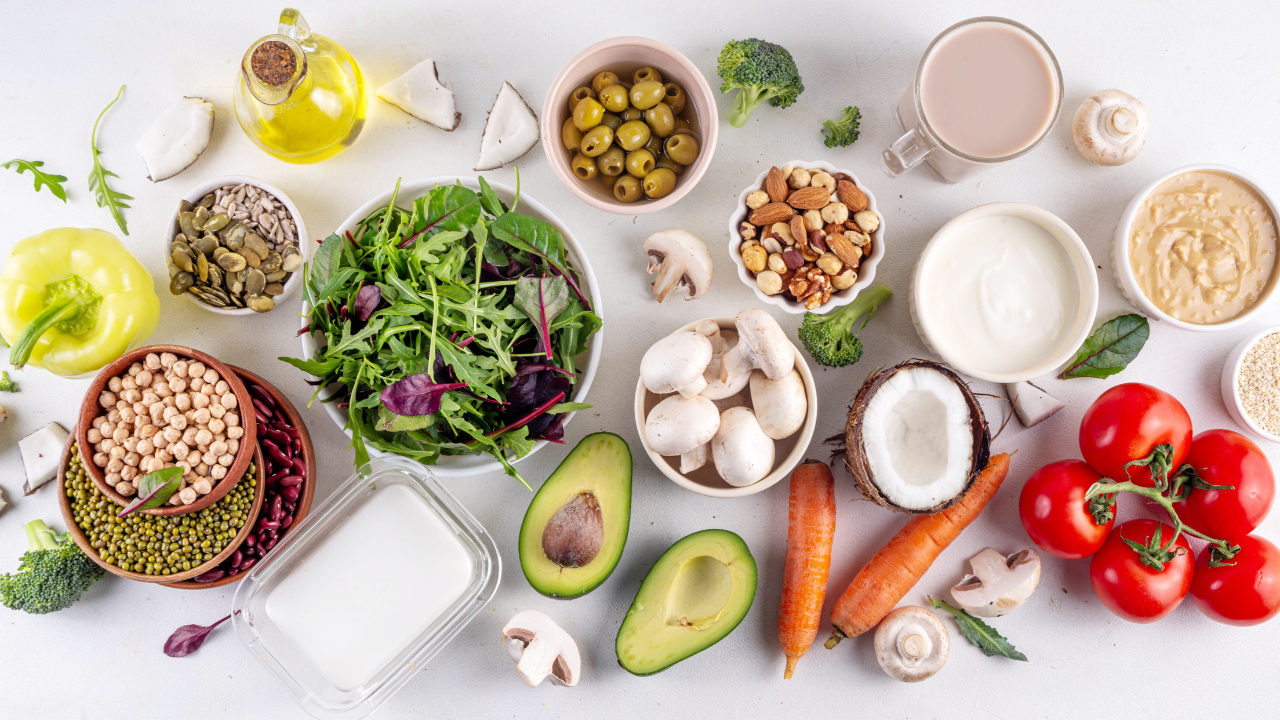
Walk through any supermarket in India today and the language of natural food is everywhere. "Made with natural ingredients." "Pure and wholesome." "Clean label." "Honest food." "Straight from nature's kitchen." "No nonsense." The packaging is earthy — kraft paper textures, hand-drawn fonts, muted greens and browns, the suggestion of a farmhouse or a grandmother's kitchen.
And behind the packaging, more often than not: refined wheat flour, refined sugar, refined vegetable oil, synthetic flavours, and a collection of E-number additives dressed in language designed to obscure their presence.
The gap between the marketing vocabulary of natural food and the actual ingredient reality of products using that vocabulary is one of the most consistent and consequential deceptions in the modern packaged food industry. It is not unique to India — it is a global phenomenon — but in the Indian market, where traditional food culture creates genuine emotional attachment to concepts like "pure," "desi," and "homemade-style," the exploitation of that attachment through marketing language is particularly sophisticated and particularly effective.
This blog gives you a complete, practical framework for cutting through this language — for distinguishing genuinely natural, whole-food products from those that use natural-sounding marketing to sell the same refined, additive-laden food in more appealing packaging. The distinction is not difficult to make once you know what to look for. But it requires knowing what "natural" actually means — and does not mean — in the Indian food labelling context.
The Regulatory Reality: What "Natural" Means on an Indian Food Label
The most important fact to understand about the word "natural" on Indian packaged food products is this: it has no legal definition under FSSAI regulations.
In the European Union, specific regulations govern what constitutes a "natural" flavour or ingredient. In the United States, the FDA has a working definition (though it too is contested). In India, as of the most recent FSSAI regulatory framework, the term "natural" on a food product label is not defined, not regulated, and not enforced. Any manufacturer can print "natural" on any product regardless of its ingredient composition.
The same applies to: "wholesome," "pure," "clean," "honest," "real," "traditional," "desi," "heritage," "farm-to-table," "artisanal," "handcrafted," and virtually every other vocabulary item in the natural food marketing lexicon. None of these terms has a legal definition under Indian food law. None of them carries any regulatory obligation about what must or must not be in the product. None of them can be relied upon as a signal of ingredient quality.
This is not a minor technical point. It is the foundational reality that makes natural food marketing so effectively deceptive: the words carry strong emotional and health associations, they are entirely free for any manufacturer to use regardless of product composition, and most consumers do not know this.
The implication is direct: you cannot determine whether a food is genuinely natural from anything on the front of the pack. Front-of-pack claims about naturalness, purity, or wholesomeness are marketing documents, not nutritional disclosures. The only way to assess whether a product is genuinely natural is to read the ingredient list and apply a clear evaluative framework to what you find there.
What "Genuinely Natural" Means in Practical Terms
Since the regulatory definition is absent, a practical definition must take its place. Genuinely natural food — for the purposes of making better choices — has the following characteristics. None of them require legal definition to be identifiable. All of them are visible on the ingredient list.
The ingredients are recognisable whole foods. Every ingredient in a genuinely natural product should be something you could, in principle, find in a market, a kitchen, or a garden. Bajra flour, ragi flour, jowar flour, moong dal, almonds, pistachios, jaggery, butter, coconut, cocoa, fenugreek — these are recognisable foods. "Modified starch (1422)," "sodium stearoyl lactylate," "partially hydrogenated palm kernel oil," "artificial flavour (butter type)," "E621" — these are not foods. They are industrial processing aids, stabilisers, and flavour compounds whose presence in an ingredient list signals that the product has moved beyond natural food preparation into industrial food manufacturing.
Nothing has been significantly stripped or refined. Natural foods are whole or minimally processed. Bajra is bajra — the grain is milled into flour, retaining its bran, germ, and all associated nutrients. Refined wheat flour is wheat from which the bran and germ have been industrially removed — leaving a product that no longer resembles the original grain in nutritional profile. Cold-pressed coconut oil is coconuts pressed and filtered. Refined palm oil is a palm oil fraction that has been bleached, deodorised, and chemically altered until its original characteristics are largely absent. The question is whether the ingredient you are reading still resembles the natural food it came from — or whether processing has transformed it into something that natural food is merely a distant ancestor of.
The ingredient list is short and does not require explanation. A genuinely natural snack does not need a list of twenty-five ingredients because real food does not require that many components to produce a good result. A batch of bajra cookies requires bajra flour, jaggery, butter, and perhaps a flavour element like coconut or cardamom. Five ingredients. A factory biscuit formulated to mimic the experience of a buttery cookie while using no real butter, standardising flavour across millions of units, achieving a shelf life of eight months, and hitting a cost-per-kilogram target may require twenty-five ingredients — each compensating for the inadequacy of the base material or the absence of real food components.
The sweetener is a minimally processed whole food derivative. Jaggery is sugarcane juice evaporated and solidified without industrial refining — retaining the iron, potassium, chromium, and B vitamins of the original juice. Dates in whole or paste form retain fiber and micronutrients. Raw honey retains enzymes and trace bioactive compounds. These are meaningfully different from the sugar aliases — liquid glucose, invert sugar, dextrose, corn syrup — that industrial food production uses to sweeten at lower cost while distributing the sugar load across multiple ingredient names.
The fat is a recognisable whole food fat. Fresh butter, cold-pressed groundnut oil, cold-pressed coconut oil, ghee — these are fats that exist in the natural food world and are processed minimally from their natural source. Refined palm oil, refined soybean oil, and hydrogenated vegetable fat are industrially processed to a degree that removes their original nutritional character and, in the case of hydrogenation, creates compounds that do not exist in natural food.
A product that meets all five of these criteria is genuinely natural in the meaningful sense — regardless of whether the word "natural" appears anywhere on its packaging. A product that fails two or more of these criteria is industrial food, regardless of how much natural-vocabulary marketing it carries.
The Marketing Language Decoder: What Common Claims Actually Mean
Here is a direct translation of the most commonly used natural food marketing vocabulary in the Indian packaged food market, against the regulatory and practical reality of each claim:
The pattern is consistent: every claim on the left creates a specific impression that the regulatory reality in the middle fails to support. The right column — what the claim does not guarantee — is where the actual harm of the gap lives.
The Five Techniques That Create the Impression of Natural Without the Reality
Understanding the specific techniques through which food marketing creates the impression of naturalness allows you to recognise them quickly and resist their influence. These techniques are not random — they are deliberate, tested, and refined through decades of consumer psychology research.
Technique 1: The Ingredient Spotlight (One Real Ingredient, Many Processed Ones)
This is the most common technique in Indian natural food marketing. A product selects one genuinely natural, culturally resonant ingredient — ragi, turmeric, ghee, oats, honey, amla — features it prominently on the packaging in large font, and builds the entire visual and verbal marketing around it. The remaining fifteen ingredients — which are predominantly refined, artificial, or heavily processed — are present on the ingredient list but receive no visual or verbal emphasis.
"Made with real honey" — the honey may be the fifteenth ingredient at a trace level, while refined wheat flour, sugar, glucose, and palm oil are the top four. "Ragi enriched" — ragi may constitute 3% of the product's weight, while refined wheat flour constitutes 70%. "Contains ghee" — a trace quantity of ghee provides the flavour note and the marketing credential, while refined palm oil provides the actual fat base of the product.
The solution: ignore the spotlight ingredient on the front. Go to the ingredient list and check whether the featured ingredient appears in the first three positions. If it doesn't, it is a marketing cameo, not a meaningful nutritional component.
Technique 2: The Packaging Aesthetic (Visual Natural Signalling)
Research in consumer psychology has established that packaging design communicates nutritional quality impressions that are largely independent of any specific claim — and that these design elements significantly influence purchase decisions and consumption patterns.
Kraft paper texture or brown recycled-looking packaging communicates "unprocessed" and "natural" without making either claim. Hand-drawn illustrations of whole foods — grains, fruits, vegetables — create the impression that the product is similar to those foods. Muted, earthy colour palettes (greens, browns, creams, terracottas) activate the mental association with natural, organic, or whole-food products. "Real photograph" style food imagery suggests ingredient authenticity. Minimal text and "honest simplicity" design language suggests a product with nothing to hide.
None of these design choices are regulated. A product packaged in kraft paper with hand-drawn grain illustrations can contain refined wheat flour, sugar, and artificial flavouring. The packaging communicates what the ingredient list does not support.
The solution: respond to packaging aesthetics as what they are — graphic design choices made by a marketing team. The ingredient list is an orthogonal source of information that the packaging design cannot alter or supplement.
Technique 3: The Negative Claim Shield (Defining by What Is Absent)
Natural food marketing has become highly sophisticated in the use of negative claims — defined by what the product does not contain — to create positive impressions that deflect attention from what it does contain.
"No refined sugar" — but contains dextrose, liquid glucose, and corn syrup, which are equally refined and more glycemically aggressive than sucrose. "No artificial preservatives" — but contains TBHQ, an antioxidant that is not classified as a preservative but has similar concerns. "No MSG" — but contains yeast extract and hydrolysed vegetable protein, which deliver equivalent amounts of free glutamate through a different vehicle. "No maida" — but contains "wheat flour" without the "whole wheat" qualifier, which in Indian labelling typically means partially refined flour.
The effectiveness of negative claims relies on the consumer not knowing the positive alternatives that fill the gap the negated ingredient leaves. No refined sugar doesn't matter if the sugar aliases are worse. No MSG doesn't matter if yeast extract achieves the same appetite override.
The solution: for every negative claim on a product's front, ask what ingredient has been substituted for the negated one. The substitution is often revealed in the ingredient list — and is often more harmful, or identically harmful under a different name.
Technique 4: The Ingredient Name Naturalisation (Renaming Processing for Palatability)
Some ingredients that would concern a label-reading consumer if named accurately are given consumer-friendly names on ingredient lists — a practice that is legal as long as the name used is an accepted common name for the ingredient in question.
"Permitted emulsifiers" instead of "mono- and di-glycerides of fatty acids (E471)" — which are derived from either plant or animal fat through industrial processing. "Permitted antioxidants" instead of TBHQ or BHA — both of which have documented health concerns. "Natural identical flavour" — a specific regulatory category covering flavour compounds that are chemically identical to natural flavour molecules but produced through synthetic chemistry. The word "natural identical" sounds reassuring; the reality is synthetic production. "Edible starch" instead of modified starch — which may have been treated with acetic anhydride or sodium hydroxide to alter its functional properties.
The solution: any ingredient described as "permitted [category]" without naming the specific compound is making the minimum regulatory disclosure. If the manufacturer chose to name the specific compound, they would be naming something that concerns consumers enough to require a general category name instead. This is reason to be attentive.
Technique 5: The Portion of Truth Amplification (True Claim, Misleading Implication)
This technique relies on making a claim that is precisely, narrowly true — and allowing the consumer's mind to draw a broader implication that the claim does not actually support.
"Contains whole grains" is true if the product contains 5% whole grain flour alongside 75% refined flour — the whole grain is present, the claim is accurate, the implied impression of a whole-grain product is misleading. "Rich in fibre" may be claimed on a product that contains more fiber per serving than its direct competitors, regardless of whether the absolute fiber level is meaningful. "Source of protein" is technically achievable at 5g per 100g — a level that no nutritionist would consider protein-rich but that meets the claim threshold. "Low in saturated fat" may be claimed on a product high in refined carbohydrates that contribute equally or more to cardiovascular risk through different mechanisms.
Each claim is true. The composite impression — a whole-grain, fiber-rich, protein-containing, heart-healthy product — is not supportable.
The solution: evaluate claims in absolute terms, not relative or categorical ones. Not "contains protein" — how many grams, from what source, per realistic portion? Not "whole grain" on the front — what position does whole grain flour hold on the ingredient list, and what proportion of the grain component does it constitute?
The Five-Question Framework for Identifying Genuine Natural Foods
Applying the above analysis to daily shopping decisions requires a practical, repeatable framework — one that can be completed in under two minutes in a supermarket aisle without requiring specialised knowledge of food science.
Question 1: What are the first three ingredients?
The first three ingredients constitute the majority of the product by weight. If any of them is refined wheat flour (maida), sugar, refined palm oil, glucose syrup, or any other clearly refined or industrial ingredient — the product is primarily a refined food, regardless of what appears further down the list or on the front of the pack.
If all three are recognisable whole foods — a millet flour, a pulse flour, a whole nut, jaggery, real butter — the product has passed its most basic authenticity test.
Question 2: How long is the ingredient list?
Count the ingredients. Under eight is encouraging. Eight to twelve is borderline. Over fifteen indicates significant industrial processing — because genuinely simple food made from whole ingredients does not require fifteen functional additives to produce a satisfactory result. The additional ingredients are there to compensate for the inadequacy of refined base ingredients, to extend shelf life beyond what real ingredients can achieve, to standardise flavour across industrial production volumes, or to override natural satiety signals through flavour enhancement.
Question 3: Are there any E numbers or chemical names?
The presence of E numbers — or their spelled-out equivalents (sodium benzoate, tartrazine, disodium inosinate, TBHQ) — indicates that functional additives are present. Genuinely natural food does not require additives whose purpose is to compensate for processing-related inadequacies. A small number of benign additives — vitamin C as ascorbic acid for antioxidant purposes, for example — are relatively harmless. Multiple E numbers across the preservative, colour, flavour enhancer, and emulsifier categories indicate a product whose natural food status is primarily marketing.
Question 4: What is the sweetener and does it have nutritional identity?
Jaggery, raw honey, dates, and coconut sugar are sweeteners with independent nutritional identity — they are recognisable foods with traceable origins and some co-nutritional content beyond sweetness. Sugar, dextrose, liquid glucose, corn syrup, invert sugar, and maltodextrin are industrial sweeteners with no independent nutritional identity — they are refined carbohydrates whose only function is sweetness or glycemic load.
A genuinely natural product uses a sweetener from the first category. A product using three names from the second category while marketing as "natural" or "no refined sugar" is engaging in the kind of partial-truth substitution described above.
Question 5: Does the fat source have a name that corresponds to a real food?
Fresh butter, ghee, cold-pressed groundnut oil, cold-pressed coconut oil — these are fats that exist as recognisable foods in their own right. Refined palm oil, refined soybean oil, partially hydrogenated vegetable fat, interesterified fat — these are industrial processing outputs that bear little resemblance to the natural oils they are derived from.
A product using the first category of fat — in reasonable quantities — is using genuinely natural fat. A product using refined or hydrogenated fats while claiming naturalness on the front is using the most affordable industrial fat available while borrowing the credibility of natural food marketing.
Recognising the Genuinely Natural: What to Look For
Having established what marketing-based natural food looks like and how to identify it, the positive case is equally important: what does genuinely natural food actually look like when you encounter it?
Genuinely natural food typically does not announce itself with extensive front-of-pack natural language — because it does not need to. The ingredient list makes the case without marketing assistance. You will typically find:
A short list. Ingredients you could find in a market. No ingredient that requires an E number, a chemical name, or industry-specific terminology to identify. A sweetener with nutritional identity. A fat with a real food name. An absence of compensation ingredients — no emulsifiers to create texture that real fat would naturally provide, no synthetic flavour to replace the flavour that real ingredients would naturally produce, no preservatives to extend a shelf life that real ingredients cannot naturally achieve.
When a product's naturalness is self-evident from its ingredient list, the front-of-pack marketing tends to be simpler — because the authenticity does not need to be asserted at volume. Products whose naturalness is asserted most loudly on the front tend to be the ones whose ingredient list on the back most requires the distraction.
Nutramore's product range illustrates this principle. The Bajra Moong Chocolate Cookies do not carry a "100% Natural" badge. They carry bajra flour, moong dal, jaggery, butter, and cocoa as their primary ingredients — a list that makes naturalness self-evident without requiring a claim. The Jowar Chilla Mix and Green-Gram Upma Premix carry their protein and nutritional quality in the ingredient list rather than on the front panel. The Millet Methi Crispies list millets and fenugreek as their basis — not "permitted food colours" or "E631."
This is not modesty about the product's quality. It is the natural consequence of having an ingredient list that requires no verbal supplementation to make its case.
The Indian Cultural Context: Why This Matters More Here
The exploitation of "natural" food marketing vocabulary is a global phenomenon — but it has particular resonance and particular effectiveness in the Indian market for reasons rooted in Indian food culture.
Indian food culture carries a deep, genuine, multi-generational connection to the idea of pure, whole, home-cooked food. The concepts of sattvic eating, of fresh preparation from whole ingredients, of the distinction between home food and bazaar food — these are real cultural values that shaped Indian nutrition for centuries and that produced genuinely superior nutritional outcomes compared to the processed food that has displaced them.
Modern food marketing in India is highly sophisticated in its exploitation of these cultural values. Brands use imagery of grandmothers, village kitchens, and traditional preparation to sell products made in factories with industrial ingredients. They use words like "dadi ka nuskha" (grandmother's remedy) and "ghar jaisa" (like home) for products whose ingredient lists no grandmother would recognise. They invoke regional food traditions — dhokla, sattu, ragi mudde — while formulating their products with the same refined ingredient base as any other packaged snack.
This exploitation works because the cultural association is genuine. People want the food their grandmothers made. They want whole, nourishing, traditional ingredients. The desire is real and the marketing fulfils it at an emotional level while the product fails to deliver it at a nutritional one.
Understanding this dynamic — that the desire being activated by natural food marketing is legitimate even when the product does not satisfy it — is part of developing the evaluative clarity to see past the marketing to the ingredient reality. You are not wrong to want whole, natural food. You are simply wrong to trust the front of a packaged food product to tell you whether you have found it.
Building a Genuinely Natural Snack Routine: Practical Guidance
Translating the framework above into daily practice means building a snack routine around products that pass the five-question test consistently — and accepting that the majority of products in a standard Indian supermarket's "health" or "natural" section will not.
The products that reliably pass the test share a profile: whole millet or pulse base in the first ingredient, jaggery as the sole sweetener, real butter or cold-pressed oil as the fat, a short ingredient list with no E numbers, and flavour from real food ingredients rather than synthetic or processed flavour compounds.
For sweet snacking occasions: Ragi Chocolate Cookies — ragi, jaggery, butter, cocoa, nothing to explain. Rice Ragi Cookies — rice flour, ragi, jaggery, butter — four recognisable foods. Jowar Coconut Cookies — jowar, coconut, jaggery, butter — the flavour comes from real coconut, not coconut flavour compound. Moong Almond Pistachio Cookies — moong dal, almonds, pistachios, jaggery, butter — every ingredient a recognisable food, every ingredient contributing genuine nutrition.
For savoury snacking occasions: Baked Protein Sticks — dal blend, spices, oil — real food ingredients delivering 18g of protein. Millet Methi Crispies — millet, methi, spices, cold-pressed oil — the crunch of a packaged snack from ingredients a home cook would recognise.
For warm snack and breakfast occasions: Jowar Upma Premix, Jowar Chilla Mix, Green-Gram Upma Premix — whole grain or pulse bases with 30–32g of complete protein, no maltodextrin bulking, no synthetic flavour, no colour additives.
For families beginning this transition and wanting to identify preferences across the range before committing to a full pantry, the Try & Taste Trial Pack with nine mini flavour packs provides the lowest-friction entry point. The Chocolate Cookies Combo, All-Time Favourite Cookies Combo, and Gluten-Free Cookies Combo provide variety across flavour profiles and millet bases for families ready to build a full rotation.
The Shortcut That Works in Any Supermarket
For moments when a full five-question analysis is not practical — when you are shopping quickly, when the product is unfamiliar, when there is not enough time to read slowly — there is a single question that functions as a reliable shortcut:
Could you make this product in your kitchen from its ingredient list, using equipment and techniques a home cook would have?
Bajra flour, jaggery, butter, coconut, baking: yes. Whole jowar, green gram, spices, cold-pressed oil: yes. Refined wheat flour, glucose syrup, partially hydrogenated fat, artificial flavour (butter type), E102, E621, modified starch (1422): no — not because any individual step is impossible, but because the combination of industrial ingredients, synthetic additives, and processing compounds that constitute the real product is not the same as the recognisable food ingredients on which home cooking is based.
If the ingredient list describes something a home cook could make, the product is genuinely in the natural food category. If it describes a set of industrial inputs that happen to produce a food-shaped output, it is industrial food dressed in natural language.
This is not a perfect test — some genuinely natural foods use small quantities of benign additives. But as a rapid first filter in a supermarket aisle, it is reliable enough to significantly improve the quality of the default choice without requiring detailed knowledge of every additive number and ingredient alias.
Final Thoughts
The language of natural food marketing is the most sophisticated and most consequential form of consumer misdirection in the Indian packaged food industry. It exploits genuine cultural values, legitimate health aspirations, and the trust that people extend to words like "pure," "natural," and "wholesome" — words whose power derives from centuries of meaning that the food industry borrows without the regulatory obligation to uphold.
The protection against this misdirection is not cynicism about all packaged food. It is a clear, specific, practical framework for distinguishing the claims on the front of a product from the reality in the ingredient list on the back. The five questions in this blog — first three ingredients, list length, E numbers, sweetener identity, fat source — applied consistently and quickly, will correctly identify marketing-based natural food and genuinely natural food in the vast majority of cases.
Genuinely natural food exists in the Indian market. Whole millet-based, pulse-enriched, jaggery-sweetened, real butter, short-list products with nothing to hide in the ingredient list — these products exist because the ingredient philosophy that produces them is both nutritionally sound and commercially viable. They simply do not announce themselves with the volume and frequency of products that have more to prove and less to show.
The quieter claim, supported by the clearer ingredient list — this is where genuinely natural Indian snacking lives.
Explore Nutramore's full range of genuinely natural, clean-label millet snacks at nutramore.in/our-products