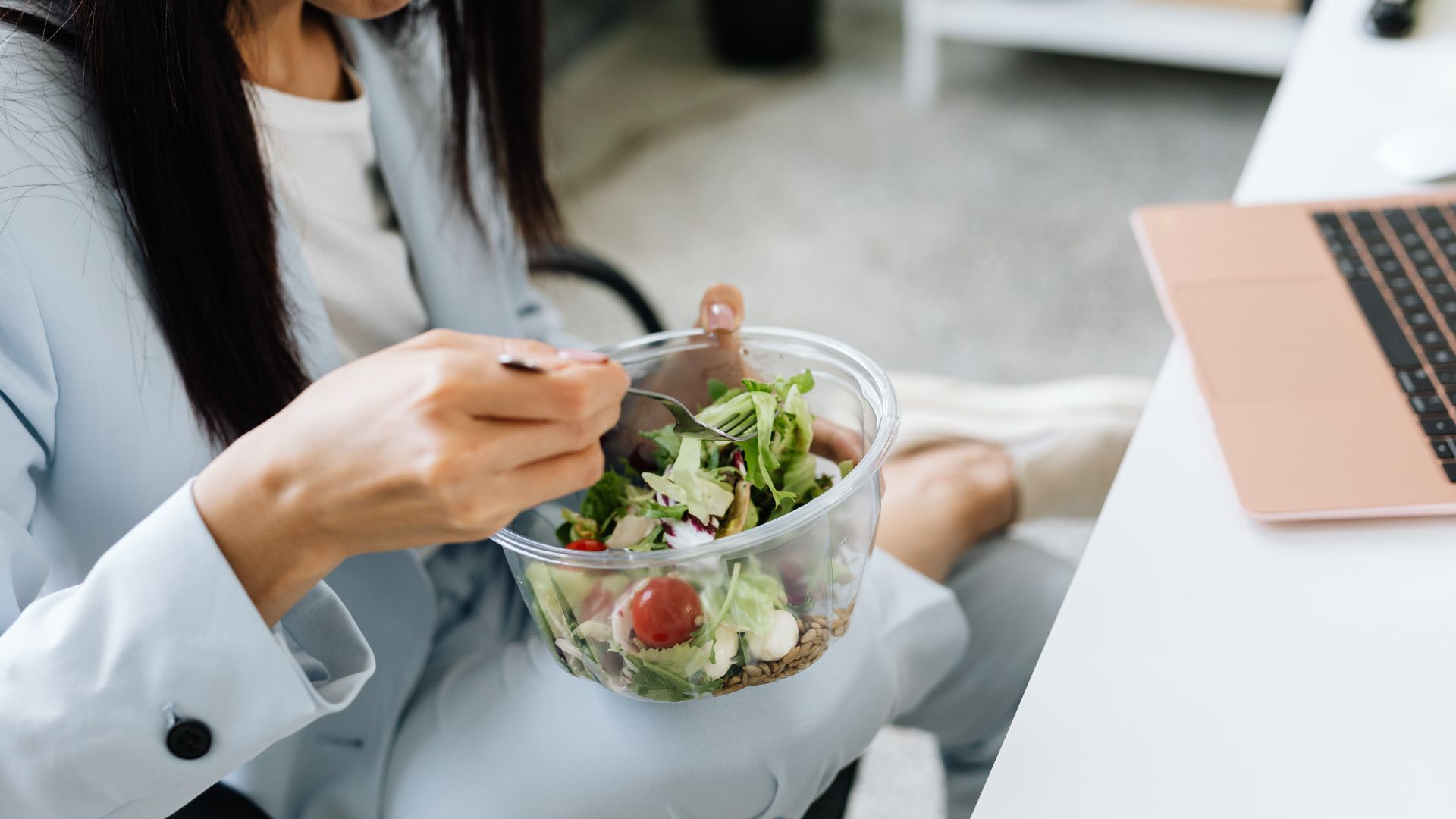
The office environment is nutritionally hostile in ways that are not always obvious until you notice the pattern: energy crashes at 2pm that make simple tasks feel effortful, the biscuit tin that empties by Wednesday because everyone reaches for it without conscious decision, the client tea that comes with a plate of samosas that politely cannot be refused, the 6pm hunger that has you ordering the first thing available because dinner is still two hours away.
Office eating is not a discipline problem. It is an environment problem — a context in which poor food choices are the easy default, nutritional planning is an extra cognitive load on already-depleted mental resources, and the physical consequences of sitting for 8–10 hours compound the metabolic effects of whatever is being eaten.
Understanding the specific dynamics of office nutrition — and having a practical, specific plan for each eating occasion in the work day — is what converts the office from a nutritional liability into a manageable environment.
What Long Desk Work Does to Your Metabolism
Before addressing what to eat, it is worth understanding what sitting for 8–10 hours does to your metabolic machinery — because the office snacking context is metabolically distinct from any other eating environment.
Physical inactivity reduces insulin sensitivity progressively. Each hour of uninterrupted sitting reduces the GLUT4 expression in lower-body muscle — the glucose transport system that insulin relies on to clear post-meal blood glucose from the bloodstream. A person who has been sitting for six hours has measurably worse insulin sensitivity than the same person after two hours of light movement. This means that the same snack consumed at hour two of the work day and hour eight produces different glycemic responses — with the late-afternoon snack producing a larger insulin response from the same food.
Cognitive stress elevates cortisol and worsens glycemic response. Deadline pressure, difficult conversations, high-stakes decision-making — the psychological stress that characterises intensive knowledge work elevates cortisol throughout the day. Cortisol raises blood glucose through hepatic glycogenolysis and gluconeogenesis, and simultaneously reduces insulin sensitivity. The result is a work day in which blood glucose variability is structurally higher than in physically active or mentally unstressed contexts — making low-GI, protein-and-fiber-rich snacking even more critical than in non-work environments.
Sedentary caloric needs are lower. Eight hours of desk work burns fewer calories than most people estimate — approximately 300–400 calories above basal metabolic rate for a full sedentary work day. This means that the snacking patterns appropriate for an active lifestyle produce caloric surplus in the office context — and that office snacks specifically should lean toward high-satiety, moderate-calorie, protein-and-fiber-dense formats rather than calorie-dense or nutrient-poor ones.
The Office Work Day: Snacking by Time Block
Pre-Work Breakfast (7–8am): Set the Metabolic Baseline
The breakfast that precedes the work day determines the quality of the morning's cognitive performance and the severity of the mid-morning hunger that drives the biscuit tin. A high-protein, low-GI breakfast — the standard repeatedly endorsed across this blog series — is its most important as a work-day intervention.
Jowar Chilla or Green-Gram Upma at 30–32g of protein, prepared in under ten minutes, provides the ghrelin suppression through the morning and the GLP-1 satiety that prevents the desperate mid-morning hunger that produces the worst desk snacking decisions.
Mid-Morning Snack (10–10:30am): The Cognitive Peak Maintenance Window
The mid-morning window is when blood glucose from breakfast begins to fall and the first temptation to reach for the office biscuit tin, the tea tray, or the readily available packaged snack appears. This is also the peak cognitive performance window for most knowledge workers — the hour between 10am and 11am when attention, working memory, and analytical capacity are at their daily maximum.
A snack at this window should provide enough protein and low-GI carbohydrate to sustain the blood glucose level through to lunch — without triggering the spike-crash cycle that would undermine the 11am–1pm cognitive performance.
Best options for office context: Baked Protein Sticks — portable, sealed, no preparation, 18g of protein, savoury and satisfying. Moong Almond Pistachio Cookies — the nut protein and millet base provide sustained energy without the sugar spike of conventional biscuits. A small handful of roasted chana alongside Jowar Chocolate Cookies — the classic protein-plus-low-GI combination in an entirely portable format.
What to avoid: the office biscuit tin (maida, refined sugar, zero protein, zero fiber — the perfect recipe for a 12:30pm energy crash), sweetened chai (the sugar adds 8–12g of glycemic load with no nutritional benefit), packaged chips or namkeen with flavour enhancers designed to make you keep eating.
Lunch (1–1:30pm): The Most Important Structural Decision
Lunch determines the quality of the entire afternoon. A large, refined carbohydrate-dominant lunch — the typical office canteen combination of white rice, roti, dal, and a sweet — produces the post-lunch blood glucose spike and reactive hypoglycaemia that is responsible for the 2pm energy crash affecting millions of Indian knowledge workers every afternoon.
Where lunch composition can be influenced: lead with dal and sabzi before rice and roti (the food-order strategy). Include adequate protein — dal, paneer, curd, egg. Keep the rice or roti portion moderate and pad with protein and vegetable volume. Avoid sweetened beverages with lunch — the additional glycemic load amplifies the post-meal spike.
Where lunch cannot be influenced (canteen or delivery): eat slowly (20 minutes minimum), stop at comfortable satisfaction rather than fullness, and plan the 3:30pm snack proactively — knowing that the afternoon crash will be mitigated by a well-timed snack regardless of what lunch was.
Walk for 10 minutes after lunch — even within an office building, a 10-minute walk reduces post-meal blood glucose by 20–30% and directly reduces the severity of the afternoon energy crash.
Afternoon Snack (3:30–4pm): The Most Critical Office Snacking Window
This is the window where the combination of the post-lunch glucose dip, the natural circadian alertness trough, the accumulated sitting-induced insulin resistance, and the cortisol fatigue of the afternoon produces the worst food decision-making conditions of the day. Reached in a state of significant hunger and low cognitive control, the typical response is whatever is most easily available — often the same biscuit tin or packaged namkeen of the morning.
Planning this snack proactively — having it physically at the desk, ready to eat, before hunger escalates to the point of poor decision-making — is the single most impactful office snacking intervention available.
Best options: Millet Methi Crispies — the fenugreek galactomannan specifically moderates the afternoon blood glucose dip through the same mechanism it moderates post-meal glucose spikes, providing a gentler, more sustained blood glucose recovery than any refined carbohydrate rescue snack. Bajra Moong Chocolate Cookies — the chocolate satisfies the sweet craving that peaks at this window with PCOS and cortisol-driven appetite, the bajra magnesium directly moderates the cortisol-amplification that worsens afternoon fatigue, and the moong protein suppresses the ghrelin that makes this window so difficult.
What to avoid: Energy drinks (caffeine and sugar producing a spike that makes the 6pm crash worse), more tea with refined biscuits (repeats the morning cycle at a point when insulin sensitivity is even lower), and vending machine options that are almost universally high-GI, high-sodium, and low-protein.
Pre-Dinner / Late Evening Snack (6–7pm, if needed): The Bridge to Dinner
For people working late or with dinner delayed beyond 8pm, a light, low-glycemic bridge snack at 6–7pm prevents the extreme pre-dinner hunger that drives rapid, large, poor-quality meal choices when food finally becomes available.
Rice Ragi Cookies or Ragi Chocolate Cookies with a glass of water — the caloric contribution is small, the ragi calcium supports the evening neurological wind-down, and the low-GI profile of the cookies does not disrupt the dinner glucose response.
Building the Office Snack Drawer
The most practical structural intervention for office nutrition is a dedicated desk snack drawer — stocked weekly, and containing only options that meet the protein-fiber-low-GI standard described above.
A well-stocked office snack drawer contains: a rotation of millet cookies (the All-Time Favourite Cookies Combo or Chocolate Cookies Combo for variety), Baked Protein Sticks for savoury mid-morning occasions, Millet Methi Crispies for the afternoon crash window, and a small supply of roasted nuts and chana for pairing.
This drawer does not need to be restocked daily. A Monday-morning stocking with one week's worth of snacks — based on the two daily snack occasions described above — takes five minutes and eliminates every snack-decision that would otherwise be made under stress, hunger, and low cognitive control.
Hydration: The Often-Overlooked Office Variable
Dehydration is one of the most consistent drivers of false hunger in the office environment — the sensation of needing something to eat when what the body actually needs is water. Even mild dehydration (1–2% body weight) measurably impairs cognitive performance, working memory, and mood — producing fatigue and concentration difficulty that is indistinguishable from blood-glucose-driven fatigue.
A glass of water at the beginning of every hour of work — not dependent on feeling thirsty, because the thirst mechanism is too slow and too suppressed by air-conditioned environments to provide reliable hydration signals — prevents the dehydration-driven false hunger that drives unnecessary snacking.
Plain water, jeera water, or unsweetened herbal teas are the most appropriate hydration vehicles for the work day. Sweetened chai and coffee (more than 2 cups) should not be counted toward hydration targets.
Final Thoughts
Office snacking is where most people's nutritional intentions encounter their most reliable defeat. The environment is optimised for convenience and palatability over nutrition. The cognitive state that governs snacking decisions is depleted by the work that precedes them. And the metabolic consequences of sedentary desk work make the same food more metabolically damaging than it would be in an active context.
The solution is not discipline applied in the moment of hunger. It is a proactively stocked desk drawer, a specific mid-morning and mid-afternoon snack plan, the 10-minute post-lunch walk, and the breakfast protein that sets the morning's metabolic baseline.
These are structural interventions that work independent of moment-to-moment willpower — because they change the default choice rather than requiring a better choice to be made against the weight of hunger, stress, and environmental temptation.
Explore Nutramore's office-ready snack range at nutramore.in/our-products