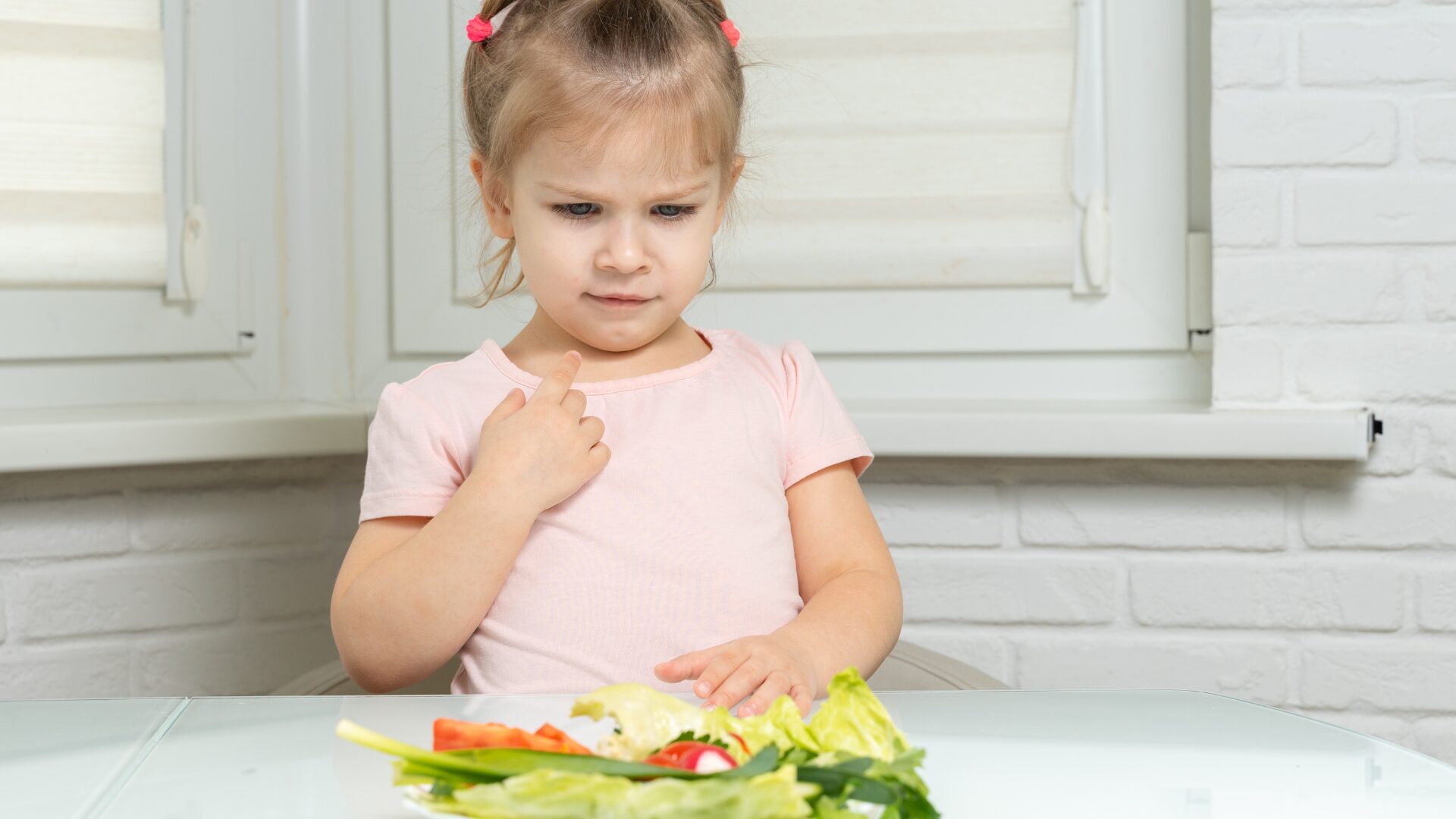
Why Your Toddler Refuses Vegetables — and What Actually Works
The lovingly prepared bowl of mashed carrot and beans lands on the tray. The toddler looks at it, pushes it away, and asks for the same three foods they ate yesterday. This scene, repeated nightly in households across India, is not a sign that something has gone wrong. It is one of the most well-documented and developmentally normal phases in early childhood eating.
The neophobia phase is real biology. Between roughly 18 months and 5 years, most children go through a phase called food neophobia — a heightened wariness of new or unfamiliar foods. Evolutionarily, this served a protective purpose: a toddler mobile enough to put things in their mouth but not experienced enough to distinguish safe from unsafe plants benefited from an instinctive caution toward anything new. That instinct hasn't disappeared just because the vegetable in question is objectively safe and nutritious.
Why pressure backfires. Research consistently shows that pressuring, bribing, or forcing a child to eat a rejected food increases resistance to that food over time, not acceptance. The child's brain associates the food with the stress of the conflict, not with genuine taste evaluation. "Just one bite" battles fought nightly tend to entrench refusal rather than resolve it.
What actually works — repeated, low-pressure exposure. The most robust finding in paediatric feeding research is the exposure effect: a food offered without pressure, repeatedly (often 8–15 times), becomes progressively more accepted — even if every single offer is initially refused. The measure of success in this window is not "did they eat it" but "was it offered calmly, again."
Hiding vegetables vs. incorporating them. Blending vegetables invisibly into a food (a paratha, a khichdi) can get nutrients in, but it doesn't build genuine vegetable acceptance because the child never learns to recognise and choose the food itself. A better long-term strategy pairs visible vegetables with genuinely appealing surrounding foods, so the child associates mealtime positively without a fight over any single item.
Let millet-pulse combinations do some of the nutritional heavy lifting. On days when vegetable acceptance is at zero, a nutrient-dense millet and pulse base means the meal isn't nutritionally empty even without the vegetable win. A moong dal khichdi or the Green-Gram Upma Premix delivers complete protein, iron, and fiber on their own — vegetables remain the goal, but their absence on a given day isn't a nutritional emergency.
Practical strategies that hold up in research: serve the same rejected vegetable alongside a preferred food repeatedly, without comment. Let toddlers touch, smell, and play with vegetables outside of mealtime pressure. Model eating the vegetable yourself, visibly and without commentary aimed at the child. Offer very small portions — a teaspoon, not a serving — to lower the psychological stakes of trying.
Final Thoughts
Vegetable refusal is a phase, not a verdict on your child's future eating habits or your parenting. The evidence is clear that calm, repeated, low-pressure exposure — sustained over weeks and months, not days — is what shifts acceptance. In the meantime, a nutritionally solid base of millets and pulses ensures the fight over broccoli doesn't become a fight over adequate nutrition too.
Explore Nutramore's toddler nutrition range: Green-Gram Upma Premix | Sugar-Free Cookies Combo