First Foods to Last Foods: A Millet-Based Weaning Guide
Somewhere around the five-and-a-half-month mark, most Indian parents start hearing the same question from every relative: "Has she started eating anything yet?" The pressure to begin solids arrives early, often earlier than it should, and it arrives with conflicting advice from every direction.
Underneath the noise, there is a genuinely good answer available in Indian food culture — one that predates all of it. Millets, soft-cooked and ground fine, have been the traditional first food in many Indian regions for generations, particularly ragi, whose use as an infant food across South India is old enough to be considered ancestral wisdom.
A note before anything else: every baby's readiness and pace is different. This is general guidance, not a substitute for your paediatrician's specific advice — particularly around allergen introduction and iron status.
Why 6 months, and why millets specifically. Before six months, an infant's gut lining is still developing the barrier that keeps large food proteins out of the bloodstream. By six months, birth iron stores also begin running low, and breast milk alone no longer meets rising iron and zinc needs. Ragi arrives as an unusually good answer to this exact gap — roughly 344mg of calcium per 100g, meaningful iron, and (when malted) very easy digestibility with reduced phytic acid.
Stage 1 (6–7 months) — first tastes. Thin, single-ingredient purees. Soak 1 tbsp malted ragi flour in 4–5 tbsp water or breast milk, cook on low heat until thin and pourable, cool fully. One new food at a time, held for 3–4 days before the next.
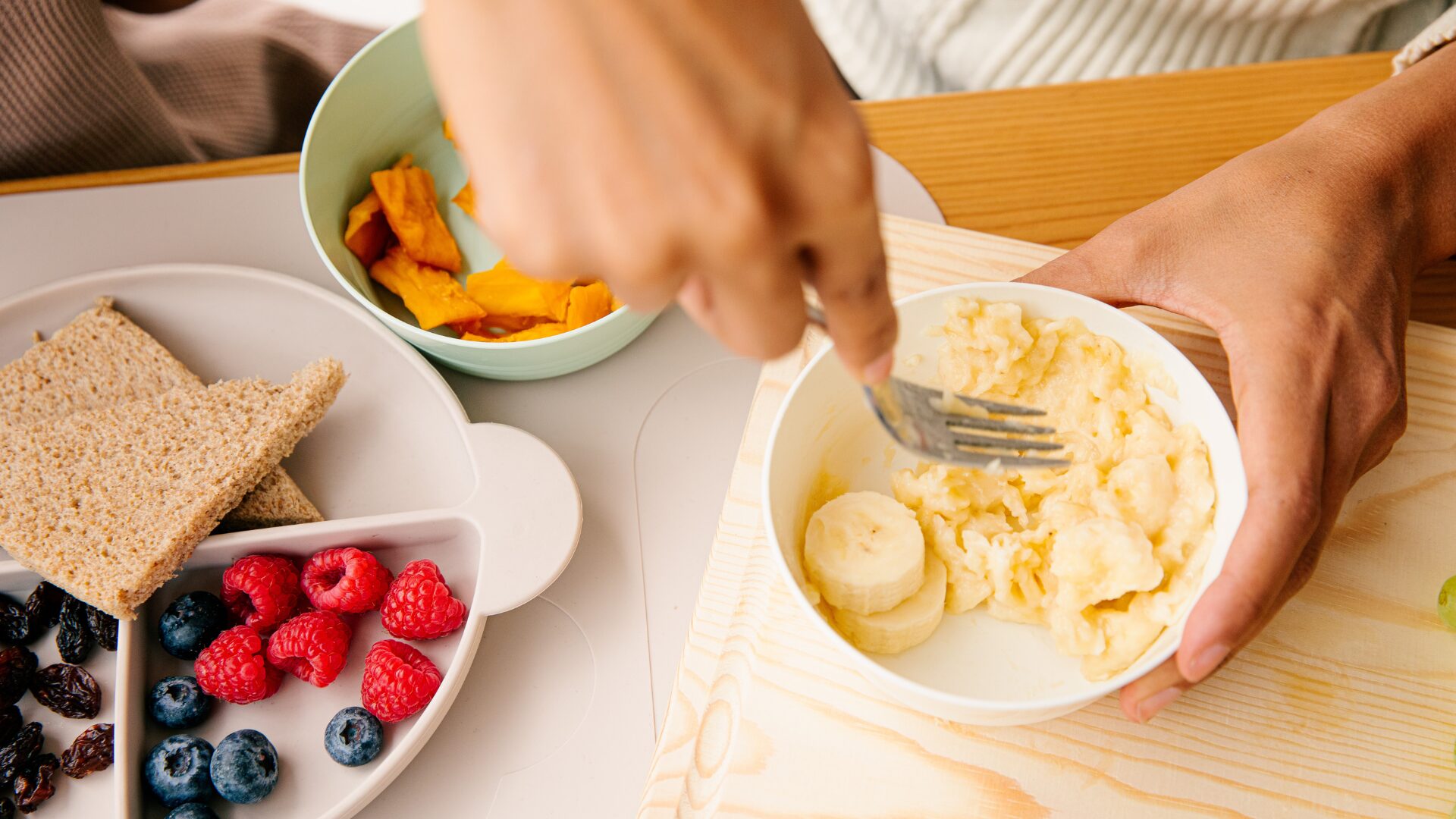
Stage 2 (7–9 months) — variety and thickness. Bajra and jowar enter now, mashed thoroughly. Pairing a millet with a well-cooked, blended moong dal begins the same protein-complementation principle that runs through Indian food culture at every age. Add vitamin C (mashed banana, a little guava) alongside iron-rich meals to boost absorption.
Stage 3 (9–12 months) — finger foods and family flavours. Soft jowar or bajra roti torn into pieces, a mashed millet-moong khichdi with a little ghee, soft steamed vegetables. Mild spices are fine; salt and sugar should stay minimal. Honey is off-limits before 12 months (infant botulism risk).
Stage 4 (12–24 months) — the toddler transition. Most nutrition should now come from table food. This is also the stage where a jaggery-sweetened, no-added-sugar cookie can appropriately enter the rotation. The Sugar-Free Cookies Combo (Ragi, Moong, Rice) is built specifically around this window — the calcium and protein density of whole millet-pulse combinations, without refined sugar or maida.
Stage 5 (24–36 months) — full toddler meals. A sample day: jowar or ragi dosa for breakfast, a Ragi Cookie or piece of fruit mid-morning, bajra khichdi with dal and curd for lunch, a few Rice-Ragi Cookies in the afternoon, soft jowar roti with dal for dinner.
Common mistakes to avoid: starting solids too early or too late; relying on a single grain indefinitely; adding salt and sugar for the parent's palate rather than the baby's need; giving up on a food after one or two rejections — repeated exposure (often 8–10 attempts) is often what it takes.
Final Thoughts
The instinct to reach for imported rice cereal comes from an understandable place — uncertainty and time pressure. But India's own food tradition solved this problem centuries ago. Ragi porridge as a first food, moong folded in for protein, bajra and jowar introduced as tolerance builds — this isn't an alternative to weaning. For much of India, it's simply how weaning has always been done.
Explore Nutramore's toddler-appropriate range: Sugar-Free Cookies Combo | Ragi Cookies | Rice-Ragi Cookies