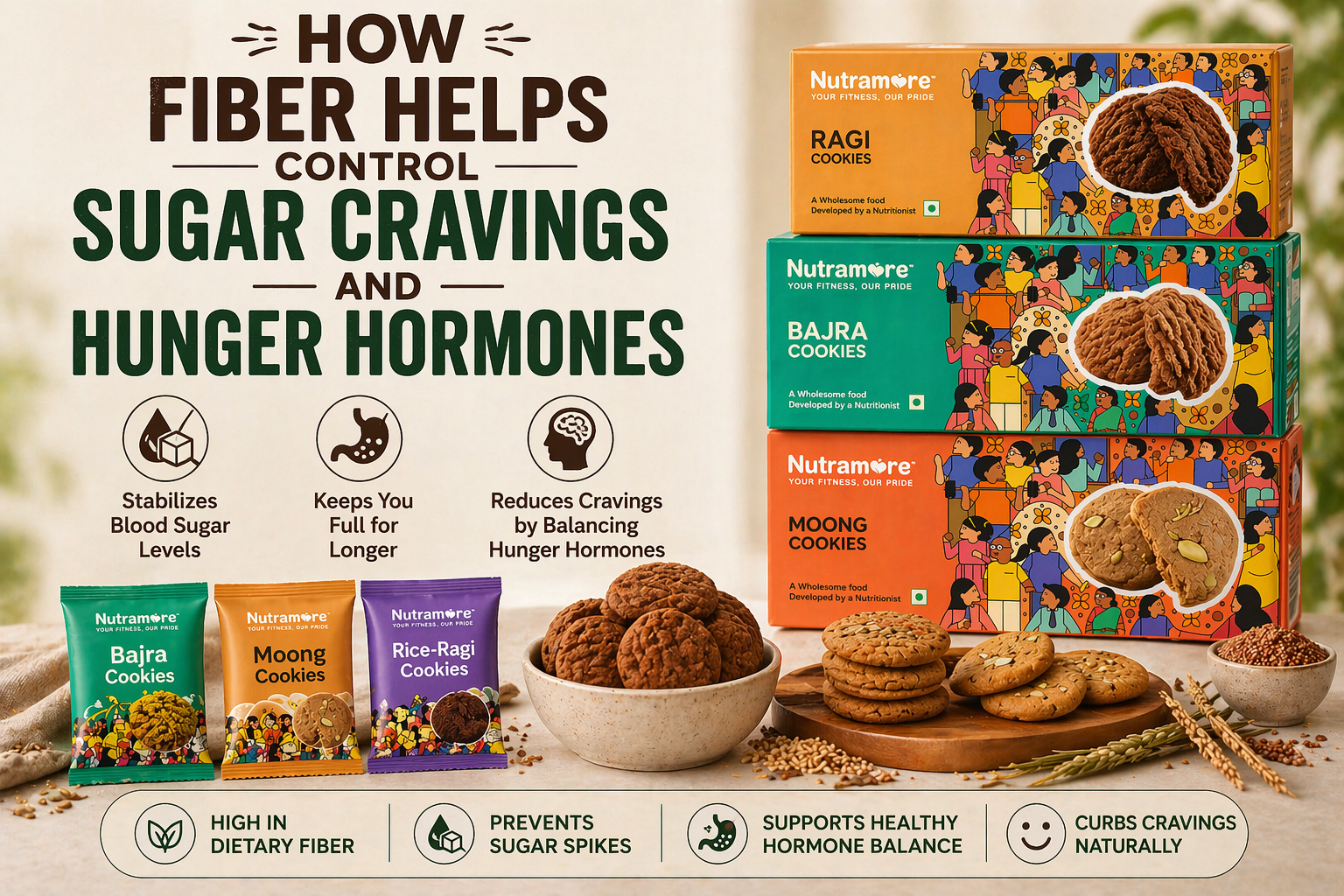
There is a moment most people recognise. It is 3pm, or 10pm, or the quiet half-hour after lunch. A craving arrives — specific, insistent, and entirely focused on something sweet. You are not particularly hungry. You ate well enough an hour ago. But the pull toward sugar feels almost involuntary.
For most people, this experience is so familiar that it seems inevitable — a fixed feature of human appetite, to be managed through willpower and discipline. Something to resist, white-knuckle through, or eventually surrender to with varying degrees of guilt.
What is rarely understood is that this craving is not primarily a matter of willpower or psychology. It is a hormonal event — a specific biochemical state produced by the composition of what you have eaten, the health of your gut microbiome, and the signalling chemistry of your digestive system. And it is a biochemical state that dietary fiber has an extraordinary capacity to prevent, moderate, and over time, reverse.
Fiber is not simply a digestive aid. It is a hormonal regulator. It directly influences the production and activity of the hormones that govern hunger, satiety, blood sugar, and the craving states that make dietary management so difficult for so many people.
Understanding exactly how this works — the specific mechanisms, not the general recommendation to "eat more fiber" — is what transforms fiber from a vague nutritional obligation into a targeted, practical tool for controlling the appetite signals that govern what and how much you eat.
Why Sugar Cravings Are Hormonal, Not Just Psychological
Sugar cravings are often treated as psychological events — moments of weakness, habitual reward-seeking, or emotional eating that require psychological intervention. And while psychological factors are real contributors, they operate on top of a more fundamental layer of hormonal biology that determines the intensity and frequency of cravings independent of mindset.
The sequence is consistent: a high-glycemic food produces a rapid blood glucose rise, insulin is released in large quantities, blood glucose drops rapidly — often below the pre-meal baseline in a process called reactive hypoglycaemia — and this glucose drop triggers two simultaneous hormonal responses that drive sugar craving.
The first is a surge in ghrelin — the primary hunger hormone produced in the stomach, which signals the hypothalamus to initiate feeding behaviour. Ghrelin rises in proportion to the speed and depth of the blood sugar drop. A rapid drop produces a large ghrelin surge. A large ghrelin surge produces intense, hard-to-resist hunger that is specifically biased toward calorie-dense, rapidly digesting foods — which is to say, exactly the sweet, refined foods that produced the drop in the first place.
The second is an elevation in cortisol — the stress hormone, which is released in response to hypoglycaemia as a counter-regulatory mechanism to raise blood sugar. Cortisol, beyond its metabolic effects, specifically increases the reward salience of sweet and fatty foods in the brain — making the appeal of a biscuit or a piece of chocolate feel qualitatively different and more urgent than it would in a normal hormonal state.
These two hormonal events — ghrelin surge and cortisol elevation — are the physiological foundation of the sugar craving. They are not volitional. They are chemical signals that override cognitive preferences with biological urgency.
The question is what prevents them from occurring in the first place. And the answer, overwhelmingly, is dietary fiber — which moderates blood glucose response, flattens the insulin curve, prevents the reactive hypoglycaemia that triggers ghrelin, and reduces the cortisol response that amplifies craving intensity.
How Fiber Works: The Four Mechanisms
Fiber does not work through a single mechanism. Its effects on hunger hormones and sugar cravings are produced through four distinct biological pathways, each operating at a different point in the digestive process and contributing to a different aspect of appetite control.
Mechanism 1: Viscous Fiber Slows Glucose Absorption
Soluble fiber — found in oats, legumes, millets, and many fruits — dissolves in water to form a viscous gel in the small intestine. This gel physically surrounds digested food particles and slows their transit through the intestinal wall, reducing the rate at which glucose enters the bloodstream.
The practical effect is a dramatically flattened blood glucose curve. Where a refined carbohydrate produces a sharp spike peaking at 30–45 minutes, the same carbohydrate consumed with soluble fiber produces a gentler, lower rise peaking at 60–90 minutes — and a correspondingly gentler insulin response, a more gradual decline, and a much shallower blood glucose nadir.
This shallower nadir is the critical point. The reactive hypoglycaemia that triggers ghrelin and cortisol does not occur because blood glucose never drops far enough to activate the counter-regulatory response. The craving that would have arrived at 3pm — the direct hormonal consequence of the high-glycemic lunch — simply does not materialise, because the fiber from the meal prevented the glucose drop that would have generated it.
Bajra (pearl millet) contains particularly significant quantities of soluble fiber, including beta-glucan — the same fiber compound extensively studied in oats and found to be one of the most potent blood-glucose-moderating food substances identified in nutritional research. Beta-glucan in bajra forms an especially viscous gel, producing blood glucose flattening effects measurable at relatively small amounts. Nutramore's Bajra Cookies and Bajra Moong Chocolate Cookies deliver bajra's beta-glucan in a snack format that provides this glucose-moderating effect at exactly the between-meal moments when cravings are most likely to strike.
Mechanism 2: Fiber Stimulates GLP-1 and PYY — The Satiety Hormones
When fiber reaches the lower digestive tract — specifically the ileum and colon — it triggers the release of two hormones that are among the most powerful satiety signals in human physiology: GLP-1 (glucagon-like peptide-1) and PYY (peptide YY).
GLP-1 is produced by L-cells in the gut lining and signals the hypothalamus to reduce appetite, slow gastric emptying, and enhance insulin sensitivity. Its effects on appetite are profound — it is the hormone targeted by the GLP-1 receptor agonist medications (semaglutide, liraglutide) that have produced dramatic weight loss results in clinical trials. The pharmaceutical approach is to mimic what dietary fiber produces naturally: sustained GLP-1 elevation that suppresses appetite and improves metabolic function.
PYY is released by the same gut cells and acts on the hypothalamus to suppress ghrelin — directly reducing the hunger signal that drives sugar cravings. Elevated PYY produces a sustained feeling of comfortable fullness that distinguishes it from the brief, sharp satiety of a blood sugar spike — PYY-mediated satiety lasts 2–4 hours and does not produce the rebound hunger that a glucose-driven satiety peak does.
Both GLP-1 and PYY are stimulated in proportion to the amount of fiber reaching the lower gut — which means that fiber-rich foods produce larger and more sustained satiety hormone responses than low-fiber equivalents of similar caloric content. A jowar-based snack that delivers 4–5g of fiber to the gut produces a meaningfully greater GLP-1 and PYY response than a maida biscuit of identical calorie count — and therefore a meaningfully greater satiety effect and stronger suppression of subsequent cravings.
The Jowar Upma Premix and Jowar Chilla Mix both deliver jowar's fiber matrix alongside 30g of complete protein — combining the fiber-driven GLP-1 and PYY response with the protein-driven ghrelin suppression that creates the strongest possible satiety effect from a single eating occasion.
Mechanism 3: Resistant Starch Produces Short-Chain Fatty Acids
Resistant starch — a category of dietary fiber particularly abundant in jowar, raw or cooled cooked millet, and green bananas — is not digested in the small intestine. It passes intact to the colon, where it is fermented by gut bacteria to produce short-chain fatty acids (SCFAs): principally butyrate, propionate, and acetate.
SCFAs are not merely fermentation byproducts. They are signalling molecules with powerful effects on appetite regulation, glucose metabolism, and the hormonal environment that governs sugar cravings.
Butyrate is the primary fuel source for colonocytes (the cells lining the colon) and directly stimulates GLP-1 secretion from L-cells — amplifying the satiety signal described above. It also crosses the blood-brain barrier and directly modulates appetite-regulating neurons in the hypothalamus, reducing the brain's response to food reward signals and specifically dampening the neurological basis of sugar craving.
Propionate is converted by the liver into glucose precursors that are used to sustain blood glucose during fasting periods — reducing the likelihood of the hypoglycaemic drops that trigger ghrelin surges. It also directly stimulates PYY secretion from gut cells, contributing to the sustained satiety effect of fiber-rich meals.
Acetate crosses the blood-brain barrier and directly suppresses the firing of appetite-stimulating neurons (AgRP neurons) in the hypothalamus — reducing baseline appetite at a neurological level that is independent of the gut-hormone pathway.
Together, the SCFA production from resistant starch in millets creates a multi-layered appetite suppression that operates at the gut level, the liver level, and the brain level simultaneously. This is why the appetite-control effect of a millet-rich diet is qualitatively different from the brief satiety of any refined food — the SCFAs produced from millet's resistant starch are sustaining appetite suppression hours after the meal that contained them.
Mechanism 4: Fiber Shapes the Gut Microbiome — The Long-Term Craving Regulator
The three mechanisms above operate within hours of consuming fiber-rich food. The fourth mechanism operates on a longer timescale — weeks and months — and in many ways is the most important for understanding why people who consistently eat fiber-rich diets report genuine reductions in sugar craving intensity over time, not merely temporary craving management.
The gut microbiome — the community of several trillion bacteria residing in the colon — is not a passive digestive bystander. It is an active participant in the regulation of appetite, mood, and food preference through the gut-brain axis: the bidirectional communication pathway between intestinal bacteria and the brain via the vagus nerve, immune signalling, and hormone production.
Critically, the composition of the gut microbiome determines which food signals it sends to the brain. A microbiome dominated by sugar-feeding bacteria — the Firmicutes and Proteobacteria species that proliferate on refined, low-fiber diets — sends appetite signals that specifically demand more of the sugar that feeds them. This is one of the mechanisms through which sugar cravings become self-reinforcing: the bacteria that thrive on sugar generate neurochemical signals that the brain interprets as craving, which drives more sugar consumption, which further enriches the sugar-feeding bacterial population.
Fiber reverses this dynamic by selectively feeding the beneficial bacteria — particularly Bifidobacterium and Lactobacillus species — that produce the SCFAs described above and that send satiety rather than craving signals to the brain. Over weeks of consistently high fiber intake, the microbiome composition shifts: sugar-feeding bacteria are outcompeted by fiber-feeding species, SCFA production increases, GLP-1 and PYY output rises, and the neurochemical signals driving sugar cravings diminish — not because willpower has improved, but because the bacterial population generating the craving signal has been reduced.
This is the deep mechanism behind the observation that switching to a fiber-rich, whole-food diet produces a genuine reduction in sugar craving intensity over four to eight weeks — not just a temporary suppression that requires constant management, but an actual change in the appetite signals the gut generates.
The Fiber Gap in Modern Indian Snacking
Understanding that fiber controls hunger hormones is one thing. Understanding how comprehensively modern Indian snacking fails to deliver fiber is what makes this knowledge actionable.
The Indian Council of Medical Research recommends a daily dietary fiber intake of 40g for adults. Studies consistently show that average urban Indian adults consume approximately 15–20g per day — less than half the recommended amount. And most of this deficiency accumulates not from main meals — which typically include dal and sabzi that contribute some fiber — but from snacks, which in the modern Indian diet are almost entirely fiber-free.
A standard Indian tea-time snack pattern — two or three maida biscuits and a cup of sweetened chai — contains approximately 0.5–1g of dietary fiber. A packet of popular fried namkeen contains approximately 1–2g. A packaged granola bar marketed as "healthy" may contain 2–3g, primarily from added inulin rather than intrinsic whole-grain fiber.
Compare this to whole millet-based snacks: jowar flour contains approximately 10g of fiber per 100g. Bajra contains approximately 8g. Ragi contains approximately 11g. Green gram (moong) contains approximately 16g per 100g. A snack built on these ingredients — like Nutramore's Millet Methi Crispies or any of the whole millet cookie range — delivers 3–5g of intrinsic whole-grain fiber per serving, compared to the near-zero fiber of refined alternatives.
The difference in daily fiber intake between a person who snacks on refined maida products and one who snacks on whole millet products may be 10–15g — a difference that, maintained consistently, produces measurably different gut microbiome compositions, measurably different GLP-1 and PYY output, and measurably different sugar craving frequency and intensity.
This is not a marginal effect. It is the difference between a gut hormonal environment that generates persistent sugar cravings and one that suppresses them.
Fenugreek: The Craving-Control Ingredient That Belongs in Every Indian Pantry
Among the fiber-containing ingredients available in Indian cuisine, fenugreek (methi) occupies a special position for sugar craving control — and understanding why makes the inclusion of methi in a well-formulated snack particularly valuable.
Fenugreek seeds contain a specific soluble fiber called galactomannan — a polysaccharide that forms an exceptionally viscous gel in the digestive tract, more viscous per gram than the soluble fiber in oats or bajra. This extraordinary viscosity produces correspondingly powerful effects on glucose absorption, insulin response, and satiety hormone stimulation.
Clinical trials examining fenugreek consumption in both diabetic and non-diabetic subjects have consistently demonstrated reductions in postprandial glucose of 25–50%, reductions in fasting blood glucose of 10–15% over sustained periods, and significant reductions in self-reported sugar cravings over four to eight weeks of daily consumption.
Fenugreek also contains 4-hydroxyisoleucine — a rare amino acid found almost exclusively in fenugreek — that directly stimulates insulin secretion from the pancreatic beta cells in a glucose-dependent manner. This means it improves insulin sensitivity specifically when blood glucose is elevated, without the risk of hypoglycaemia that pharmaceutical insulin sensitisers carry.
Nutramore's Millet Methi Crispies combine the multi-millet fiber matrix with fenugreek's galactomannan — creating a snack whose fiber profile addresses glucose moderation, satiety hormone stimulation, and insulin sensitivity simultaneously. As a mid-afternoon snack — the window when sugar cravings are most intense for most people — they are particularly well-positioned to interrupt the hormonal cascade before it produces the craving that leads to poor snack choices.
Fiber and the Serotonin Connection
There is a third hormonal pathway through which fiber influences sugar cravings that is less discussed but increasingly well-documented: the relationship between gut fiber, gut bacteria, and serotonin production.
Approximately 90–95% of the body's serotonin is produced not in the brain, but in the gut — specifically by enterochromaffin cells in the intestinal lining, stimulated in part by the SCFA butyrate produced from fiber fermentation. Serotonin in the gut is primarily involved in regulating gut motility and communicating satiety information to the brain via the vagus nerve.
Crucially, serotonin availability in the brain — which influences mood, reward sensitivity, and the emotional drivers of craving — is linked to gut serotonin production and to the tryptophan metabolism that gut bacteria regulate. A fiber-depleted gut microbiome produces less butyrate, which stimulates less gut serotonin production, which can contribute to the serotonin depletion that makes sweet foods feel like emotional regulation tools rather than simply food.
This is the biological basis of the observation that sugar cravings intensify under stress and emotional difficulty — because stress depletes serotonin, and sugar temporarily raises it through a dopamine-mediated reward pathway. The person is not simply weak-willed — they are seeking serotonin through the fastest available route.
Consistent dietary fiber intake — by supporting the gut bacteria that produce butyrate, which stimulates gut serotonin, which feeds into the serotonin-tryptophan axis — provides a genuine nutritional contribution to the serotonin adequacy that reduces the emotional drive to self-medicate with sugar.
This is one of the most compelling arguments for understanding millet-based, fiber-rich snacking not just as metabolic management but as genuine emotional and psychological support — the fiber is not just flattening glucose curves, it is contributing to the neurochemical environment that makes sweet foods less urgently appealing.
The Timeline: How Quickly Fiber Changes Craving Patterns
One of the most practical questions for anyone beginning to shift toward a higher-fiber diet is: how long does it take to notice a difference in craving intensity?
The answer has a short-term and a long-term component.
Within 2–4 hours of eating a fiber-rich snack: The immediate effect is felt. GLP-1 and PYY are elevated. Ghrelin is suppressed. The blood glucose curve is flat. The specific craving that would have arisen from a glucose crash simply does not materialise. This immediate effect requires no microbiome change — it is the direct hormonal consequence of the fiber in the current meal.
Within 1–2 weeks of consistent high-fiber eating: Gastric emptying begins to slow as the gut adapts to higher fiber volumes. The GLP-1 and PYY response to the same meal begins to increase as the gut becomes more responsive to fiber signals. Early microbiome shifts begin — Bifidobacterium and Lactobacillus populations begin to expand. The person may notice that cravings arrive less frequently or with less intensity.
Within 4–8 weeks: The gut microbiome composition has measurably shifted. SCFA production is higher. The neurological craving signal is genuinely reduced at a baseline level. Most people making this transition consistently report that they no longer feel the same urgency around sweet foods — not because they are controlling themselves more successfully, but because the craving itself is less insistent.
Beyond 3 months: The microbiome shift is consolidated. Insulin sensitivity has improved (a consequence of better SCFA production and lower chronic glucose variability). The hormonal baseline has genuinely changed. Sugar cravings are occasional rather than persistent, and their intensity when they do arise is a fraction of what it was before the dietary shift.
This timeline explains why advice to "just eat less sugar" consistently fails — it addresses the symptom without addressing the cause. The craving is produced by the gut's hormonal output, which is shaped by the gut microbiome, which is shaped by the fiber content of the diet. Removing sugar from the diet without adding fiber does not change the microbiome or the hormonal output — the craving continues, eventually producing the compliance failure that makes restrictive approaches so unsustainable.
Adding fiber — consistently, through every snack occasion — is what changes the system that generates the craving in the first place.
Practical Fiber-First Snacking: What to Choose and When
Translating this science into daily practice requires choosing snacks that actually deliver meaningful fiber — not the near-zero fiber of refined alternatives, but the 3–6g per occasion that begins to meaningfully shift GLP-1, PYY, and over time, microbiome composition.
Mid-morning (10am) — the first craving prevention window:
Nutramore's Jowar Chocolate Cookies or Bajra Moong Chocolate Cookies — both delivering jowar or bajra fiber alongside pulse protein — create the combined fiber-plus-protein satiety signal that suppresses ghrelin through the late morning, preventing the blood sugar dip that would otherwise generate a pre-lunch craving. The chocolate flavour satisfies any sweet taste preference without the refined sugar that would create the very craving cycle fiber is designed to prevent.
Mid-afternoon (3:30–4pm) — the highest-risk craving window:
Millet Methi Crispies at this window are specifically valuable — the galactomannan from fenugreek produces immediate blood glucose flattening and GLP-1 stimulation, the multi-millet fiber feeds SCFA-producing bacteria, and the savoury flavour profile satisfies without creating a sweet-craving precedent. Alternatively, Baked Protein Sticks paired with a small piece of whole fruit — the dal fiber and protein combined with the fruit's pectin — creates an effective mid-afternoon craving prevention combination.
Evening (6–7pm) — the emotional eating window:
Ragi Chocolate Cookies or Rice Ragi Cookies — ragi's polyphenol content and exceptional fiber density make it particularly well-suited to the evening window when serotonin-mediated emotional eating is most common. The calcium in ragi also supports GABA production — the calming neurotransmitter that reduces the anxiety-driven craving that peaks in the early evening for many people.
For a more substantial fiber and protein contribution at any snack occasion, Green-Gram Upma Premix or Jowar Chilla Mix deliver the highest fiber-plus-protein combination available in the Nutramore range — genuinely effective for the most persistent craving patterns.
For families building a fiber-first snack pantry across multiple taste preferences, the All-Time Favourite Cookies Combo rotates through jowar, rice-ragi, and bajra — covering three distinct millet fiber profiles across the week. The Gluten-Free Cookies Combo adds the multigrain coffee variant for those who prefer a less sweet, more complex flavour profile. And the Try & Taste Trial Pack with 9 flavour mini packs allows the whole family to identify which millet fiber profiles they genuinely reach for — making consistency, the most important variable in microbiome reshaping, achievable without boredom.
Why "Eating Less Sugar" Is Only Half the Answer
It is worth addressing directly the most common dietary recommendation for managing sugar cravings — which is simply to eat less sugar. While this is true as far as it goes, it addresses the craving at the point of indulgence rather than at the point of generation.
The craving for sugar is produced upstream — by blood glucose crashes, by ghrelin surges, by a gut microbiome signalling for the refined carbohydrates it has been fed. Reducing sugar consumption addresses none of these upstream causes. It simply places willpower between the person and the craving that the upstream hormonal environment continues to generate.
This is why people who restrict sugar without improving fiber intake consistently find that cravings persist at full intensity for months — they have removed the fuel but not changed the engine that generates the demand. The resistance required is as high on day 60 as it was on day one.
Adding fiber, by contrast, progressively dismantles the upstream machinery that generates the craving. The need for willpower diminishes not because the person becomes more disciplined, but because the hormonal signal driving the craving weakens as the gut microbiome shifts, SCFA production increases, GLP-1 and PYY output rises, and the serotonin axis stabilises.
The full answer to sugar cravings is therefore: reduce the refined carbohydrates that generate craving-producing hormonal states, and simultaneously increase the dietary fiber that reshapes the hormonal environment to one in which those craving states no longer arise with the same frequency or intensity.
These two changes work synergistically. Reducing sugar reduces the substrate that feeds craving-generating gut bacteria. Increasing fiber increases the substrate that feeds craving-suppressing gut bacteria. Together, they produce a microbiome and hormonal shift that neither change achieves as effectively alone.
Final Thoughts
Sugar cravings are not a character weakness. They are a hormonal event — produced by blood glucose instability, ghrelin surges, cortisol elevation, a sugar-dominant gut microbiome, and a serotonin axis chronically stressed by refined, low-fiber eating patterns.
Dietary fiber addresses every one of these mechanisms. It flattens blood glucose through viscous gel formation. It stimulates GLP-1 and PYY to produce lasting satiety. It generates SCFAs that suppress appetite at the brain level and improve insulin sensitivity at the cellular level. And over weeks and months, it reshapes the gut microbiome from one that demands sugar to one that produces satiety — changing the appetite environment itself rather than simply managing the symptoms of a poor one.
The most accessible, most consistent, and most culturally appropriate source of this fiber in the Indian context is what has always been available: millets and pulses — jowar, bajra, ragi, moong, green gram — in whole, minimally processed forms.
Making these foods the foundation of daily snacking is not a temporary dietary intervention. It is a permanent upgrade to the biological systems that govern appetite — one that produces progressively less craving, progressively more satiety, and progressively less dependence on willpower with every week it is maintained.
The craving diminishes not because you fight it harder. It diminishes because you remove the conditions that produce it.
Explore Nutramore's full range of fiber-rich millet snacks at nutramore.in/our-products