
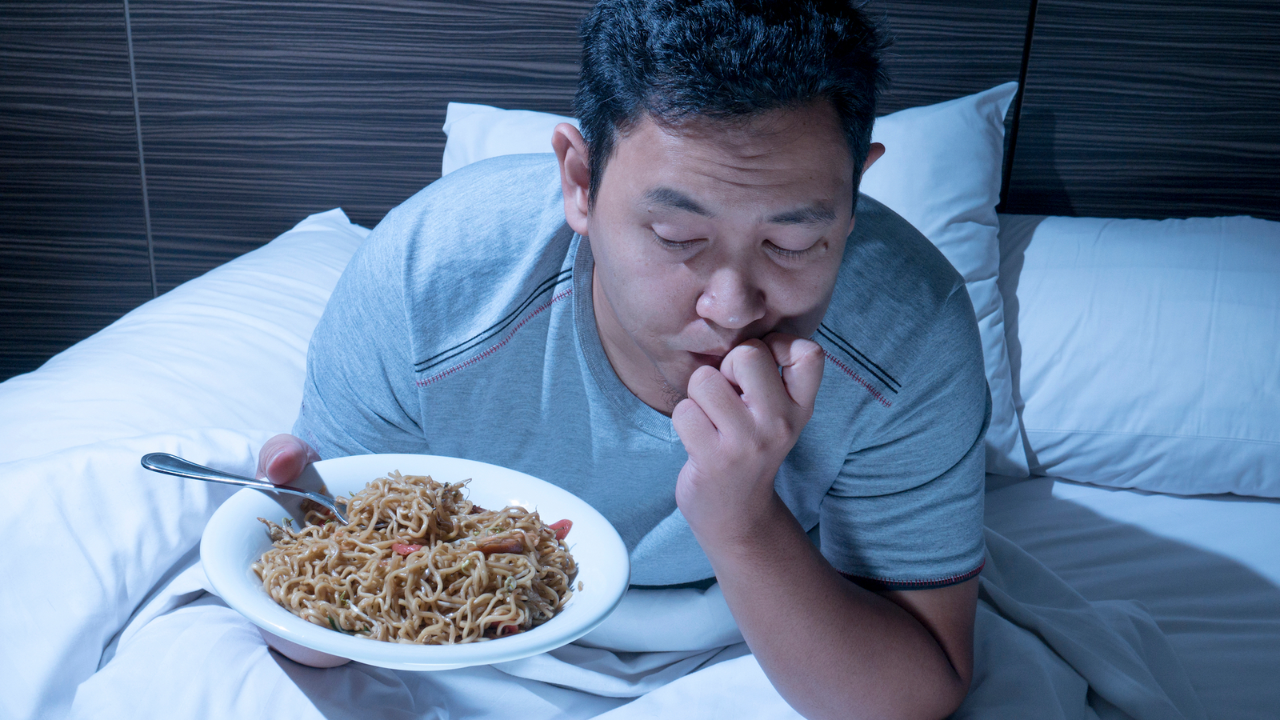
It begins innocuously. Dinner is done, the kitchen is cleaned, you have settled into the evening — and then, somewhere between 9pm and midnight, the urge appears. Not always dramatic hunger. Sometimes just the pull toward something sweet, something salty, something to occupy the hands and the mind during the quiet hours when the day's work is finished and the only thing left is the television and the quiet of the house.
For many Indian families, late-night snacking is not even identified as snacking. It is the biscuits with late chai. The leftover from dinner reheated at 10pm. The handful of namkeen while watching a show. The sweet that comes out of the fridge after everyone else is in bed. These are habitual, unremarkable, deeply human behaviours — and they are, from a metabolic standpoint, among the most consistently harmful patterns in modern nutrition.
Not because the foods themselves are necessarily different from what might be eaten at 4pm. But because of when they are eaten — specifically, because the human body's metabolic machinery is governed by a precise biological clock whose settings at 10pm are dramatically different from its settings at 4pm, in ways that make the same food produce different — and more damaging — metabolic consequences at night than at almost any other time of day.
This blog explains the full science of late-night eating: what it does to digestion, what it does to sleep architecture, what it does to weight and metabolism, why it happens in the first place, and what — if anything — is genuinely safe to eat if real hunger strikes in the evening hours.
The Circadian Clock: Why Timing Is a Nutritional Variable
The foundation of understanding late-night eating's specific harms is the circadian rhythm — the 24-hour biological clock that governs virtually every physiological process in the human body.
The circadian system is not a single clock. It is a network of molecular timekeepers present in essentially every cell of the body — in the liver, the pancreas, the gut, the adipose tissue, and the brain — all synchronised to the central pacemaker in the hypothalamus's suprachiasmatic nucleus (SCN), which in turn is primarily set by light exposure.
These peripheral clocks are not decorative. They actively regulate the timing of metabolic processes — determining when the liver is optimised for glucose storage versus glucose output, when the pancreas is most responsive to insulin signalling, when digestive enzyme secretion peaks, when gut motility is most active, and when adipose tissue is most receptive to fat storage signals.
The critical insight — now extensively documented in the field of chronobiology — is that metabolic function varies predictably across the 24-hour cycle in ways that make the same meal or snack produce different biological outcomes depending on when it is consumed.
Insulin sensitivity — the efficiency with which cells respond to insulin to clear glucose from the blood — is highest in the morning and early afternoon, and falls progressively through the day, reaching its lowest point in the late evening and overnight hours. A meal that produces a modest insulin response at noon may produce a 20–30% larger insulin response at 10pm — with the same food, the same portion, the same glycemic index — simply because the body's insulin machinery is operating at reduced efficiency.
Digestive enzyme secretion follows a similar circadian pattern — peaking during the active day hours and reducing in the evening in preparation for the metabolic rest state of sleep. Food consumed late at night encounters a digestive system that is winding down — producing less pepsin, less pancreatic lipase, less bile acid secretion — and is therefore processed more slowly and less completely than food consumed during the day.
Core body temperature, which is directly linked to metabolic rate, drops in the evening in preparation for sleep — reducing the rate at which the body burns energy from consumed food.
Leptin, the satiety hormone produced by adipose tissue, rises in the evening — which should produce a feeling of fullness and reduce late-night appetite. But in people with disrupted circadian rhythms, insulin resistance, or sleep deprivation, this leptin rise is blunted — contributing to the persistent evening hunger that drives late-night snacking despite an adequate daily caloric intake.
All of these circadian factors converge to make late-night eating metabolically distinct from daytime eating — and metabolically disadvantaged in ways that directly affect digestion, sleep, and long-term weight.
How Late-Night Eating Affects Digestion
Gastric Emptying Slows Significantly
Gastric emptying — the rate at which food leaves the stomach and enters the small intestine — is governed in part by the autonomic nervous system, which shifts from its daytime sympathetic-dominant state toward parasympathetic dominance as the evening progresses and the body prepares for sleep.
In the daytime, sympathetic nervous activity maintains brisk gastric motility — food moves efficiently through the stomach into the small intestine, where nutrient absorption occurs at its peak efficiency. In the late evening, gastric motility slows. The same meal that would leave the stomach in 2–3 hours at lunchtime may take 4–5 hours at 10pm — sitting in the stomach for longer, fermenting more, producing more acid and gas, and placing greater mechanical pressure on the lower oesophageal sphincter.
This slowed gastric emptying has specific consequences:
Acid reflux and GERD. When food remains in the stomach for extended periods, it increases intragastric pressure and the likelihood of acid refluxing upward into the oesophagus. Going to bed with a partially full stomach — which late-night snacking ensures — dramatically increases this risk. Research consistently shows that the single most effective non-pharmacological intervention for GERD is avoiding food within 2–3 hours of lying down. Late-night snacking is the dietary behaviour most directly opposed to this recommendation.
Bloating and flatulence. Food fermenting in the gut for longer periods at reduced digestive efficiency produces more gas — particularly from carbohydrate-heavy snacks whose fermentation by gut bacteria generates hydrogen and carbon dioxide. The bloating and abdominal discomfort that many people experience overnight or on waking is often directly attributable to late-night eating rather than any digestive pathology.
Disrupted gut repair. The overnight period is when the gut lining undergoes its primary cycle of cellular repair and regeneration — shedding damaged epithelial cells and replacing them with new ones. This process is regulated by the circadian clock and requires a resting digestive system. Late-night eating disrupts this repair cycle by maintaining digestive activity through hours when the gut is biologically programmed to rest — contributing to the progressive degradation of gut lining integrity that underlies leaky gut syndrome, food sensitivity development, and chronic gut inflammation.
The Microbiome's Overnight Work
The gut microbiome follows its own circadian rhythm. During the day, microbial activity is oriented toward fermenting dietary fiber, producing short-chain fatty acids, and interacting with the mucosal immune system. Overnight, the microbial community undergoes its own maintenance cycle — species ratios shift, certain populations become more active, and the microbiome as a whole performs functions that support the gut's regenerative overnight processes.
Late-night eating — particularly of refined carbohydrates and sugar — disrupts this microbial circadian rhythm by providing substrate for fermentation at a time when the microbiome is not optimally positioned to handle it. Research in chronobiology has shown that disrupted microbiome circadian rhythms are associated with increased gut permeability, impaired SCFA production, and the progressive microbiome dysbiosis that drives sugar cravings, inflammation, and metabolic disease.
How Late-Night Eating Affects Sleep
The relationship between late-night eating and sleep quality is bidirectional and well-documented — and understanding it requires looking at three distinct pathways through which food consumption close to sleep disrupts sleep architecture.
Blood Sugar and Sleep Architecture
Sleep is not a uniform state. It progresses through cycles of non-REM and REM sleep, each cycle lasting approximately 90 minutes, with the early cycles dominated by deep slow-wave sleep (SWS) — the most physically restorative phase — and later cycles containing more REM sleep, which is critical for memory consolidation, emotional processing, and the clearance of metabolic waste products from the brain.
Blood glucose regulation plays a direct role in sleep architecture. The transition from wakefulness to deep sleep is associated with a reduction in glucose utilisation by the brain — the sleeping brain runs on a more efficient metabolic substrate than the waking brain, requiring less glucose per unit of time.
When a high-glycemic snack is consumed close to bedtime — biscuits, chips, sweet desserts, sugary tea — it produces a blood glucose spike that the body must manage during the first hours of sleep. The insulin response required to clear this glucose elevates cortisol (which is counter-regulatory to insulin) during a period when cortisol should be at its lowest. Elevated cortisol during early sleep disrupts the slow-wave sleep cycle — reducing SWS duration and depth, which means poorer physical restoration, less growth hormone release (which occurs primarily during deep sleep), and worse metabolic recovery overnight.
Melatonin and Insulin Sensitivity
Melatonin — the primary sleep hormone — is not merely a signal for sleep onset. It is an active participant in metabolic regulation during the overnight period. Melatonin directly reduces the secretion of insulin from pancreatic beta cells and reduces the sensitivity of peripheral tissues to insulin.
This is a circadian adaptation: overnight, when food is not being consumed, the body does not need insulin's glucose-clearing function. Reducing insulin activity allows glucose to be directed to the brain — which requires it for basic overnight maintenance — without triggering fat storage. The system works elegantly when no food is consumed during the overnight melatonin-elevated window.
When food is consumed after melatonin has risen — typically after 9–10pm — the combined effect of melatonin-induced insulin suppression and the normal circadian decline in insulin sensitivity produces a dramatically amplified blood glucose response to the same food. Research published in Current Biology has shown that blood glucose responses to identical test meals are 17–29% higher when meals are consumed in the evening versus the morning — a difference attributable to the circadian decline in insulin function rather than any change in the food itself.
This amplified glucose response means that a late-night snack with a moderate daytime glycemic index produces what is effectively a high-glycemic response at night — with correspondingly greater insulin secretion (when the melatonin suppression is overcome), greater fat storage signalling, and greater disruption to sleep architecture.
Digestive Discomfort and Sleep Fragmentation
Beyond the hormonal mechanisms, the simple physical discomfort of a partially full stomach, reflux, bloating, and increased gut motility from undigested food directly disrupts sleep through fragmentation — more brief awakenings, more light-sleep periods, and less total time in the restorative deep sleep phases.
Polysomnography studies comparing sleep quality in subjects who ate within one hour of bedtime versus those who finished eating three hours before bed consistently show measurably worse sleep architecture in the late-eating group: more arousals, less SWS, more time in light sleep, and lower sleep efficiency — the proportion of time in bed actually spent sleeping.
These sleep disruptions are not just inconvenient. Impaired sleep quality drives the next day's appetite dysregulation — specifically, elevated ghrelin and reduced leptin from poor sleep increase appetite and reduce satiety by 15–25%, driving caloric overconsumption the following day. Late-night eating therefore creates a self-reinforcing cycle: it disrupts sleep, disrupted sleep elevates appetite hormones, elevated appetite drives more late-night eating.
How Late-Night Eating Affects Weight and Metabolism
The weight management consequences of late-night eating operate through three distinct mechanisms — each independently significant and collectively powerful.
Mechanism 1: Amplified Fat Storage at Night
The combination of lower insulin sensitivity, melatonin-mediated insulin suppression, and reduced core body temperature in the evening creates a metabolic environment in which the same caloric load is more likely to be stored as fat than at any other time of day.
Research in chronobiology has directly measured this effect. A landmark study from the Salk Institute demonstrated that mice fed the same caloric intake in a time-restricted pattern (eating only during active hours) showed dramatically different metabolic outcomes from mice eating ad libitum across the full 24 hours — the time-restricted group was leaner, had lower blood glucose, and had healthier lipid profiles despite identical caloric consumption. Subsequent human research has confirmed the principle: calories consumed at night are metabolically more damaging than the same calories consumed during the day, specifically because the circadian machinery that determines fat storage versus fat oxidation is set toward storage during overnight hours.
The practical implication: a 200-calorie snack at 4pm and a 200-calorie snack at 10pm produce different fat storage outcomes — not dramatically different in a single instance, but significantly different when the pattern is repeated nightly across months and years.
Mechanism 2: Suppressed Overnight Fat Oxidation
One of the most important metabolic events during the overnight fasting period is fat oxidation — the body's use of stored fat as fuel during the hours when no dietary energy is being consumed. This overnight fat burning is one of the primary mechanisms through which the body manages body composition in the absence of caloric restriction.
Late-night eating suppresses this overnight fat oxidation by providing dietary substrate that the body uses preferentially before turning to stored fat. Insulin released in response to a late-night snack specifically inhibits lipolysis — the breakdown of stored fat — for several hours after the snack is consumed. During those hours, fat oxidation is suppressed and the body runs on the dietary substrate of the snack instead of its fat stores.
For someone eating at 10pm and sleeping until 6am, the overnight fat-burning window — which in the absence of late-night eating might begin around 3–4 hours after dinner — may be compressed by late-night eating to only 3–4 hours instead of 8–10 hours. The cumulative loss of overnight fat oxidation across a year of late-night snacking is a significant contributor to visceral fat accumulation and weight gain that does not show up in any daily calorie count.
Mechanism 3: The Sleep Deprivation-Appetite Cascade
As described above, late-night eating disrupts sleep, and disrupted sleep drives the appetite dysregulation that produces weight gain. The specific hormonal changes from inadequate or poor-quality sleep — elevated ghrelin, reduced leptin, elevated cortisol, reduced GLP-1 responsiveness — produce a measurably increased appetite the following day, with a specific bias toward calorie-dense, high-carbohydrate foods.
Studies at the University of Chicago have quantified this: one week of sleep restriction (5.5 hours versus 8.5 hours) produced a 24% increase in overall appetite and a 45% increase in appetite for calorie-dense snacks specifically. The mechanism is entirely hormonal — ghrelin rises by approximately 28% and leptin falls by approximately 18% with sleep restriction, producing an appetite increase that most people cannot override with willpower.
This cascade — late-night eating → disrupted sleep → elevated appetite → caloric overconsumption → weight gain → more appetite dysregulation — is one of the most consistent and self-reinforcing patterns in metabolic medicine. Breaking it requires addressing the late-night eating that initiates the cascade, not just the downstream caloric overconsumption.
Why Late-Night Hunger Happens: The Root Causes
Understanding why late-night hunger occurs is as important as understanding its consequences — because addressing the cause is more effective than managing the craving in the moment.
Inadequate daytime protein. This is the most common single cause of late-night hunger in people who eat regular meals. Protein, as documented in the protein snacking blog, suppresses ghrelin for 2–3 hours and stimulates GLP-1 and PYY for sustained satiety. People who eat carbohydrate-dominant daytime snacks — biscuits, crackers, namkeen — experience ghrelin rebounds throughout the day that compound by evening into a significant appetite deficit. Late-night hunger is often the accumulated consequence of insufficient protein across the previous 12–14 hours.
Insufficient daytime calories. People who undereat during the day — particularly those following calorie-restrictive approaches — accumulate a caloric deficit by evening that manifests as strong late-night hunger. The biology does not respect the intention to create a deficit; it simply registers a deficit and compensates through elevated ghrelin. This is one of the key mechanisms through which caloric restriction leads to late-night overeating that negates the daytime restriction.
Blood sugar instability from poor daytime snacking. A day of high-glycemic snacking — refined biscuits, sweet tea, packaged namkeen — creates a pattern of blood sugar spikes and crashes that leaves blood glucose volatile by evening. The late-evening blood glucose nadir that follows a moderately sized dinner eaten after a day of glycemic volatility can be significant — triggering a ghrelin surge in the 9–11pm window that feels indistinguishable from genuine hunger.
Stress and emotional eating. The evening hours are often when the day's stress, unresolved emotional content, and social isolation reach their greatest subjective intensity. Cortisol, which has been elevated by daytime stress, peaks again in the early evening — and elevated cortisol specifically increases the reward salience of sweet and fatty foods in the brain, creating a neurological pull toward comfort food that operates independently of physiological hunger.
Habit and conditioned reward. The brain's reward circuit learns quickly. If late-night eating has been a regular pattern — biscuits with chai at 9pm, dessert after dinner, namkeen during late-night television — the brain begins to anticipate and generate appetite at these times through conditioned response, regardless of physiological need. The hunger that arises at 9pm after a habit of 9pm snacking is partly conditioned rather than purely physiological — which is why it persists even after dinner has been adequate.
The Circadian Eating Timeline Visualised
Here is how the body's metabolic state changes across the day — and what it means for eating timing:
The pattern is consistent across every metabolic variable: the earlier in the day food is consumed, the more favourably the body's circadian machinery is positioned to process it. The later food is consumed, the more unfavourably positioned it is — for insulin sensitivity, for digestive efficiency, for fat storage risk, and for sleep quality.
Addressing the Root Causes: The Daytime Fix for the Night-time Problem
Because late-night hunger is predominantly caused by daytime nutritional patterns rather than evening circumstances, the most effective intervention for late-night snacking is not found in the evening — it is found in how the day is structured.
Start with a protein-rich breakfast. The relationship between breakfast protein and late-night hunger is documented and direct. Research published in the American Journal of Clinical Nutrition found that a high-protein breakfast (35g of protein) significantly reduced late-night snacking in overweight young adults compared to a normal-protein breakfast — and the reduction was associated with measurably lower ghrelin and higher PYY levels in the late evening. The mechanism is clear: protein consumed at breakfast sustains satiety and maintains stable blood glucose through the morning, preventing the ghrelin accumulation that drives intense late-night hunger.
Nutramore's Jowar Chilla Mix providing 30g of complete protein, and Green-Gram Upma Premix providing 32g, are among the most practically achievable high-protein Indian breakfasts available — preparing in under ten minutes and delivering the protein load that research identifies as the most effective late-night hunger prevention strategy.
Ensure mid-afternoon snacking is protein-and-fiber-rich. The 3–5pm window is the last genuine snacking opportunity before the circadian decline in metabolic efficiency begins. A snack at this time that delivers 10–15g of protein and meaningful fiber sustains satiety through the dinner period and reduces the post-dinner appetite that drives late-night eating.
Nutramore's Baked Protein Sticks at 18g of protein per pack, or Millet Methi Crispies providing millet fiber and fenugreek's galactomannan for sustained satiety, serve this function effectively — positioning the body for minimal post-dinner hunger rather than the intense late-night cravings that inadequate afternoon snacking produces.
Ensure dinner is adequate and protein-containing. Undereating at dinner — which is common in people trying to restrict evening calories — paradoxically produces stronger late-night hunger by failing to trigger the post-meal leptin and PYY response that should suppress appetite through the evening. A moderate, nutritionally complete dinner with adequate protein is a more effective strategy for preventing late-night eating than a restricted dinner that leaves the body metabolically unsatisfied.
Address the habitual and emotional components. For late-night eating that is driven primarily by habit or emotional state rather than genuine hunger, nutritional intervention alone is insufficient. Breaking the evening snacking habit requires identifying the environmental cues that trigger it — the television, the chai ritual, the quiet of the house — and introducing substitution behaviours that provide the comfort or stimulation being sought without the food component. Herbal tea, a brief walk, a specific activity reserved for the evening, social engagement — these are not nutritional interventions but they address the non-nutritional drivers of late-night eating that nutritional strategy alone cannot reach.
If You Must Eat Late: What Is Least Damaging
The practical reality is that for many people — those working late shifts, those with family dinner schedules outside their control, those in social situations that involve evening eating — completely eliminating late-night eating is not realistic. In these situations, the question is not "should I eat?" but "what is least metabolically damaging if I do?"
The principles are specific:
Prioritise protein and fat over carbohydrate. Protein and fat produce minimal insulin response. They do not produce the blood glucose spike that disrupts sleep architecture and amplifies fat storage. A small amount of paneer, a handful of nuts, a piece of cheese, or a boiled egg produces far less metabolic disruption late at night than any carbohydrate-containing snack.
Choose low-glycemic carbohydrates if carbohydrate is unavoidable. If a carbohydrate-containing snack is necessary, the lowest-GI options — whole millet, whole pulse-based foods — produce the smallest blood glucose response and therefore the least disruption to melatonin-insulin interaction and sleep architecture. A couple of Bajra Cookies or Ragi Chocolate Cookies — both low-GI, jaggery-sweetened, fiber-containing — produce a meaningfully smaller glycemic response than any refined-sugar, maida-based alternative, making them the least damaging cookie option if evening eating is unavoidable.
Keep portions very small. The metabolic disadvantage of late-night eating is dose-dependent. A 100-calorie late snack produces less disruption than a 400-calorie late snack. If the purpose is to address genuine hunger rather than emotional or habitual eating, a small amount of protein-containing food is sufficient to prevent the hunger from disrupting sleep without producing the full metabolic consequences of a substantial late meal.
Allow at least 2–3 hours between eating and lying down. Even if late eating cannot be avoided, maximising the gap between the last food and bedtime reduces acid reflux risk, partially restores gastric emptying before sleep begins, and reduces the direct sleep architecture disruption that eating immediately before bed produces.
Avoid refined sugar entirely in the evening. Of all the components of late-night snacking, refined sugar — biscuits, sweets, chocolate, sweetened beverages — is the most metabolically harmful at night. The blood glucose spike from refined sugar in the presence of elevated melatonin produces the largest insulin response, the greatest fat storage signal, and the most significant sleep architecture disruption of any food type. If any one change is made to evening eating habits, eliminating refined sugar after 7pm produces the most consistent metabolic benefit.
The Broader Pattern: Time-Restricted Eating and Its Evidence Base
The scientific field of chrono-nutrition has produced substantial evidence for the metabolic benefits of time-restricted eating (TRE) — the practice of confining all caloric consumption to a specific daily window, typically 8–12 hours, without necessarily reducing total caloric intake.
Multiple clinical trials — including the landmark study by Sutton et al. published in Cell Metabolism — have demonstrated that TRE aligned with the earlier part of the day (eating between 7am and 3pm, for example) produces improvements in insulin sensitivity, blood pressure, appetite regulation, and markers of metabolic syndrome independent of any change in total caloric intake or macronutrient composition.
The most practically accessible version of TRE for most Indian families is not an early-window protocol but a moderate one: finishing eating by 7–8pm and not eating again until 7–8am, creating a 12-hour overnight fast. This requires no dietary restriction during the eating window — it simply means that the period after dinner is a true eating-free period, allowing the circadian metabolic recovery and overnight fat oxidation that late-night snacking consistently prevents.
This 12-hour window is compatible with normal Indian family life — dinner by 7pm, breakfast at 7am — and does not require any of the more aggressive protocols associated with intermittent fasting. Its metabolic benefits accumulate through the consistency of the overnight fast rather than through any dramatic short-term restriction.
Final Thoughts
Late-night snacking is not simply a matter of extra calories eaten at an inconvenient time. It is eating during a biological window when the body's metabolic machinery — its insulin sensitivity, its digestive efficiency, its fat storage signalling, its sleep architecture — is configured for rest and repair rather than for food processing.
The consequences are specific and cumulative: impaired digestion, acid reflux, disrupted gut repair, fragmented sleep, suppressed overnight fat oxidation, amplified fat storage from the same calories, and the next-day appetite dysregulation that perpetuates the cycle.
The solution is found primarily in the daytime — in the protein adequacy of breakfast and mid-day snacking that prevents the accumulation of appetite deficit that drives late-night hunger. And where late-night eating cannot be completely avoided, it is found in the choice of lowest-GI, highest-protein, smallest-portion options that minimise the disruption to the circadian metabolic processes that the overnight period is designed to support.
The body is not the same metabolic machine at 10pm that it is at 3pm. Respecting that difference — through the timing and composition of what you eat — is one of the most evidence-supported and practically achievable nutritional interventions available for improving digestion, sleep quality, and long-term weight management simultaneously.
Eat earlier. Eat better. Sleep deeper. The connections between these three are not metaphorical. They are biological, documented, and entirely within your control.
Explore Nutramore's full range of metabolism-supporting millet snacks at nutramore.in/our-products
