Everyone is trying to escape refined sugar. The evidence against it — for blood sugar, weight management, gut health, insulin resistance, inflammation, and dental health — has become too consistent to ignore, and most people who are paying even modest attention to their health are looking for something better.
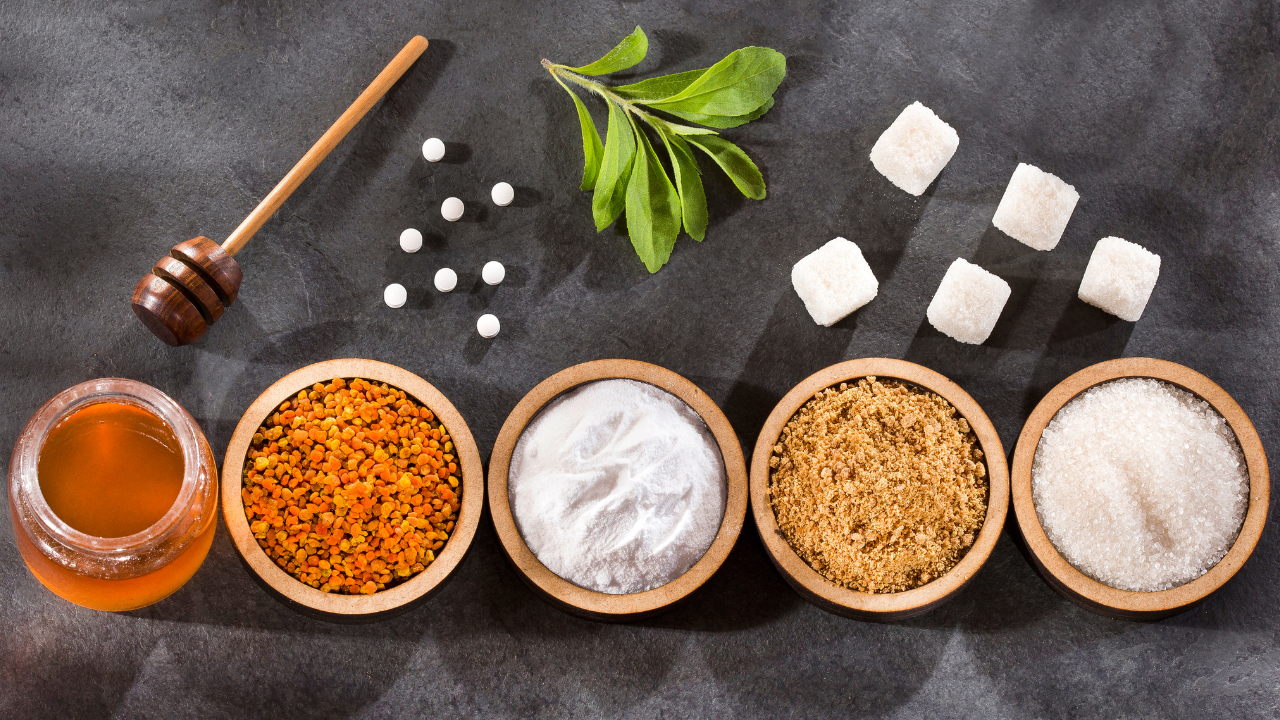
The market has responded with what appears to be an abundance of alternatives. Jaggery is suddenly everywhere, marketed as the ancient Indian solution to the sugar problem. Honey appears on "natural" products as the proof that no refined sweetener was needed. Coconut sugar is positioned as the low-GI tropical option. Stevia appears in "zero-calorie" products as the botanical escape from glycemic consequence. Date syrup and agave nectar carry wholefood credentials. And a growing range of artificial sweeteners — aspartame, sucralose, saccharin — promise all the sweetness with none of the calories.
The question is which of these alternatives are genuinely better, which are differently marketed versions of the same problem, and which may actually be worse than what they replace.
The answer requires looking at each alternative honestly — not through the lens of its marketing story, but through the lens of what it actually contains, how it behaves in the body, and what the evidence says about its effects on blood sugar, gut health, weight, and metabolic function.
This blog provides that honest assessment.
The Baseline: What Makes Refined White Sugar Problematic
To evaluate alternatives accurately, you first need to be clear about what specifically makes refined white sugar problematic — because not all of those problems are shared by all alternatives, and some alternatives solve some problems while creating others.
Refined white sugar is sucrose — a disaccharide of glucose and fructose in equal proportion, produced by extracting and crystallising cane or beet juice and then removing all molasses, minerals, vitamins, and other biological compounds through industrial refining. The result is a product that is approximately 99.9% pure sucrose with no nutritional content whatsoever beyond carbohydrate.
The specific harms of refined white sugar as a dietary staple operate through several mechanisms:
Rapid glycemic response. Sucrose has a glycemic index of approximately 65. When consumed in the quantities typical of modern Indian snacking — multiple biscuits, sweetened chai, packaged sweets — it produces repeated blood glucose spikes that drive the insulin-resistance cascade described in previous blogs.
Fructose metabolism and hepatic fat. The fructose component of sucrose is metabolised almost exclusively in the liver, where at the consumption levels typical of a modern diet — particularly from multiple sweetened sources throughout the day — it drives de novo lipogenesis (fat production in the liver), uric acid production, and the hepatic insulin resistance that is increasingly recognised as central to the development of metabolic syndrome.
Zero micronutrient content. Refined sugar displaces nutritionally valuable food from the diet while providing no vitamins, minerals, or phytonutrients in return. Every calorie from refined sugar is a calorie that has crowded out a calorie that could have come from food with genuine nutritional value.
Gut microbiome disruption. Refined sugar preferentially feeds bacterial species — particularly certain Firmicutes and Proteobacteria — that are associated with gut dysbiosis, increased intestinal permeability, and the systemic inflammation that drives chronic disease.
Psychological dependency mechanisms. The dopaminergic reward response to refined sugar — and particularly to the sweet-fat-salt combinations in which it typically appears — produces consumption patterns in many people that resemble the reward-seeking behaviour associated with addictive substances.
A genuinely better alternative to refined sugar would address several or most of these problems. An alternative that merely substitutes a different source of glycemic load without addressing fructose metabolism, micronutrient content, or gut microbiome effects is not genuinely better — it is differently packaged.
Jaggery: The Honest Assessment
What It Is
Jaggery — gur in Hindi, bella in Kannada, vellam in Tamil — is produced by boiling sugarcane juice or palm sap and then cooling and solidifying the result without the industrial refining that produces white sugar. The process retains the molasses fraction — the dark, mineral-rich byproduct that industrial refining removes — along with the iron, potassium, calcium, magnesium, phosphorus, chromium, and B vitamins that are naturally present in sugarcane juice.
The result is a sweetener that is chemically similar to unrefined cane sugar — composed primarily of sucrose with some glucose and fructose — but meaningfully different in its micronutrient composition and in the industrial processing it has not undergone.
What the Evidence Says
Glycemic index: Jaggery's glycemic index is approximately 54–60 — meaningfully lower than refined white sugar's GI of 65, and approximately 20% lower than dextrose or liquid glucose. The difference is real and produces a somewhat flatter glucose curve from equivalent portions. It is not, however, a low-GI sweetener in absolute terms — it is a lower-GI sweetener than refined alternatives.
Micronutrient content: The most documented advantage of jaggery is its mineral content. Per 100g, jaggery contains approximately 11mg of iron, 1056mg of potassium, 80mg of calcium, 70–90mg of magnesium, and trace chromium. The iron in jaggery is non-haem iron — less bioavailable than haem iron from animal sources — but in the context of a plant-based diet where iron sources are limited, jaggery's iron contribution is genuinely meaningful over regular consumption. The chromium content is particularly relevant for insulin sensitivity — chromium is a cofactor for the glucose tolerance factor (GTF) that facilitates insulin receptor binding, and chromium supplementation has been shown to improve insulin sensitivity in deficient populations.
The sucrose reality: Despite its advantages, jaggery is still primarily sucrose — approximately 65–85% by weight depending on the source and processing. Its fructose metabolism characteristics, while somewhat moderated by the mineral content that is absent in refined sugar, are not fundamentally different from sucrose. Jaggery cannot be consumed in unlimited quantities without glycemic and metabolic consequences — the lower GI and mineral content make it a better choice than refined sugar, but not a consequence-free one.
Quality variation: This is a practical concern that is rarely discussed in jaggery's popular health narrative. The Indian jaggery market is highly variable in quality. Chemical-free, traditionally processed jaggery — where the only inputs are sugarcane juice and the evaporation process — retains its full mineral profile and is genuinely different from refined sugar. However, commercially processed jaggery may be treated with sodium hydrosulphite (for colour whitening) or other chemicals that compromise both the safety and nutritional profile of the product. The "chemical-free jaggery" specification that Nutramore uses for its full product range is specifically addressing this real quality variation in the jaggery supply chain.
The Verdict on Jaggery
Genuinely better than refined white sugar — meaningfully so. Lower GI, non-zero micronutrient content, chromium for insulin sensitivity support, and iron for vegetarian diets. Not a consequence-free sweetener, not suitable for unlimited consumption, and importantly subject to significant quality variation that makes sourcing from a reputable supply chain with chemical-free certification meaningful rather than merely marketing language.
Jaggery is the most appropriate everyday sweetener for Indian food culture — it fits the flavour profiles of traditional Indian snacking, provides trace nutrition alongside sweetness, and carries none of the industrial processing damage of refined alternatives.
Honey: Complex, Beneficial, and Widely Adulterated
What It Is
Honey is produced by bees from flower nectar through a process of enzymatic transformation and water reduction that concentrates the sugars and introduces a complex mixture of enzymes, organic acids, amino acids, phenolic compounds, and antimicrobial substances that give raw honey its distinctive biological properties.
Raw honey — unheated, unfiltered, and unprocessed — is genuinely a different substance from refined sugar, and from the pasteurised, filtered commercial honey that constitutes most of the Indian market. Raw honey retains enzymes (including glucose oxidase that produces hydrogen peroxide), phenolic compounds with documented antioxidant and antimicrobial activity, flavonoids with anti-inflammatory properties, propolis traces, and prebiotics that support gut bacteria. Its glycemic index is approximately 55–65 depending on the floral source.
What the Evidence Says
Antimicrobial and wound-healing properties: The evidence for raw honey's antimicrobial activity is strong and well-documented. Medical-grade honey (particularly Manuka honey) is used clinically for wound treatment. The phenolic compounds and hydrogen peroxide production from glucose oxidase create a genuinely hostile environment for many bacteria. This property, however, is destroyed by heating — which is why cooked or baked products using honey offer none of these benefits.
Antioxidant content: Raw honey contains varying quantities of flavonoids and phenolic acids whose antioxidant activity is measurable and real — dark honeys from buckwheat or forest sources contain significantly more phenolics than lighter honeys from mild floral sources. Antioxidant content correlates with pollen content and floral diversity.
Glycemic response: Honey's glycemic index of 55–65 is similar to or slightly lower than refined white sugar's GI of 65, depending on the fructose-to-glucose ratio of the specific honey (which varies with floral source). Honey with a higher fructose proportion has a lower GI — because fructose has a GI of approximately 25 — but the higher fructose also increases the hepatic metabolic load described in the refined sugar section above. This is the same paradox as agave: lower GI, but through higher fructose content rather than slower glucose release.
The adulteration problem: This is the most significant practical concern with honey in the Indian market. Studies by the Centre for Science and Environment (CSE) and other Indian research groups have documented widespread adulteration of commercial Indian honey with sugar syrup, rice syrup, inverted sugar syrup, and corn syrup — sometimes at proportions exceeding 50% of the product. A 2021 study found that 77% of Indian honey samples failed international quality tests for purity. The mineral content, enzyme activity, and antimicrobial properties of adulterated honey are dramatically reduced or absent.
For honey to deliver its documented benefits, it must be raw, unheated, and unadulterated — a standard that most commercially available Indian honey does not meet.
The Verdict on Honey
Genuinely beneficial in raw, unadulterated form — with real antimicrobial, antioxidant, and prebiotic properties absent from refined sugar. Inappropriate for hot food or baking (where heat destroys the beneficial compounds that justify choosing it). Subject to severe quality concerns in the Indian market that make sourcing from verified, tested, reputable producers essential. Not suitable for people managing diabetes or insulin resistance in quantities beyond small amounts. At similar glycemic impact to refined sugar for most commercial varieties, while delivering significantly less nutritional value than its marketing suggests when adulterated.
Coconut Sugar: Modest Advantages, Often Overstated
What It Is
Coconut sugar is produced from the sap of coconut palm flowers, which is collected, heated to evaporate water, and solidified. It retains some of the minerals and inulin (a prebiotic fiber) present in coconut sap, and has a lower glycemic index than refined white sugar.
What the Evidence Says
Glycemic index: Coconut sugar has a GI of approximately 54 — similar to jaggery — compared to refined sugar's 65. The difference is real but not dramatic, and the GI advantage can be negated by consuming coconut sugar in larger quantities (which the lower sweetness intensity sometimes encourages).
Inulin content: Coconut sugar contains small amounts of inulin — a prebiotic fiber that feeds beneficial gut bacteria and slows glucose absorption. The practical contribution of inulin from typical coconut sugar consumption quantities to gut microbiome health is modest but not zero.
Mineral content: Coconut sugar contains trace iron, zinc, calcium, and potassium — less than jaggery by most measures, but more than zero. The quantities in typical serving sizes are nutritionally trivial but not absent.
The composition reality: Coconut sugar is still approximately 70–80% sucrose — meaning its fructose metabolism characteristics are essentially identical to refined sugar. Its advantages over refined sugar are real but modest.
Price and sustainability: Coconut sugar is typically 4–8 times more expensive than jaggery or refined sugar. For the modest advantage it offers over jaggery — which is the more appropriate comparison — the price premium is not justifiable for most Indian consumers. It is genuinely better than refined sugar. It is not meaningfully better than good-quality jaggery, and costs significantly more.
The Verdict on Coconut Sugar
A legitimate sugar alternative with real but modest advantages over refined white sugar — lower GI, trace minerals, some inulin. Not meaningfully superior to jaggery at twice to eight times the price. An appropriate choice for people who prefer its flavour profile (milder and less intense than jaggery) but not a premium product whose nutritional advantages justify a significant price difference.
Stevia: Genuinely Zero Calorie, But With Caveats
What It Is
Stevia is a sweetener derived from the leaves of Stevia rebaudiana, a plant native to South America. The sweet compounds in stevia leaves — primarily rebaudioside A and stevioside — are extracted and purified to produce a sweetener that is 200–350 times sweeter than sucrose and contains no calories or carbohydrates.
What the Evidence Says
Glycemic impact: Stevia produces no meaningful blood glucose response — it is not metabolised for energy and does not trigger an insulin response in the same way sugars do. For people managing diabetes or insulin resistance, stevia's glycemic neutrality is a genuine advantage.
Safety: Stevia has been extensively studied and is generally recognised as safe by the FDA, EFSA, and WHO at typical consumption levels. Rebaudioside A — the most purified extract — has the most favourable safety profile. Whole leaf stevia and crude stevia extracts are less well-studied and are not approved by the FDA for use as food ingredients.
Gut microbiome effects: This is where stevia's profile becomes more complex. Several studies have suggested that rebaudioside A may alter gut microbiome composition in ways that are not uniformly positive — specifically reducing populations of Lactobacillus and Bifidobacterium species that are among the most beneficial gut bacteria. A 2021 study in Microorganisms found that stevia disrupted quorum sensing in beneficial gut bacteria — an important communication mechanism for microbiome coordination. The research is not conclusive enough to characterise stevia as harmful to the gut microbiome, but it is sufficient to note that the long-standing assumption that calorie-free sweeteners are metabolically neutral is not fully supported.
The bitter aftertaste and palatability problem: Pure stevioside has a pronounced bitter, liquorice-like aftertaste that many people find unpleasant. Commercial stevia products address this in two ways: by using more purified rebaudioside A extracts (which have less aftertaste) and by blending stevia with other sweeteners — including erythritol, maltodextrin, or inulin — to round the flavour profile. The "stevia product" in many commercial applications is therefore a blend rather than pure stevia, and the blend may include ingredients that are themselves not metabolically neutral.
Appetite and calorie compensation: A concern shared by all non-caloric sweeteners is the calorie compensation effect — the possibility that sweet taste without caloric consequence triggers cephalic phase insulin release and appetite stimulation that leads to increased caloric intake at subsequent meals. The evidence on this for stevia specifically is mixed — some studies show no compensation effect, others show partial compensation. It is less concerning than the evidence for artificial sweeteners but not definitively absent.
The Verdict on Stevia
The most credibly beneficial of the non-caloric sweeteners, with a natural botanical origin and a strong safety profile. Genuinely useful for people managing diabetes or insulin resistance who want sweet flavour without glycemic consequence. Not metabolically neutral in all respects — potential gut microbiome effects warrant attention, and commercial stevia products often contain additional ingredients. Appropriate as an occasional tool rather than a primary daily sweetener, and preferable to artificial alternatives for people who need a non-caloric option.
Agave Nectar: The Cautionary Tale of the Low-GI Trap
What It Is
Agave nectar is produced from the sap of agave plants, concentrated and filtered to produce a liquid sweetener. It has been heavily marketed as a natural, low-GI alternative to sugar — particularly in the premium health food segment.
The Problem
Agave's low glycemic index — approximately 15–30 — comes from its extremely high fructose content, which ranges from 55% to 90% depending on the product and level of processing. This is higher fructose than high-fructose corn syrup (which is approximately 55% fructose).
As established in the discussion of refined sugar's harms, fructose is metabolised almost exclusively in the liver, where high-quantity consumption drives de novo lipogenesis, hepatic fat accumulation, uric acid production, and the hepatic insulin resistance that is central to metabolic syndrome. The low GI of agave is not the result of slow glucose release — it is the result of providing almost no glucose, routing the caloric load to the liver as fructose instead.
This is arguably the most significant "health food" bait-and-switch in the sugar alternatives category: a sweetener marketed for its low GI that achieves that low GI through a fructose concentration that is more hepatically damaging than refined white sugar at equivalent consumption quantities.
The Verdict on Agave Nectar
Not a health food. The low GI is real but misleading — achieved through high fructose content that produces liver-specific metabolic damage independent of glycemic impact. Refined sugar is a better choice for most purposes because its fructose concentration is lower. Agave should not be chosen on the basis of its low GI or natural positioning.
Artificial Sweeteners: The Metabolic Complexity
What They Are
Artificial sweeteners — aspartame (E951), sucralose (E955), saccharin (E954), acesulfame potassium (E950), and others — are synthetic compounds that activate sweet taste receptors with no caloric consequence. They are used in diet beverages, sugar-free biscuits, and "light" packaged foods marketed to people managing weight or diabetes.
What the Evidence Says
The safety and metabolic effects of artificial sweeteners have been studied extensively and remain genuinely contested in the scientific literature — which itself is informative.
Gut microbiome disruption: This is the most consistently documented concern. Studies published in Nature (Suez et al., 2014) demonstrated that saccharin, sucralose, and aspartame alter gut microbiome composition in ways that impair glucose tolerance — specifically through changes in Bacteroides and Clostridiales species that mediate metabolic signalling. Importantly, the glucose tolerance impairment was transferable to germ-free mice via microbiome transplant — demonstrating that the microbiome change, not a direct metabolic effect of the sweetener, was the mechanism.
Cephalic phase insulin release: Sweet taste — regardless of whether it is accompanied by calories — triggers cephalic phase insulin release in many people: a pavlovian-style insulin response to the anticipated arrival of glucose that activates fat storage signalling even in the absence of actual glucose. The magnitude of this effect varies between individuals and between sweeteners, but it undermines the assumption that calorie-free equals metabolically neutral.
Appetite dysregulation: Multiple randomised controlled trials have failed to demonstrate that replacing caloric sweeteners with artificial sweeteners produces sustained weight loss — and some studies show compensatory increases in caloric intake that partially or fully offset the caloric reduction from the sweetener substitution. The sweet-reward pathway that drives overconsumption of caloric sweeteners appears to remain active with artificial sweeteners, with reduced caloric consequence but potentially preserved appetite dysregulation.
Aspartame and carcinogenicity: In 2023, the WHO's International Agency for Research on Cancer (IARC) classified aspartame as "possibly carcinogenic to humans" (Group 2B) — the same category as pickled vegetables and aloe vera extract, indicating limited evidence rather than established risk. The WHO's Joint Expert Committee on Food Additives (JECFA) simultaneously maintained the existing acceptable daily intake, indicating that the evidence of harm at typical consumption levels is not sufficient to require reduced limits. The classification reflects scientific uncertainty rather than established danger, but it is consistent with a precautionary approach of moderate use.
The Verdict on Artificial Sweeteners
Useful as an occasional tool for specific populations — particularly people with diabetes who require sweet taste without glycemic consequence and for whom stevia is not a preferred option. Not appropriate as a long-term daily dietary staple for healthy people seeking to reduce sugar, because the gut microbiome disruption, potential appetite dysregulation, and cephalic phase insulin effects undermine the expected metabolic benefits. Not as neutral as their calorie count suggests.
The Moderation Principle: Why No Sweetener Is Consequence-Free
A point that deserves explicit statement, because it is easy to miss in the enthusiasm of finding better sweetener options: no sweetener is consequence-free in excess.
Jaggery is genuinely better than refined white sugar — but jaggery at high daily quantities still delivers significant sucrose load, still produces insulin responses, and still contributes to glycemic variability at quantities above moderate daily use. The fact that it contains iron and chromium does not transform it into a health food that can be consumed without limit.
Honey is genuinely beneficial in raw, unadulterated form — but its fructose content, at the tablespoon-multiple quantities that some recipes call for, delivers hepatic fructose load that matters metabolically.
Stevia produces no glycemic response — but the evidence on gut microbiome effects means that treating it as entirely metabolically neutral across unlimited daily consumption is not supported by the full body of evidence.
The meaningful shift is not from refined sugar to unlimited jaggery — it is from a diet where sweetness is the dominant flavour mode of snacking, requiring large quantities of any sweetener, to a diet where the sweetness of a well-chosen millet-based snack with moderate jaggery provides genuine satisfaction at a quantity where the jaggery's advantages are relevant and its disadvantages are minimal.
This is precisely the snacking model that Nutramore's products represent. The jaggery content in a serving of Ragi Chocolate Cookies or Bajra Cookies is sufficient to provide pleasant sweetness — and to deliver the chromium, iron, and potassium that jaggery contributes — without the quantity that would produce meaningful glycemic disruption. The millet base's fiber and low GI further moderate the jaggery's glycemic contribution, producing a composite snack with a blood glucose response far gentler than any refined-sugar-sweetened equivalent.
What This Means for Everyday Indian Snacking
The practical conclusions from this honest assessment of sweetener alternatives are specific and actionable:
For everyday Indian snacking: Chemical-free jaggery is the appropriate choice. It fits the flavour profiles of traditional Indian food, provides genuine micronutritional value absent from all refined alternatives, has a meaningfully lower GI than white sugar, and in the context of a well-formulated whole millet snack, contributes to a composite glycemic response that is genuinely safe for most people.
For people managing diabetes or insulin resistance: Jaggery in small quantities within a high-fiber, low-GI food matrix is manageable for most people — but individuals with significantly impaired glucose tolerance should discuss their specific situation with their healthcare provider. Stevia as a sweetener in products designed for diabetic management provides the most complete glycemic neutrality available from a natural source.
For people choosing honey: Verify the source. Choose raw, unheated, unadulterated honey from verified producers. Do not use honey in hot preparations where its beneficial compounds are destroyed. Treat it as an occasional flavour element rather than a daily staple sweetener.
For people encountering agave: Understand that its low GI is misleading. It is not a health food for metabolic purposes. Jaggery is a better choice by every meaningful measure for Indian consumers.
For people in products with artificial sweeteners: Treat them as occasional tools for specific circumstances — managing diabetes, reducing immediate caloric load in a specific dietary context — rather than long-term daily dietary components. Stevia is preferable to synthetic artificial sweeteners for people who need a non-caloric option regularly.
The Products That Get This Right
The snack choices that genuinely honour this framework are those that use chemical-free jaggery as their sole sweetener — in quantities calibrated to provide satisfaction without excess — within a whole millet and pulse base whose fiber and low GI moderate the jaggery's own glycemic contribution.
Nutramore's full cookie range — from Jowar Coconut Cookies and Jowar Chocolate Cookies to Bajra Moong Chocolate Cookies, Rice Ragi Cookies, Moong Almond Pistachio Cookies, and Multigrain Coffee Cookies — uses jaggery as the single sweetener across every product. There is no refined sugar. No glucose syrup. No invert sugar. No maltodextrin. No sugar alias of any description. One sweetener, named honestly, in quantities calibrated to the whole-food millet matrix that surrounds it.
This is what the right sweetener choice looks like in practice — not a headline claim about jaggery being the solution to India's sugar problem, but the quiet, consistent, ingredient-list-level commitment to a genuinely better sweetener in a genuinely better food context.
The Try & Taste Trial Pack with 9 flavour mini packs is the most practical way to explore this range across different millet bases and flavour profiles — finding what works before committing to a full rotation.
Final Thoughts
The sugar alternatives landscape is more complex than most of its marketing suggests. Jaggery is genuinely better than refined white sugar — but not infinitely better, and only when sourced as genuinely chemical-free. Raw honey is genuinely beneficial — but only when it is genuinely raw and unadulterated, a standard that most commercial Indian honey does not meet. Stevia is genuinely useful for diabetics and those requiring non-caloric sweetness — but not metabolically neutral in all respects. Agave's low GI is genuine — but achieved through fructose content that makes it worse than refined sugar by metabolic measures that GI does not capture. Artificial sweeteners are useful tools for specific circumstances — but not the long-term daily alternatives that their marketing positions them as.
The most important insight from this full assessment is not which sweetener to choose — it is how much sweetener to need. A diet built around whole millet and pulse-based snacks with moderate jaggery sweetening requires far less sweetener to produce satisfaction than a diet built around refined flour and refined sugar products that need high sweetness intensity to compensate for the absence of genuine flavour from real ingredients.
When the food is genuinely good — when bajra, jowar, ragi, and moong are carrying their natural flavour complexity and the real butter is providing genuine richness — the sweetener's job is modest. And modest quantities of a good sweetener, in a good food, are how the whole category of sweetener anxiety resolves itself most naturally.
Explore Nutramore's full range of jaggery-sweetened, whole-grain millet snacks at nutramore.in/our-products